How to Determine Whether a Car Is Two Years Old
Determining whether a vehicle qualifies as one of the 2 year old cars in the market means checking the elapsed time from a recognized starting point rather than guessing from appearance or a dealer description. The answer can shift depending on whether you use the model year, the build date, or the first registration date as your reference. Most buyers and owners simply care whether the car falls within a two-year window from new. Knowing which record source matters helps avoid confusion when comparing sale listings, warranty documents, and title paperwork.
Direct answer
A car is generally considered two years old when roughly twenty-four months have passed since it was first placed in service or first registered. The model year alone can be misleading because a vehicle built in late 2025 may be sold and registered as a 2026 model, making it less than a year old in the next calendar year. Similarly, a car built early in a calendar year might sit unsold for months before its first registration. The useful question is which date you need to satisfy: a listing age, a condition estimate, or a legal or warranty definition.
The build date on the door jamb label gives the month and year of assembly, while the in-service date begins when the first owner takes delivery or the title is first issued. For many purposes, especially advertising and ownership history, the first registration or in-service date is the better clock. A used car described as a two-year-old model may be physically older by several months because it was built well before it was registered. Checking the record source that matches your purpose prevents reaching the wrong conclusion from a single date.
How to proceed
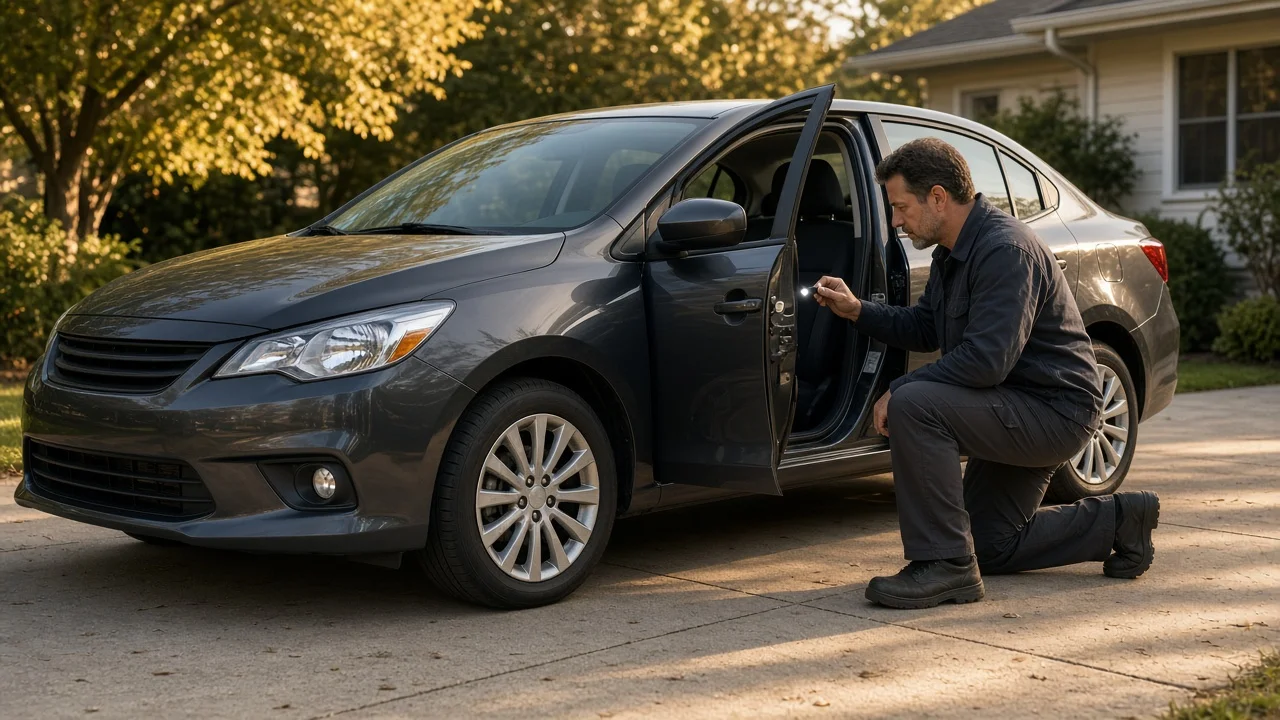
Begin by locating the vehicle identification number and the federal certification label, which usually sits on the driver-side door jamb. The label often shows the month and year of manufacture, which establishes the build date. Compare that date with the registration card, title document, or vehicle history record to find the first registration or in-service date. If the vehicle came from another state or was sold as a dealership demonstrator, the first registration may have occurred later than the build date, so note which event you are measuring.
A practical completion check is to subtract the starting month and year from the current month and year, then confirm that the result is approximately twenty-four months. If the car was built in March 2023 and manufactured for the 2024 model year, it may be counted as two years old by build date even if the model year sounds newer. Exact calendar-day calculations are rarely necessary for ordinary shopping or ownership questions, but consistency is important. Always use the same type of date when comparing several vehicles.