Connect smartphone to old car stereo
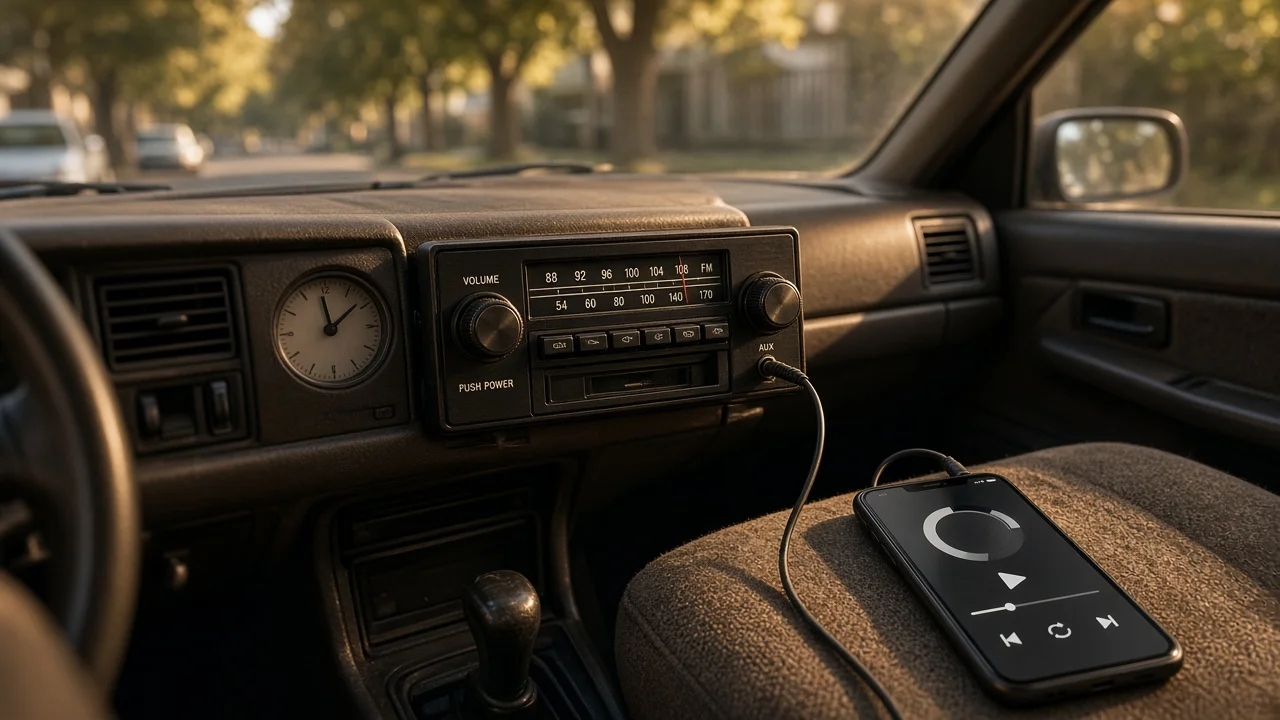
Getting phone audio into an older dashboard can feel like a dead end when the factory radio predates Bluetooth and USB media. The good news is that a smartphone can usually become the audio source for a legacy head unit without replacing the whole system. The right path depends on the available inputs, the condition of the speaker wiring, and how much integration is wanted. The goal is to feed a clean signal into existing vehicle audio while keeping controls and charging reasonable for daily driving.
Essential answer
The essential answer is that most old car stereos accept a smartphone through an auxiliary input, a cassette adapter, an FM transmitter, or a wired FM modulator. If the head unit already has a 3.5 mm aux jack on the face or rear, a simple cable gives the most direct audio connection. When no aux input exists, the tape deck or antenna signal path becomes the practical entry point. Each method works, but sound quality and ease of use differ enough to affect the choice.
Signal reception and interference matter because an FM transmitter broadcasts on an open station and can be stepped on by strong local radio signals in urban areas. A wired FM modulator connects in line with the antenna and delivers the phone audio more reliably by reducing over-the-air competition. A cassette adapter avoids radio tuning entirely and uses the tape head to inject sound, though it depends on a functioning cassette mechanism. These differences explain why one solution fits a daily commute better than another.
Procedure
Begin by identifying the cleanest input the factory or aftermarket radio offers. If an auxiliary port is present, connect a quality cable from the phone headphone jack or USB-C audio output to that port, set the stereo to aux, and adjust phone volume to roughly three-quarters before fine-tuning at the head unit. For vehicles without aux, insert a cassette adapter into the tape slot and route its cable to the phone if the tape mechanism operates smoothly. The key is preventing strain on the cable and dash trim while driving.
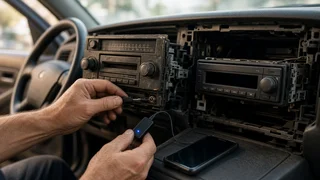
When no aux jack or working cassette deck is available, tune the radio to a quiet FM frequency and set an FM transmitter to the same station. A wired FM modulator can be installed in the antenna lead for steadier reception, but it requires access behind the radio and careful routing that some owners prefer to leave to an installer. After any method, test at idle and at highway speed, because electrical noise, antenna placement, and vehicle integration can change the result under real driving conditions.