How to Choose a Cargo Liner for a Car
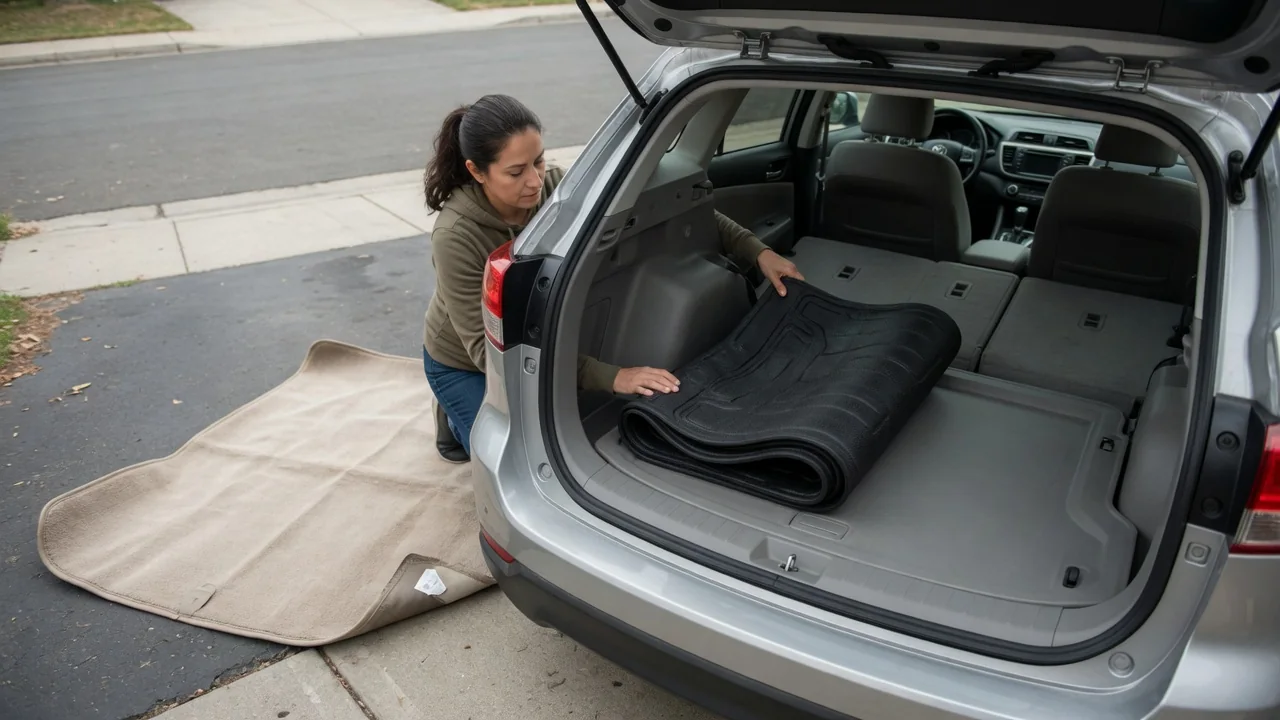
Learning how to choose a cargo liner for a car comes down to three practical questions: whether it fits the load floor, whether the material suits what you carry, and how easily it cleans up afterward. A liner that matches the shape of your trunk or hatch protects the carpet from moisture, grit and wear, while a poorly matched one shifts, curls and lets spills reach the fabric underneath.
Measure cargo area
Start with the load floor itself rather than the vehicle's overall size. Measure the width between the wheel housings, since those intrusions usually define the narrowest point, then the width near the tailgate opening, where the floor often widens. Take the depth from the rear seatbacks to the sill or latch area. Sedans, hatchbacks, wagons and SUVs differ considerably here, and a trunk that looks rectangular often tapers toward the seats or curves around the taillight housings.
Note anything that changes the floor shape. Some vehicles have an adjustable or two-level load floor, a subwoofer enclosure, a side storage pocket or a third row that folds flat into the floor. Each alters the outline a liner must follow. Vehicle-specific molded liners are shaped to one body style and sometimes one trim or seating configuration, so confirm those details before ordering. Universal trim-to-fit mats rely on your measurements, and cutting slightly oversize first leaves room to correct the outline.
Raised edges
A raised lip around the perimeter is what turns a flat mat into a tray. When a grocery bag leaks, snow melts off boots or a potted plant tips, the liquid spreads until it meets an edge. A flat mat lets it run off into the carpet and down toward the spare tire well, where moisture can sit unnoticed and cause odors or corrosion. A lip holds it on the surface until you can pour or wipe it away.
Edge height involves a trade-off. A taller lip contains more liquid and loose material such as mulch or sand, but it can make sliding heavy boxes in and out more awkward and may interfere with a low loading sill. Check how the edge meets the sidewalls and the rear seatbacks, because gaps there are where dirt collects. Stiffer thermoplastic liners tend to hold their edge shape, while softer rubber-like materials may sag at the corners, particularly in a hot cabin.
Access to anchors
Most cargo areas have tie-down points, typically metal loops or recessed hooks near the corners of the floor or low on the side panels. They secure cargo nets, straps and organizers, and they matter for safety because unrestrained heavy items can move forward in hard braking. A liner that covers these points removes a function the vehicle was designed with. Look at where your anchors sit and whether the liner has cutouts, relief notches or an outline that stops short of them.
Other access points deserve the same check. The spare tire or tire repair kit, the jack, a battery or fuse panel located in the cargo area and the pull straps or levers that fold the rear seats may all sit beneath or beside the floor. Child seat tether anchors are sometimes mounted on the seatbacks or the cargo floor, depending on the vehicle. A liner should lift out quickly without tools so these stay reachable at the roadside, and it should not block seat folding mechanisms.
Everyday Use and Observations
Match the material to your typical load. Smooth, rigid liners rinse clean easily but can let luggage and groceries slide in corners, so a textured or grippy surface helps keep items in place. Flexible rubber-style mats grip well and deaden rattles, though deep textures trap fine dirt and pet hair. Carpeted liners look closer to the original trim and stay quiet, but they absorb liquid and take longer to dry, making them better for dry cargo than for wet gear.
Cleaning habits reveal a lot once the liner is in use. Most non-carpeted liners can be lifted out, shaken, hosed down with mild soap and left to dry fully before going back in. Avoid shiny dressings on the top surface, since they make cargo slide. Lift the liner periodically and feel the carpet beneath it; dampness there suggests liquid is getting past the edges or condensation is being trapped. Watch for curling corners, shifting under load and any new odor after spills.
Limits and Next Steps
A liner protects the floor, not the whole compartment. Seatbacks, side panels and the bumper sill remain exposed unless the design includes extra coverage, and some extended versions only work with the seats in a particular position. A liner also does nothing about water that enters from elsewhere. If the carpet underneath is wet without an obvious spill, a leaking tailgate seal, taillight gasket or body vent may be the source, and that deserves inspection rather than a thicker mat.
Before buying, confirm the exact model year, body style and seating layout against the product's stated fitment, because mid-generation changes can alter the floor shape. Once installed, check that the liner lies flat, that the tailgate or trunk lid closes and latches normally, and that every anchor and storage cover remains usable. If a molded liner rocks, bridges a contour or overlaps trim, treat that as a fit problem and exchange it rather than forcing or trimming a part not meant to be cut.