How Do Car Defrost Vents Reach the Glass?
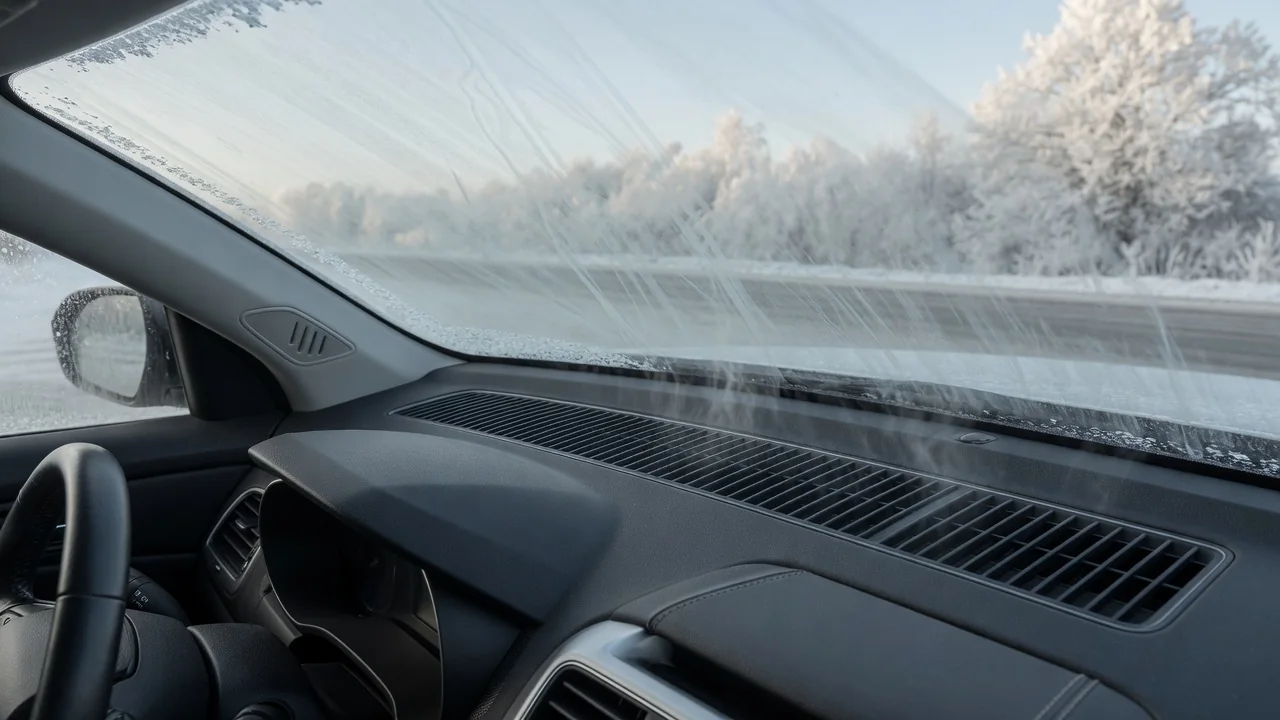
When you press the defrost button, air leaves the dashboard and has to cover a large, steeply angled sheet of glass. This works through a combination of outlet placement, duct shape, and air speed, all aimed at clearing the areas a driver needs most. This guide explains how windshield defrost duct design works in general terms, and notes where real-world results depend on the specific vehicle.
Outlet position: where defrost air starts its path
Most vehicles place the windshield defrost outlets in the top surface of the dashboard, close to where the glass meets the dash. They are usually long, narrow slots or a row of grilles running across much of the width of the windshield. Placing them there keeps the distance between the outlet and the glass short. The air reaches the inner surface before it has mixed heavily with the surrounding cabin air and lost its temperature and momentum.
Behind those slots is a duct network fed by the HVAC module, the housing under the dash that contains the blower, evaporator, and heater core. When defrost mode is selected, a mode door, or a set of doors, redirects air away from the face and floor ducts and toward the defrost plenum. From there, the duct divides and widens so air is spread along the length of the outlet instead of shooting out of a single point. Many designs also route a smaller branch to outlets at the ends of the dash. These are aimed at the side windows so the driver can see the exterior mirrors.
The angle of the outlet matters as much as its location. Vanes or the shape of the slot direct the air upward and slightly forward so it meets the windshield at a shallow angle. Exact angles, slot widths, and branch layouts vary by vehicle. They are set during development to suit that particular windshield's rake and curvature.
Air speed: how the jet stays on the glass
Once air leaves the outlet, its speed determines how far up the windshield it travels. A thin, fast-moving jet released close to a surface tends to cling to it, a behavior often described as the Coanda effect. Instead of drifting into the cabin, the air follows the curve of the glass and spreads out as a wall jet that sweeps upward. Narrow slots help create this kind of flat, fast sheet of air.
As the jet travels, it slows down and mixes with cabin air, so its ability to transfer heat and carry away moisture drops with distance from the outlet. Higher blower speeds push the faster part of the flow farther up the glass, which is why the cleared area usually grows when the fan setting is increased. Faster air also improves heat transfer at the surface. It thins the layer of still air right against the glass, which otherwise acts as insulation.
Speed is only part of the picture. Warm air raises the temperature of the glass so frost or ice can melt and condensation can evaporate, while dry air helps carry moisture away. On many vehicles, selecting defrost automatically engages the air conditioning compressor, so the evaporator removes humidity before the heater core warms the air. Whether and how this happens depends on the specific climate control system.
Visibility: which areas clear first
Because the jet is strongest and warmest near the outlet, the lower part of the windshield usually clears first. The cleared zone then expands upward and outward as the glass warms. Defrost systems are generally designed to prioritize the part of the windshield directly in the driver's line of sight. In the United States, federal safety standards set requirements for windshield defrosting and defogging performance. The precise zones and timing come from those standards and from each manufacturer's engineering targets, not from a single universal pattern.
Edges and upper corners are typically the last areas to clear. They are farthest from the outlets, the jet has slowed by the time it gets there, and the glass near the frame may be colder. Side window demister outlets serve a separate visibility need: keeping a clear view of the exterior mirrors and nearby traffic. Rear windows are usually handled differently, most often by an electrically heated grid in the glass rather than by ducted air.
Practical implications and limits
Anything placed on the dashboard can interfere with the airflow path. Papers, phone mounts, dash covers, or debris lodged in the outlet slots can block or deflect the jet so it detaches from the glass, leaving uneven or slow-clearing patches. A clogged cabin air filter can reduce the volume of air the blower delivers, which weakens the jet across the whole windshield. Dirt or film on the inside of the glass can also make fog harder to clear and can increase glare once it is gone.
Settings affect results too. Recirculation mode keeps moist cabin air circulating, which can slow defogging, while fresh-air intake typically brings in drier outside air in cold weather. On engines that rely on coolant for cabin heat, the air stays cool until the engine warms up. Early clearing therefore depends mostly on airflow and dehumidification rather than heat. Vehicles with electric heaters, heat pumps, or heated windshields may behave differently, and the owner's manual is the right reference for how a specific system is meant to be used.
There are also physical limits. Thick ice on the outside of the windshield must be warmed through the glass, which takes time no matter how well the ducts are designed, so scraping is often still needed. If clearing seems unusually weak, or only one area receives air, possible causes include a stuck mode door, a duct that has come loose behind the dash, or a blower problem. Diagnosis depends on the vehicle's particular layout.