How AC Works in Electric Cars: Electric Compressors Explained
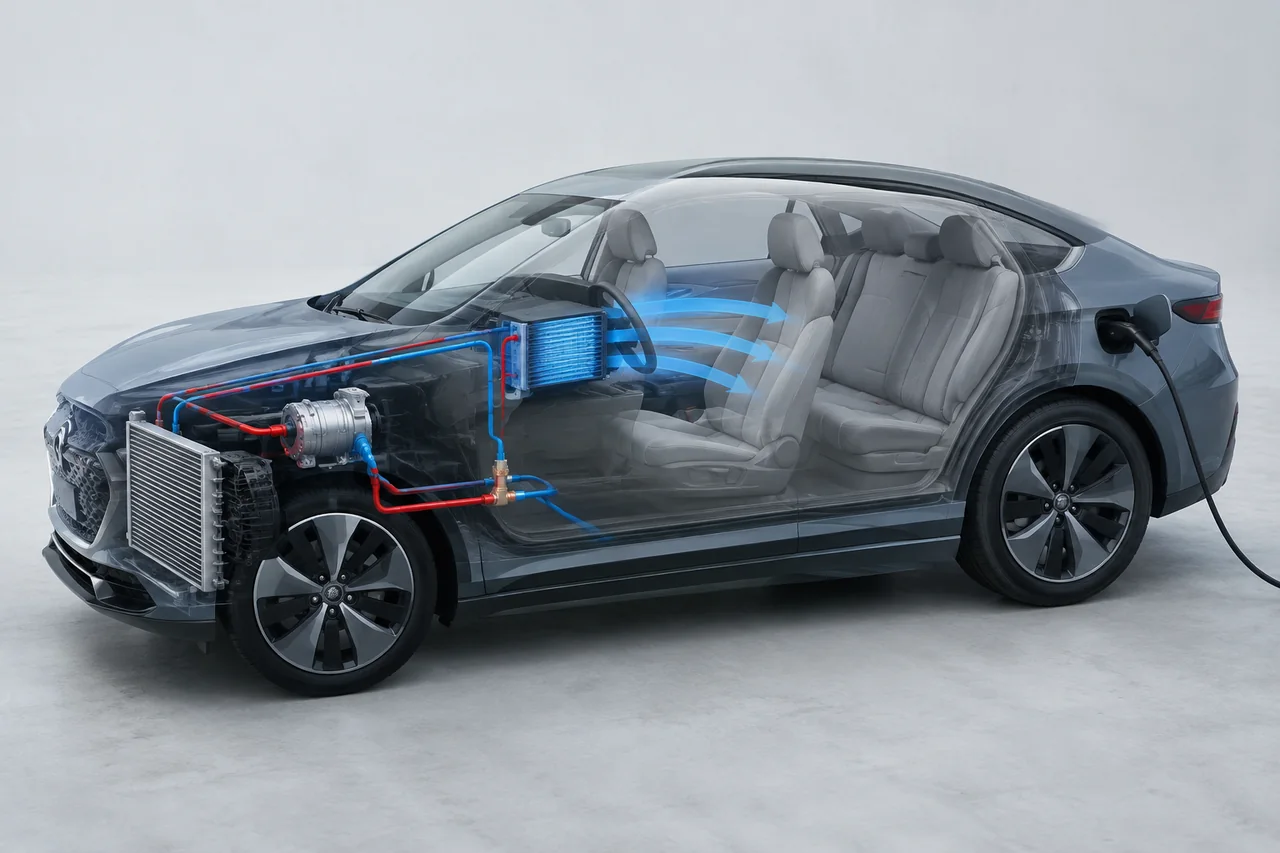
Air conditioning in an electric car moves heat the same way it does in any vehicle, but different hardware drives it. Instead of a belt turning the compressor, an electric car AC system uses an electrically powered compressor, electronic controls, and battery energy. That design explains why EVs and many hybrids can cool a stopped cabin and why running the AC affects range.
How Electric Cars Power Cabin Air Conditioning
Cabin cooling does not create cold air; it moves heat out of the cabin. A sealed refrigerant circuit absorbs heat from air passing through the dashboard and releases it outside the vehicle. In a conventional car, the engine spins the compressor through a belt. An electric car has no running engine to supply that motion, so the electric AC compressor has its own motor. Because it runs on electrical power instead of crankshaft rotation, it can operate whenever the vehicle supplies energy to it.
The compressor is only part of the energy picture. The blower fan is a separate electric motor that pushes cabin air across the evaporator and out the vents. Its speed setting controls airflow, not how much heat the refrigerant removes. Both draw power, but the compressor is usually the larger load during active cooling. Cooling also depends on the vehicle allowing climate operation. The car generally must be on or in a supported climate mode, with enough available battery energy to run the system.
What Happens Inside the Refrigerant Circuit
Inside the electric car AC system, the compressor squeezes low-pressure refrigerant vapor into hot, high-pressure vapor. That refrigerant flows to the condenser near the front of the vehicle, where outside air carries heat away and the refrigerant condenses into a liquid. An expansion device then drops its pressure sharply, which makes it very cold. The cold refrigerant enters the evaporator behind the dashboard, absorbs heat from cabin air, boils back into vapor, and returns to the compressor.
The evaporator does more than lower the air temperature. When warm, humid cabin air meets its cold surface, moisture condenses out of the air, which is why AC helps clear fogged windows. That water drains out beneath the vehicle, so a small puddle of clear water under a parked car after cooling is normal. The refrigerant stays in a sealed loop and isn't used up during operation. A low charge points to a leak or a service issue, not normal consumption.
How the Electric AC Compressor Is Controlled
An electric AC compressor for a car pairs the compression mechanism with an electric motor and control electronics, often in one unit. Many older belt-driven compressors cycle on and off. An electric compressor's motor can instead change speed to vary cooling output. The climate control module weighs cabin temperature readings, the selected setting, and system limits such as refrigerant pressure and temperature. It then runs the compressor faster for rapid cooldown or slower to hold a steady temperature.
In many battery electric vehicles, the electric car AC compressor draws power from the high-voltage traction battery through dedicated electronics. Electrical architecture varies, though, and some vehicles power related components differently. Compressor specifications, refrigerant type, and compatible lubricant must come from vehicle-specific service information, because electric compressors can have special oil requirements. Whether a replacement electric compressor for car AC suits a particular model depends on the manufacturer's data, not on whether the parts look alike.
Why AC Can Run With a Hybrid's Engine Off
A hybrid with an electric compressor can keep the cabin cool while the combustion engine is off at a stoplight or during low-speed electric driving. That's possible because the compressor doesn't depend on engine rotation. Not every hybrid works this way. Some use belt-driven compressors, and compressor arrangements vary between designs. Check engine-off cooling for your specific model in the owner's manual or with dealer information instead of assuming it from the hybrid label.
Even with an electric compressor, the engine may start while the AC is running. If the hybrid battery charge drops, cooling demand is high on a hot day, or the vehicle controls call for charging, the system can restart the engine to protect the battery and keep the cabin comfortable. Parked cooling and remote climate control depend on which modes the vehicle supports. They may also be limited by battery state, time limits, or whether the vehicle is in a permitted operating condition.
How Cabin Cooling Uses Battery Energy and Affects Range
Running the AC in an electric car uses energy that could otherwise move the vehicle, so range can drop, but no single percentage applies to every driver. Demand rises with higher outside temperatures, strong sunlight, heat soaked into seats and interior surfaces, humidity, and a lower temperature setting. Trip length matters too. Pulling a hot cabin down to a comfortable temperature takes much more effort than holding it there, so short trips in a sun-baked car cost proportionally more than long drives.
A few practical habits help. Parking in shade reduces heat soak, and a comfortable setting instead of an extreme one lowers compressor workload. Recirculation takes less energy because it cools air that's already been cooled, though fresh air helps prevent fogged windows and stale air. Where supported, preconditioning while plugged in lets much of the initial cooldown draw power from the grid. It doesn't guarantee zero battery draw, however, and parked AC without charging still uses stored energy.
Where Heat Pumps and Battery Cooling Fit
Some electric and hybrid vehicles use heat pump hardware, which reroutes refrigerant flow to warm the cabin as well as cool it. A heat pump isn't required for electric AC, however. A cooling-only refrigerant circuit driven by an electric compressor provides air conditioning on its own, and those vehicles may heat the cabin with other equipment, such as resistive heaters. A heat pump mainly changes how efficiently the vehicle produces heat, not whether it can cool.
Battery thermal management often connects to the same system. In many designs, a heat exchanger lets refrigerant cool a liquid coolant loop that circulates through the traction battery, so one compressor serves both the cabin and the battery. Shared hardware does not mean cabin air blows over the battery pack. The circuits exchange heat through separate fluids. Refrigerant routing and priorities vary by vehicle and conditions, for example when fast charging or extreme heat increases the battery's need for cooling.
Safe Observations When Electric AC Stops Cooling
When an electric car's AC stops cooling, careful observations make diagnosis faster. Note whether airflow from the vents is strong or weak, whether vent temperature changes at all, and whether any warning messages appear. Listen for unusual sounds, and record whether the problem happens while parked, while driving, or only after extended use. Check the climate settings and the owner's manual, since energy-saving modes or low battery conditions can restrict climate operation.
Weak cooling alone can't identify a failed compressor, a refrigerant leak, or an electrical fault, because different problems produce similar symptoms. A stored fault code is evidence to interpret alongside testing, not proof that a part has failed. If cooling problems persist, a warning appears, or you hear abnormal noises, have a qualified technician test the system using vehicle-specific procedures. Don't open refrigerant lines, handle compressor electrical connections, or add refrigerant yourself: the system is under pressure, high-voltage wiring is dangerous, and correct service steps differ by vehicle.