Honda TPMS Light On: Meaning, Calibration and Reset Across Models
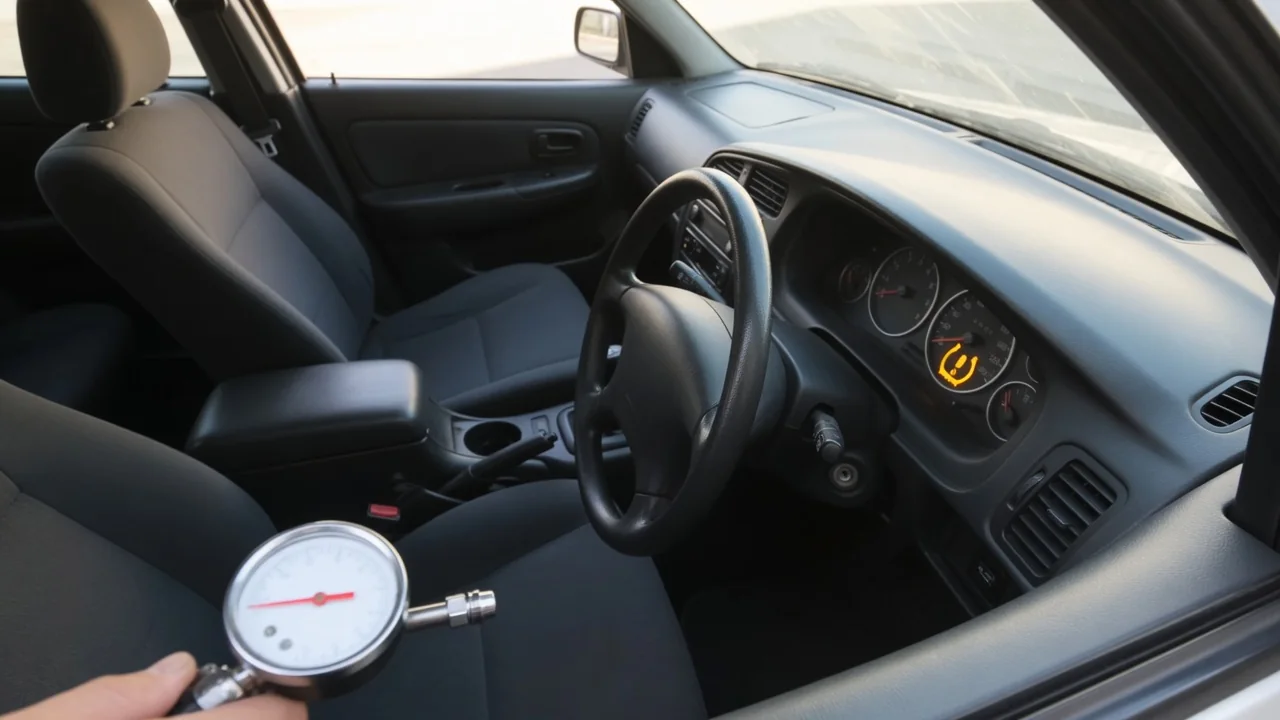
When the Honda TPMS light comes on, the tire pressure monitoring system is flagging either a tire that may be low or a problem with the monitoring system itself. Whether you drive a Civic, Accord, CR-V, Pilot, Odyssey or Fit, start by checking your tires with a gauge before you try a reset. This guide explains what the warning means, how Honda TPMS calibration generally works and when to get professional help.
What Your Honda TPMS Warning Is Telling You
TPMS stands for tire pressure monitoring system, which answers the common question of what TPMS means on a Honda Accord or any other Honda. Its job is to alert the driver when one or more tires may have lost enough air to affect braking, handling, fuel economy and tire life. A radial tire can look almost normal while running well below its specified pressure. That's why a lit low tire pressure indicator always calls for a gauge check, not just a look at the sidewalls.
Before you interpret a TPMS light in a Honda, note the model year, the market, the exact symbol or message, and whether the indicator stays on steadily or flashes first. Honda has used different systems across models and years. Some detect low pressure indirectly from wheel-speed data, while others use a pressure sensor in each wheel. Check your owner's manual to see which one your vehicle has. A low-pressure alert and a system-fault warning can look different, and each one calls for a different response.
Check Tire Pressure Before Starting a Reset
Check cold tire pressure on each tire with a reliable gauge. Cold means the car has been parked for several hours or driven only a short distance. Compare the readings with the tire placard on the driver's door, not the maximum pressure molded into the sidewall. Pressure changes with temperature. A cold morning can lower readings enough to trigger the Honda TPMS warning light even though nothing is punctured, and a warm tire can read misleadingly high.
While you inflate the tires, look for nails, cuts, bulges or sidewall damage, and note whether one tire keeps losing air between checks. A tire that keeps dropping needs to be inspected for a puncture, a leak where the tire seals against the rim, or a valve problem. If a tire is badly deflated or visibly damaged, or the vehicle pulls, vibrates or feels unstable, pull over somewhere safe. Call roadside assistance or have the spare fitted instead of driving on and trying a reset.
Honda Civic TPMS Calibration and Reset by Model Year
Honda Civic TPMS behavior depends on the generation and equipment, so find the exact year and trim before you look up a Civic TPMS reset. If you own a 2012 or 2015 Honda Civic and want to reset the TPMS, open the owner's manual for that exact year and find the tire pressure monitoring section. It tells you whether the car has a calibration function, where the control is, and whether the car must be parked with the ignition in a particular mode.
Where calibration is available, the manual typically links it to pressure adjustment, tire rotation or tire replacement, and it expects every tire to be set to the placard pressure first. If you calibrate with a low tire, the system learns the wrong baseline. Some procedures describe a learning period while you drive. Follow only the conditions your manual gives, not a universal speed or distance. If the calibration option is missing or the Honda Civic TPMS light comes back, recheck the pressures and book a diagnosis.
Honda Accord TPMS Light and the Correct Reset Procedure
Before you interpret the Honda Accord TPMS light, identify the model year and the exact display. A steady amber symbol, a flashing indicator and a text message can mean different things. If the Accord's manual describes a calibration or initialization function, it lists what must be true first, such as the vehicle being parked, a specific ignition setting and correctly inflated tires. It also describes the confirmation you should see once the process starts, such as a message or a change in the indicator.
If your Accord's manual shows no reset you can do yourself, the system may use individual sensors that need registration or diagnosis with professional scan tools after tire or wheel work. A TPMS light on a Honda Accord that stays on after you correct the pressures does not prove that a sensor has failed. The cause may be an unfinished calibration, a slow leak or a communication problem, and a technician can tell these apart with proper testing.
Honda CR-V TPMS Light After Inflation or Tire Service
Before you try a Honda CR-V TPMS light reset, confirm the model year and equipment, and note whether the warning is steady or flashing. If your configuration has a documented calibration function, the basic sequence is the same. Set each tire to the placard's cold pressure, start calibration from the control your manual names, and watch for the confirmation it describes. A CR-V TPMS reset is pointless without the pressure check, because the system simply learns the wrong inflation.
If the TPMS light comes on in a Honda CR-V after a tire rotation, tire replacement or seasonal wheel swap, follow the guidance for that specific vehicle. Some systems only need recalibration. Vehicles with wheel sensors may need winter wheels fitted with compatible sensors that are registered to the vehicle. If the warning stays on or returns days later, check the pressures again instead of resetting over and over. A returning alert can point to a slow leak or an equipment problem that professional testing can find.
Finding TPMS Instructions for the Pilot, Odyssey, and Fit
If you own a Pilot, Odyssey or Fit, find the owner's manual for your exact year and market, either the printed copy or Honda's owner resources. Look in the index under tire pressure monitoring or low tire pressure. Don't assume every Honda uses the same procedure. TPMS behavior on the Pilot, Odyssey and Fit can differ by generation, including the menu path, the control used and whether you can calibrate the system yourself at all.
If the manual describes a calibration you can do yourself, follow its conditions and check that you see the result it describes before driving. If it refers to sensor testing or registration instead, take the vehicle to a tire shop or Honda dealer with TPMS tools. If your vehicle's controls or messages don't match the manual, it may have different equipment. Ask a dealer to confirm the system from the vehicle identification number (VIN) instead of guessing.
When the Honda TPMS Light Stays On With Correct Pressure
When a Honda TPMS light is on but the tires seem fine, first make sure they really are. Every tire, including the spare if your system monitors it, should be measured cold with a gauge and match the placard. One correct reading can't rule out a slow leak that lowers pressure overnight. Possible causes include an unfinished calibration, a faulty sensor or lost sensor signal on models with wheel sensors, or a problem introduced during recent wheel service. None of these is confirmed without testing.
Professional testing can check for leaks, read stored TPMS fault information and, on vehicles with sensors, confirm that each sensor is communicating. Bring useful details to the technician: the model year, your cold pressure reading for each tire, when the warning appeared and whether it flashed, any recent tire rotation, repair or replacement, and the calibration steps you tried. That history helps the technician quickly tell a pressure problem from a system fault and avoid replacing parts that don't need it.