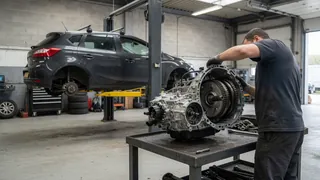
Honda Cars With Dual-Clutch Transmission
A Honda dual clutch transmission car pairs automated clutch control with the direct, mechanical feel that traditional torque-converter automatics often soften. This design uses two separate input shafts and clutches to preselect the next gear, which changes shift behavior and powertrain response. For drivers researching transmission type and fitment, the subject is narrower than it first appears. Several Honda models have used a dual clutch unit in specific applications, particularly where compactness and quick shifts matter. Understanding fluid specification, service history, diagnostic codes, and repair options helps separate normal operating character from a developing fault. The following sections cover the essential answer without inventing model-specific figures.
Essential answer
Honda has offered a dual clutch transmission in selected cars, most recognizably within the Acura line and in certain hybrid or sport-oriented Honda models sold in the US market. The technology operates with a mechanical gear arrangement similar to a manual transmission, but clutch engagement and gear selection are automated. That gives the unit a different shift feel from a conventional planetary automatic. Because fitment varies by model year, powertrain, and market, the practical answer is not that every Honda uses this design; rather, the dual clutch appears in specific applications where its packaging and response characteristics fit the vehicle.
The unit should not be confused with a standard automatic or a continuously variable transmission. Its shift behavior can sometimes feel firmer at low speed, and fluid specification and service history affect long-term performance. If a driver notices unusual engagement, a diagnostic code can point toward a sensor or hydraulic command issue, but it does not by itself prove that the clutch pack or a gear actuator has failed. Similarly, a manufacturer-dependent code needs vehicle-specific confirmation before repair options are chosen, since the same symptom can arise from calibration, fluid condition, or mechanical wear.