Highway hypnosis
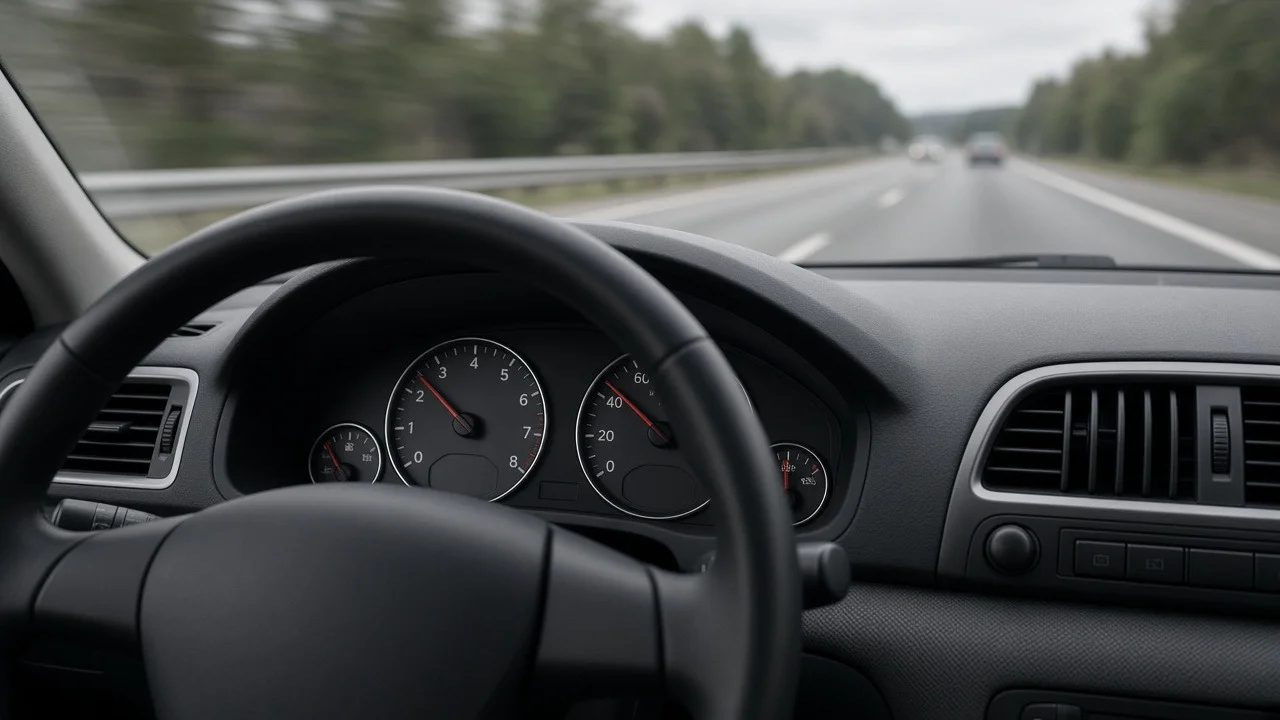
Many drivers have arrived at an exit with little memory of the previous miles, but they were not asleep. They were experiencing what is highway hypnosis in driving, a state of reduced conscious attention despite open eyes and steady hands. This phenomenon can make a familiar commute feel automatic, which hides a serious safety problem. The right of way at an intersection, a changing following distance, and sudden road conditions may all be missed when the brain stops actively processing the road. Understanding this condition is the first step toward preventing it and staying genuinely alert behind the wheel.
Essential answer
Highway hypnosis is a trance-like mental state that can occur during monotonous driving. The driver continues to steer, brake, and maintain lane position, but conscious awareness of the task fades. It is not sleep, because the eyes remain open and the body may still react to predictable events. However, the higher-level monitoring that checks speed, road markings, and visibility becomes reduced. This means a driver can miss an unexpected brake light or a changing speed limit sign even though they technically appear to be looking at the road ahead.
The condition is usually associated with long stretches of limited-access highway where turns are gentle and traffic is light. Repetitive scenery, steady engine noise, and few required decisions encourage the brain to shift into a lower-alertness mode. It is important to distinguish this from drowsy driving, which involves an actual physiological need for sleep. Highway hypnosis can occur even when the driver is not tired, simply because the environment provides too little stimulation to hold active driver attention.
How it works
The brain is designed to conserve energy by automating repetitive tasks. Once a driver becomes familiar with the feel of the steering and the rhythm of the road, parts of the brain involved in conscious supervision become less active. The driver can operate the vehicle using well-practiced procedural memory while the conscious mind drifts to other thoughts. This is similar to how a person can walk or ride a bicycle without narrating every movement. The practical effect is that response to unusual events slows because the executive part of the brain is not fully engaged.
Vision also changes during this state. A driver may stare at a fixed point far ahead, reducing the normal scanning pattern that checks mirrors and side windows. Peripheral awareness narrows, and the sense of speed can become unreliable. Because the road is not demanding, the driver does not notice this decline in performance. The risk is not that the car suddenly veers off the road, but that a child, a stalled vehicle, or a patch of ice appears and the driver does not process it in time to choose a safe action.
Strengths, limitations and suitability
The main strength of this automatic state is efficiency, but that is not a benefit on public roads. Highway driving without constant traffic decisions can feel relaxing, and some drivers believe they are saving mental energy for later. The limitation is that safety depends on recognizing rare and unpredictable events, which the automated brain is poor at doing. A driver in this state may maintain speed and position well for many miles while completely failing to notice a broken-down vehicle on the shoulder or an ambulance approaching from behind.
This condition suits no one as a driving technique. It is more likely to affect experienced drivers on familiar routes because their brains already have a stored plan for the trip. New drivers and those on unfamiliar roads tend to stay more alert because the environment demands more processing. Drivers who commute long distances before dawn or after a full workday are at higher risk. Recognizing this vulnerability is important because many people assume that only drowsy drivers are dangerous, but monotony alone can produce a similar inattentional state.
A driver who notices a sudden realization that several miles have passed without memory should treat it as a warning. The brain has dropped into automatic mode and is no longer actively evaluating road conditions. Continuing to drive in that state increases the chance of a late reaction to a hazard. Short-term correction, such as changing speed or using fresh airflow, may briefly restore attention, but the underlying monotony remains. The honest assessment is that no driver is immune, and the condition does not reflect driving skill.
Procedure
Prevention requires interrupting the conditions that allow the brain to automate the drive. Before a long trip, a driver should plan stops roughly every two hours or sooner if attention fades. During the drive, vary speed slightly within legal limits and change lane position when safe to create new visual input. Keep the eyes moving between the mirrors, the instrument cluster, and different points down the road rather than fixing on one spot. These small actions force the brain to stay in active monitoring mode instead of relying on stored routines.
In the moment, a driver who notices the warning signs should take immediate, non-distracting action. Sit up straighter, adjust ventilation to bring in cooler air, or briefly increase following distance to create more time to respond. Avoid turning up the radio alone, because familiar background sound may not break the trance. The most effective step is to leave the highway and stop in a safe area. A short walk and some water restore the physiological arousal that highway driving suppresses. Then resume the trip only when the driver feels actively engaged with the task.
Diagnosing a problem
Drivers sometimes confuse highway hypnosis with simple fatigue, but the causes are different. Fatigue produces heavy eyelids, yawning, and a clear desire to sleep. Highway hypnosis can appear without any of those signs, which makes it harder to identify. One observable check while driving is to ask whether the driver can recall the last few road signs or the color of the vehicle that passed a moment ago. If those details are missing, attention has dropped even if the driver feels awake. Another sign is a sudden surprise at a curve or exit that should have been anticipated.
If the condition occurs repeatedly on the same route, the route itself may be part of the problem. Long straight sections with little traffic and few intersections require almost no decisions. Changing the route to include a few surface streets with stop signs or different scenery can restore the need for active planning. A driver should also check whether poor sleep the night before is making the monotony worse. While highway hypnosis is not the same as falling asleep, the two problems can overlap, and a driver who cannot stay focused should stop driving until normal attention returns.