Harley Twin Cam Primary Oil Capacity: What to Put In and Why It Matters
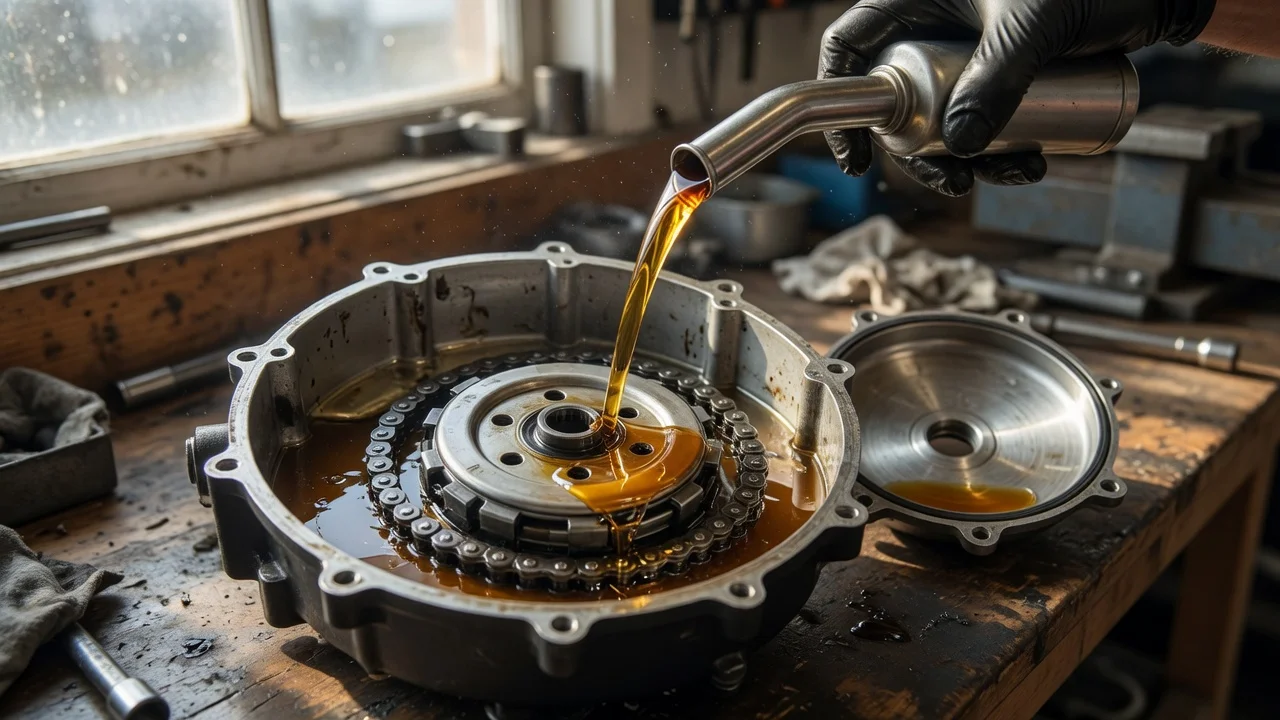
Direct answer and scope
For most Harley-Davidson Twin Cam models, the primary chaincase takes about 1 quart, or roughly 32 fluid ounces, when the primary cover has been removed and the case is completely dry. During a routine fluid change where some residual oil remains on components, the typical fill is approximately 26 to 28 fluid ounces, checked through the derby cover or inspection opening rather than by volume alone. The primary on a Twin Cam is a separate cavity from the engine crankcase and the transmission. It lubricates the primary chain, the clutch, and the compensator sprocket. The exact amount can vary slightly by model year and primary cover design, but the one-quart reference is the standard service baseline for the Twin Cam family used from 1999 through 2016 in Big Twin models, excluding V-Rod and some later Milwaukee-Eight applications.
Why the primary is a separate fluid system
On a Twin Cam engine, three separate fluids perform different jobs. Engine oil handles crankcase and top-end lubrication, transmission lubricant protects the gearset, and primary fluid serves the chain, clutch pack, and compensating sprocket. Keeping the primary separate prevents clutch debris from contaminating the engine oil and allows a fluid that is compatible with wet clutch friction material. If a rider or technician treats the primary as a shared sump, overfilling and cross-contamination can result.
Wet fill versus dry fill capacity
The dry fill capacity is the amount required after a full primary disassembly, cleaning, or new component installation. For most Twin Cam primaries this is about 32 fluid ounces. The wet fill amount, used during a normal service, is lower because oil remains coating the chain, clutch plates, and inner primary surfaces. In practice, many riders start with 26 to 28 ounces of primary fluid, then add small amounts until the level reaches the correct point on the clutch diaphragm spring or the bottom of the derby cover opening, depending on the inspection method used for that model year.
Checking the level correctly
Harley-Davidson specifies checking the primary fluid with the motorcycle vertical and level, not on the side stand. On many Twin Cam models, the inspection point is the bottom edge of the clutch diaphragm spring visible through the derby cover opening. The fluid should just touch the bottom of the diaphragm spring when the bike is upright. Other models use a fill plug on the primary cover and specify filling until the fluid reaches the threads. Overfilling can cause clutch drag, hard neutral finding, fluid leakage from the vent, and increased pressure inside the primary.
Fluid selection for the Twin Cam primary
The primary requires a lubricant that is compatible with the wet clutch. Heavy gear oils, engine oils with high levels of friction modifiers, or automotive fluids with aggressive additive packages can cause clutch slip or grabbing. Harley-Davidson’s own primary chaincase lubricant is a common service fill, but many owners also use a dedicated primary fluid or a motorcycle-specific lubricant labelled for wet-clutch primaries. Do not assume that transmission gear oil is correct for the primary. Some products work in both applications, but the label must state wet-clutch compatibility.
Service interval and signs of trouble
Harley-Davidson service schedules commonly call for primary fluid replacement at the same interval as the transmission, often every 5,000 miles on older Twin Cam models and up to 10,000 miles on later models under specific service plans. Signs that the primary fluid level or condition is wrong include clutch slippage under acceleration, difficulty finding neutral with the engine running, a noisy start-up chain rattle, or fluid weeping from the primary gasket. If the primary has been overfilled, removing the excess through the inspection opening usually resolves clutch drag and hard shifting.
Qualification by model year and generation
The one-quart primary capacity is not universal across every Harley-Davidson wearing a Twin Cam badge. Softail, Touring, and Dyna models share the same basic primary architecture, but aftermarket primary covers, compensator changes, and high-capacity clutch baskets can alter actual fill volume. Always use the dipstick, inspection point, or fill plug specified for the specific model year and primary cover installed. The stated capacities are service references for stock components, not a replacement for checking the level visually after a fill.