Grote 7-pin trailer connector wiring diagram
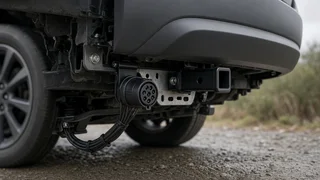
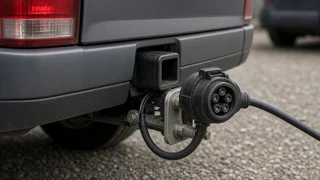
A Grote 7-pin trailer connector wiring diagram maps the blade-style terminals and color-coded conductors linking a tow vehicle to a trailer's lighting and auxiliary circuits. These diagrams help owners trace turn signals, brake lamps, tail lamps, ground, and trailer battery charging paths through the connector. The standard arrangement supports reliable trailer operation, but wiring mistakes can cause blown fuses, dim lamps, or a trailer battery that never charges. Understanding the diagram also matters when diagnosing parasitic draw, checking system voltage, or correcting voltage drop across the harness.
Essential answer
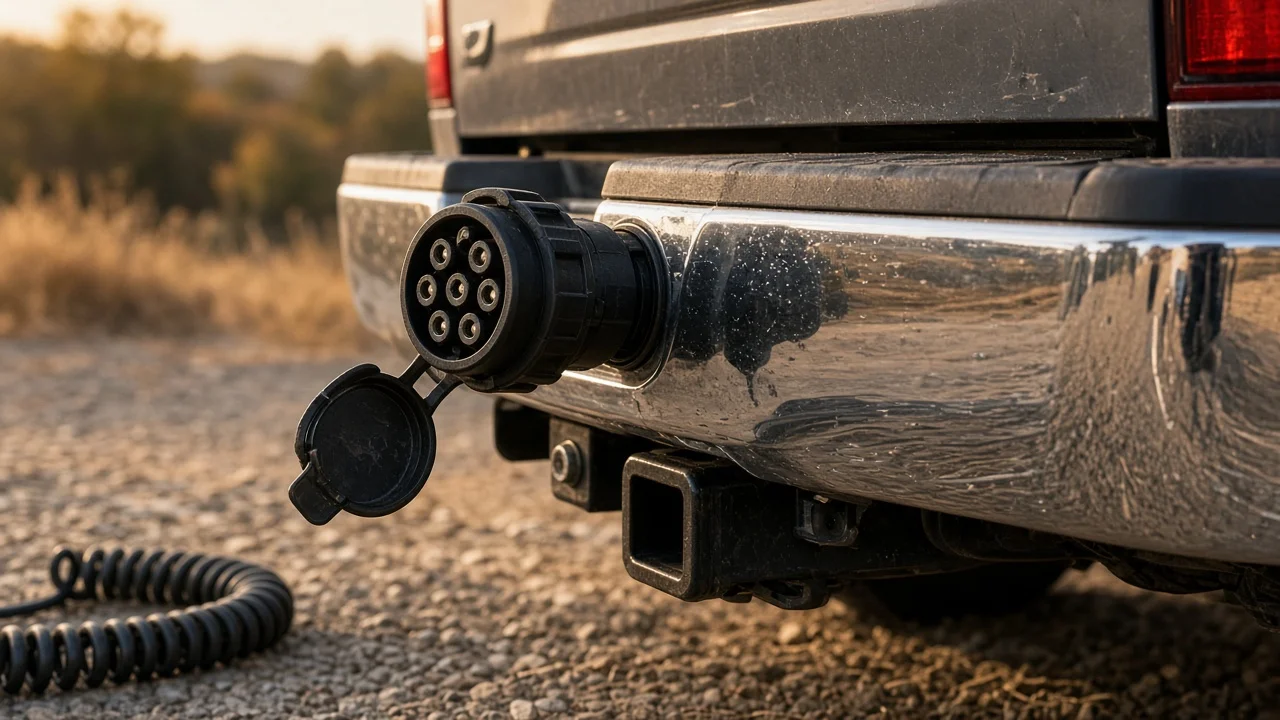
The essential answer is that a Grote 7-pin trailer connector wiring diagram identifies each terminal position and its assigned circuit so you can install, inspect, or troubleshoot the plug and socket. The seven positions typically cover left turn and brake, right turn and brake, tail lamps, ground, reverse lamps, electric trailer brakes, and a 12-volt auxiliary feed for trailer battery charging. A wiring diagram groups these by blade location around the round connector body, usually in a clockwise sequence when viewed from the front of the receptacle. Knowing where the ground pin sits is especially useful because a missing or corroded ground connection can cause several trailer lamps to behave oddly at once.
Because different trailer types and vehicle manufacturers may use slightly different auxiliary or reverse circuit assignments, the diagram should be treated as the baseline reference rather than a universal legal specification. Manufacturer-dependent codes and connector layouts require vehicle-specific confirmation, and a diagram alone does not prove a fault or guarantee a compatible harness. Still, using it to follow circuit colors and terminal positions narrows the job to the correct blades and wires. That helps an owner avoid swapping the trailer battery charging circuit with the brake lamp circuit, a mistake that can blow a fuse or feed power through the wrong load.