9-Pin Trailer Connector Wiring Diagram

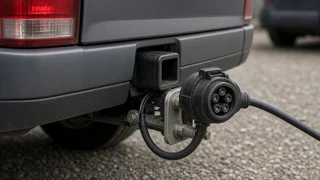
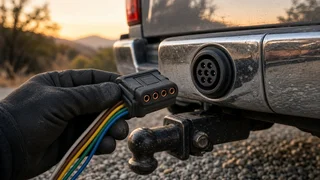
A 9-pin trailer connector wiring diagram maps the conductors linking a tow vehicle to a trailer when more circuits are needed than a basic four-way flat or six-way round plug provides. The additional positions commonly support electric trailer brakes, a 12-volt auxiliary feed, reverse lamps, and separated ground returns. Because pin assignments vary among manufacturers, the diagram is best used as a circuit-tracing guide rather than a universal color code. Checking system voltage, ground paths, fuse rating, and trailer-side wiring before splicing helps prevent a miswired lamp, weak brake signal, or battery terminals draining through an always-hot auxiliary feed.
Essential answer
The essential answer is that a 9-pin trailer connector wiring diagram illustrates how a round or rectangular plug distributes more electrical functions than a conventional flat four-way or smaller round connector can handle. Where a four-way carries tail lamps, left and right turn signals, and ground, a nine-position layout often adds electric brake output, a battery charging circuit, reverse lamps, and a separate ground for high-current devices. Because no single industry standard controls every pin location on all tow vehicles and trailers, the diagram identifies which terminal does what on a particular harness rather than proving a universal arrangement.
Reading such a diagram correctly means treating each pin as part of a complete circuit that begins at the tow vehicle battery or converter, passes through a fuse, reaches the connector, and returns through a ground path. A wire labeled for auxiliary power may be energized only with the ignition on, while a brake output often varies according to controller command. Voltage drop becomes important on long trailer runs, especially for brakes and charging output. Therefore, the diagram should be compared with the trailer side and confirmed with a test light or meter before any permanent connection is made.