Gray oil in the engine
The short answer
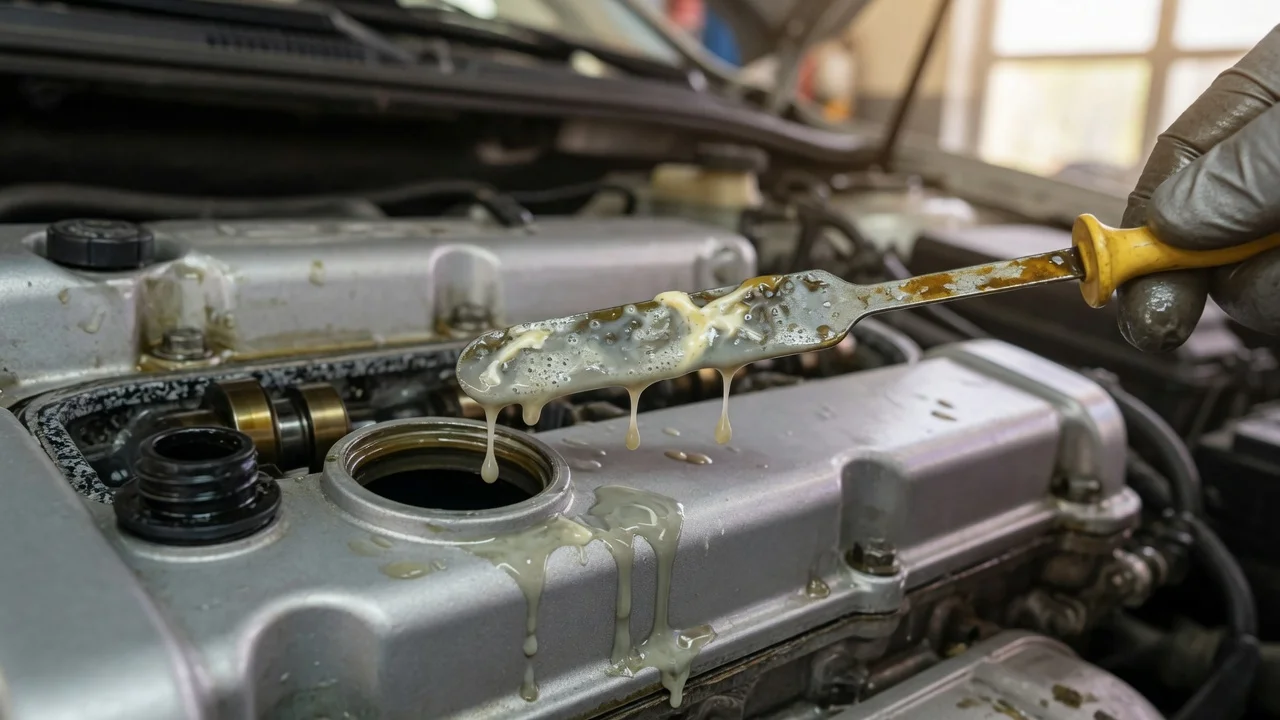
Healthy engine oil is normally amber when fresh and darkens to brown or black as it ages. Oil that looks gray, milky or muddy is usually contaminated with something that should not be there. The most common causes are coolant leaking into the oil, moisture from condensation, and, less often, fine metal particles from internal wear. Some of these causes are minor. Others, especially coolant contamination, can lead to serious engine damage if the car keeps being driven.
Where the gray appears matters. A small amount of light, foamy residue under the oil filler cap is a different situation from gray or milky oil on the dipstick or in the drained oil. No vehicle-specific data was provided for this guide, so the causes below are general. How likely each one is, and how it is fixed, depends on the engine design, model year and powertrain.
What gray oil can indicate
Appearance | Likely cause | Seriousness; Milky, light gray or tan, like a milkshake, on the dipstick or throughout the oil | Coolant mixing with oil, often from a failed head gasket, a cracked cylinder head or block, or a failed oil cooler on engines that have one | High. Stop driving and have the engine diagnosed. Light, creamy residue only under the filler cap or on the cap's underside, with oil on the dipstick looking normal | Condensation, common with frequent short trips in cold or damp weather where the engine never fully warms up | Usually low, but worth confirming that coolant isn't involved; Gray or silvery tint with a metallic sheen or visible glitter | Fine metal particles from wear of bearings or other internal parts | Potentially high. Needs inspection. Dull gray and thinner than usual, possibly smelling of fuel | Possible fuel dilution combined with other contamination | Moderate to high, depending on the cause
Signs that point to coolant contamination
Coolant contamination is the cause most worth ruling out, because coolant breaks down the oil's ability to lubricate. Gray oil is more likely to involve coolant if it appears together with any of the following:
The coolant level drops with no visible external leak; White exhaust smoke that persists after warm-up, sometimes with a sweet smell; The engine overheats or the temperature gauge behaves erratically; The engine misfires or runs roughly, especially on a cold start; The oil level on the dipstick rises instead of staying steady or falling
What to do next
Check where the discoloration is. Compare the dipstick oil with any residue under the filler cap. Check the coolant level with the engine cold. Never open a hot cooling system. If the dipstick oil is milky or gray and coolant is going missing, avoid driving the car and have it inspected or towed. If only the filler cap shows residue and the car is used mostly for short trips, a longer drive at full operating temperature may clear it. If the residue keeps coming back, have it checked. Ask a technician about a cooling system pressure test and a combustion leak (block) test. Both are standard ways to confirm a head gasket or cracked-component fault. Consider sending an oil sample to a laboratory for analysis. It can detect coolant, fuel and wear metals that you can't judge by eye. If metal particles are suspected, don't just change the oil and carry on. Wear debris points to a mechanical problem that a fresh fill won't fix.
Limits of a visual check
Oil color alone can't confirm a diagnosis. Lighting, oil type and the age of the oil all affect how it looks, and some contamination is invisible until it is advanced. A visual check is useful for deciding whether to keep driving or stop, but the actual cause should be confirmed with testing. This guide doesn't cover repair costs, failure rates for particular engines or model-specific service bulletins, because no such data was supplied. Check the vehicle's service information or ask a qualified technician for those details.