Look Up GM Vehicle Specifications by VIN
The Short Answer
A General Motors VIN can tell you a lot about a vehicle: who built it, where, which model year it is, its basic body and model line, and, on most GM vehicles, which engine it was built with. It usually cannot tell you everything. Transmission type, axle ratio, and many option details are generally not encoded in the VIN itself. For those, you need GM's Regular Production Option (RPO) codes, which come from the vehicle's build record or its Service Parts Identification label.
So the practical answer is a two-step approach. Decode the VIN for identity and engine. Then check the RPO codes for transmission and equipment. This applies to GM brands sold in the US, such as Chevrolet, GMC, Buick and Cadillac, for vehicles built under the standardized 17-character VIN system.
What the 17 VIN Characters Mean
Since the 1981 model year, US-market vehicles have used a standardized 17-character VIN. The general layout is set by federal rules. Each manufacturer decides what most positions mean within that framework, so exact interpretations vary by GM model year and vehicle line.
Position(s) | General meaning | Notes for GM vehicles; 1 | Country of manufacture | Indicates where final assembly took place; 2–3 | Manufacturer and division or vehicle type | Together with position 1, forms the World Manufacturer Identifier; 4–7 | Vehicle attributes | GM uses these for details such as model line, body style, or restraint system; the meaning varies by year and model; 8 | Vehicle attribute | On most GM vehicles, this is the engine code; 9 | Check digit | Calculated from the other characters to detect transcription errors; 10 | Model year | Letters and digits cycle; I, O, Q, U, Z and 0 are not used; 11 | Assembly plant | Identifies the specific GM factory; 12–17 | Production sequence number | Unique serial for the individual vehicle
Engine Codes: Usually in the VIN
On most GM vehicles, the eighth character is the engine code. That single character points to a specific engine, but the same letter or digit can mean different engines in different model years or on different vehicle lines. You must read it together with the model year (position 10) and the vehicle line. A decoder that accounts for both is more reliable than a generic chart.
The VIN engine character also maps to GM's three-character engine RPO code. You will often see that code in parts catalogs and service information. If you are ordering engine parts, confirm the RPO code as well as the VIN character.
Transmission Codes: Usually Not in the VIN
GM generally does not encode the transmission in the VIN. The most dependable way to identify it from paperwork is through RPO codes. These codes appear in three places:
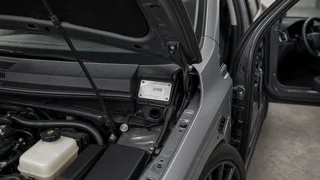
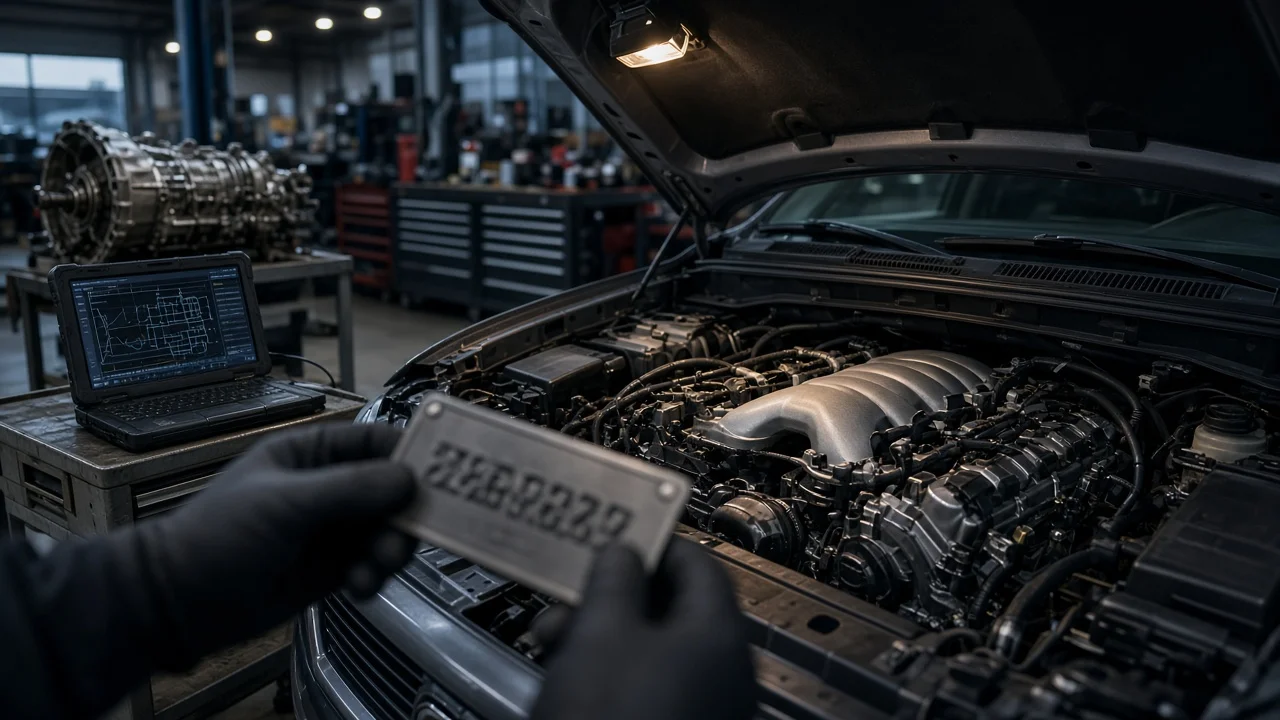
The Service Parts Identification label, often called the SPID label, which lists the vehicle's RPO codes. It is commonly found inside the glove box, on the inside of a door or trunk lid, or near the spare tire. The location varies by model and year. A build sheet or vehicle build record, which a GM dealer can usually retrieve by VIN. An identification tag or stamping on the transmission itself, which a technician can read if the label is missing or the transmission may have been replaced.
Not every printed label decodes the RPO codes into plain descriptions. You may need a reference list or a dealer's help to translate a code into a specific transmission model. Also, a vehicle that has had its engine or transmission replaced may no longer match its original build record. On used vehicles, physical inspection is the only way to confirm what is actually installed.
Where to Run a GM VIN Lookup
NHTSA's free VIN decoder: a federal government tool that returns manufacturer-reported data such as make, model, model year, plant, body class, and often engine details. It does not typically return full RPO option lists. A GM dealer service or parts department: can usually pull the factory build information by VIN, including RPO codes. Policies on providing printouts vary by dealer. The vehicle's own SPID label: the most direct source of RPO codes for the vehicle in front of you, if it is still present and legible. GM's owner account tools: may display vehicle details for a registered owner. The depth of specification data shown can vary. Third-party VIN decoders: can be convenient, but accuracy and completeness vary. Treat their transmission and option details as unconfirmed unless they match the RPO codes.
How the Sources Differ
A basic VIN decode answers "what is this vehicle?" It covers model, year, plant, body, and usually engine. An RPO lookup answers "how was this specific vehicle built?" It covers transmission, axle ratio, trim packages, and individual options. If you only need to confirm a model year or engine for general research, a free decoder is usually enough. If you are buying parts, checking towing equipment, or verifying a used vehicle's description, use the RPO codes as well.
Limits of This Guide
This guide does not list specific GM engine or transmission codes. No verified code tables for particular models and years were available. Character meanings in positions 4 through 8 change across GM vehicle lines and model years. Confirm any specific decode against GM service information, a dealer, or the vehicle's own labels. Vehicles built for markets outside the US may follow different conventions.
Next Step
Read the 17-character VIN from the lower windshield or the driver's door jamb and run it through a decoder to confirm the model year and engine. Then find the SPID label or ask a GM dealer for the build record to get the RPO codes for the transmission and options. On a used vehicle where the original powertrain may have been swapped, have the engine and transmission physically checked.