GEICO Assistance for a Car Lockout: What It Covers and How to Use It
If you are locked out of your car and insured with GEICO, lockout help generally comes through GEICO's Emergency Road Service. This is an optional roadside assistance add-on to an auto policy, not part of every policy by default. If your policy includes it, you can request a service provider to come to your vehicle and try to open it. If your policy does not include it, the lockout is not handled as an ordinary insurance claim. In that case you would usually arrange and pay for a locksmith or another roadside service yourself. The most important qualification is the difference between getting into the car and replacing or reprogramming a key. Roadside lockout service is built around the first. Lost, broken or electronically locked-out keys often need separate work that roadside coverage may not pay for.
Check Whether Your Policy Includes Roadside Assistance
Before you call anyone, confirm that Emergency Road Service is listed on your policy. You can usually check your policy declarations, your digital ID card, the GEICO mobile app or your online account. Coverage is attached to specific vehicles on a policy. If you have several cars, check that the locked vehicle is one of the covered ones.
Terms, service limits and availability can vary by state, policy and the date the coverage was added. Treat your own policy documents as the authority on what is included, rather than general descriptions.
What Lockout Service Typically Handles
Keys locked inside the vehicle, including in the cabin or trunk where the provider can safely reach them. A vehicle that locked itself with the key or remote transmitter inside, which can happen with some automatic locking features. Dispatch of a third-party service provider to your location, rather than a GEICO employee. Non-destructive entry methods meant to avoid damaging the door, glass or weatherstripping.
What It Often Does Not Cover
Roadside lockout service usually stops at opening the vehicle. The following situations often fall outside it or cost extra. Confirm with GEICO or your policy wording before assuming they are included:
Cutting a new mechanical key when the original is lost. Replacing a remote transmitter or smart key fob. Key programming, the process of pairing a new key or fob with the car's computer. Diagnosing immobilizer faults, where the car unlocks but will not start because it does not recognize the key. Repairing broken locks, ignition cylinders or damaged door hardware.
Why Modern Keys Change the Picture
On many recent vehicles, the key is more than a piece of cut metal. An immobilizer is an anti-theft system that lets the engine start only when it detects a transponder chip or smart key it recognizes. That means even after someone unlocks the door, a replacement key may not start the car until it has been programmed to that specific vehicle.
Key programming may require dealer equipment or an automotive locksmith with the right tools for your make, model and model year. Some vehicles allow simpler procedures and others do not. Requirements depend heavily on the manufacturer and generation. If your key is lost rather than locked inside, expect a two-step situation: entry first, then key replacement through a dealer or qualified locksmith.
Situation | Likely handled by roadside lockout service | Likely needs separate service; Keys visible inside a locked car | Yes, entry to the vehicle | No; Keys locked in the trunk | Often, depending on vehicle design and access | Sometimes, if the trunk cannot be reached from the cabin; Key lost entirely | Entry may be possible | Yes, a new key and possibly programming; Key fob battery dead | Entry may be possible | Sometimes only a fob battery replacement; Car unlocks but will not start | Usually not | Yes, immobilizer or key diagnosis
How to Request Help
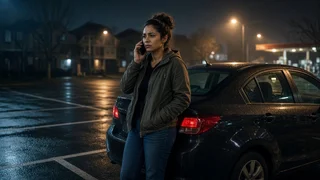
Make sure you are in a safe place, especially if you are on a roadside or in a poorly lit area. Open the GEICO mobile app or use the roadside assistance contact listed on your ID card or policy documents. Give your exact location, the vehicle's year, make, model and color, and where the keys are if you know. Mention if a child or pet is inside the vehicle, and contact emergency services immediately in that case rather than waiting for roadside help. Keep your phone charged and available so the provider can reach you.
Have Proof of Ownership Ready
Service providers commonly ask for proof of ownership or authorization before opening a vehicle. This step protects owners against theft. Carry a driver's license and be ready to show registration or insurance documents once the car is open. If those documents are locked inside, tell the provider so they can verify them after entry. If you are driving someone else's car, the provider may need to confirm you are authorized to use it.
If You Don't Have GEICO Roadside Coverage
Without Emergency Road Service on your policy, you still have other options:
Call a local locksmith directly. Ask in advance about price and whether they can handle your type of key. Use a separate roadside membership if you have one. Check whether a credit card benefit includes roadside help. Check whether a manufacturer's roadside program still applies to your vehicle under warranty. Use a connected-car service from the automaker, if your vehicle supports remote unlocking and the subscription is active.
After the immediate problem is solved, consider whether adding roadside assistance to your policy makes sense for you. It tends to be most useful for drivers who travel often, drive older vehicles or do not already have roadside coverage from another source.
Preventing the Next Lockout
Keep a spare mechanical key or fob somewhere secure that you can reach. Do not leave it hidden on the vehicle. Replace key fob batteries when the range starts to drop. Learn whether your car auto-locks and how to adjust that setting. Set up your automaker's app if your vehicle supports remote unlocking. Keep a photo of your registration and insurance details on your phone so you can verify ownership.
The Bottom Line
GEICO can help with a car lockout if your policy includes Emergency Road Service. A provider can be sent to unlock the vehicle, typically arranged through the app or the roadside contact on your policy materials. Coverage centers on regaining access, not on replacing keys, programming fobs or fixing immobilizer problems. Confirm your coverage, have proof of ownership ready, and plan for separate key service if the key itself is lost or damaged.