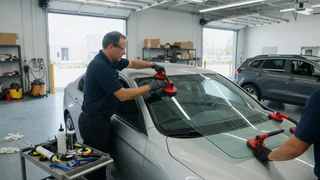
GEICO OEM Auto Glass Replacement: What to Know Before You File
If you have a cracked windshield or broken window and carry a GEICO auto policy, you may be wondering whether the replacement will use OEM glass or a non-original alternative. The short answer is that it depends on your policy wording, your state, your vehicle and how you handle the claim. This guide explains what OEM glass is, how it differs from other replacement glass, and the practical steps for requesting it.
The Direct Answer
GEICO glass claims are typically handled under comprehensive coverage, sometimes with a separate glass coverage option depending on the state. Like most insurers, GEICO policies generally promise a repair or replacement of like kind and quality rather than guaranteeing original equipment manufacturer (OEM) glass in every case. That means a GEICO OEM glass replacement is possible, but it is not automatic. Whether OEM glass is approved can depend on the exact terms of your policy, state rules on replacement parts, the age and equipment of your vehicle, and whether a non-OEM part of comparable quality is available.
Because policy language and state regulations vary, the most reliable answer for your specific situation comes from your own policy documents and the claims representative handling your file. Treat any general statement, including this one, as a starting point rather than a coverage decision.
What OEM Glass Means
OEM glass is produced by or for the vehicle manufacturer and typically carries the automaker's branding in the printed corner marking, often called the bug or monogram. It is intended to match the glass originally installed at the factory in shape, thickness, tint, coatings and any embedded features.
Replacement glass usually falls into one of three categories:
Type | What it is | Typical consideration; OEM | Made to the automaker's specification and carries the automaker's logo | Closest match to the original; usually the most expensive option; OEE (original equipment equivalent) | Made to similar specifications, sometimes by the same glass supplier, without the automaker's logo | Often comparable in quality; fit and optical features can vary by vehicle; Aftermarket | Made by an independent manufacturer to fit the vehicle | Must meet federal safety standards, but fitment, clarity and feature compatibility can differ
All windshields and side glass sold for road use in the US must meet federal safety standards, so non-OEM glass is not inherently unsafe. The differences, when they appear, tend to show up in fitment precision, optical quality, and compatibility with sensors and coatings.
How a GEICO Glass Claim Typically Works
Glass claims at many large insurers, including GEICO, are often routed through a glass claims administrator or a network of partner shops that can schedule mobile or in-shop service. The general flow looks like this:
Report the damage online, through the app or by phone. Confirm whether the damage can be repaired (small chips) or requires replacement (larger cracks, damage in the driver's line of sight, or broken side and rear glass). Review your deductible; in some states, glass replacement may be covered with a reduced or zero deductible depending on the coverage you selected. Schedule the work with a network shop or, where your state allows, a shop of your choice. Confirm what type of glass will be installed before the appointment.
Many states give policyholders the right to choose their own repair facility. If you use an out-of-network shop, ask in advance how payment will be handled and whether you could be responsible for any difference between the shop's price and what the insurer approves.
When OEM Glass Matters Most
For an older vehicle with a plain windshield, a quality OEE or aftermarket part is often a reasonable outcome. OEM glass becomes more important as the glass takes on more functions. Situations where it is worth pushing for OEM include:
Advanced driver assistance systems (ADAS): forward-facing cameras for lane keeping, automatic emergency braking or adaptive cruise rely on clear, distortion-free glass in the camera area. Small differences in glass specification or bracket placement can complicate calibration. Head-up displays: these project onto the windshield and may require a specific interlayer to avoid double images. Rain and light sensors, heated wiper areas, acoustic interlayers, solar-control coatings or antenna elements embedded in the glass. Newer or leased vehicles, where matching factory equipment may matter for resale or lease return. Vehicles where non-OEM options have known fitment issues, such as wind noise, water leaks or trim that does not seat properly.
Whatever glass is used, a windshield replacement on an ADAS-equipped vehicle generally calls for camera calibration afterward. Ask whether calibration is included in the claim and who will perform it.
How to Request OEM Glass on a GEICO Claim
Read your policy: look for language about OEM, like kind and quality, or replacement parts in the comprehensive or glass coverage section. Ask directly when you file: state that you are requesting OEM glass and explain why, for example ADAS cameras, a head-up display or sensor features. Provide your VIN so the correct part, including all options, can be identified. Ask for the decision in writing if OEM is declined, and ask what part will be installed instead. Confirm with the shop which glass they ordered before work begins. If OEM is not approved, ask whether you can pay the price difference to upgrade.
What to Check After Installation
Quality of installation matters as much as the glass itself. A few checks help catch problems early:
Markings: the corner stamp should show the brand you were promised, along with the required safety markings. Fitment: the glass should sit evenly, with consistent gaps and moldings seated flush against the body. Sealing surface: there should be no visible gaps in the urethane bead and no signs of rust or damaged paint along the pinch weld, which is the metal flange the glass bonds to. Adhesive compatibility and cure time: ask how long to wait before driving; the urethane adhesive needs time to reach structural strength, and the windshield contributes to roof support and airbag performance in many vehicles. Mounting points: mirror, camera and sensor brackets should be secure and correctly positioned. Visibility: look for distortion, waviness or haze, especially in the driver's sight line and camera area. Leaks and noise: watch for water intrusion after rain or a car wash and listen for new wind noise at highway speed. ADAS function: confirm calibration was completed and that no warning lights appear.
If you notice an issue, contact the installer first; most shops offer a workmanship warranty. Keep your claim number and invoice handy in case the insurer needs to be involved.
Bottom Line
GEICO can cover OEM auto glass replacement, but approval is not guaranteed and usually hinges on policy terms, state rules and your vehicle's features. If your car has ADAS cameras, a head-up display or integrated sensors, make a clear, specific request for OEM glass when you file, confirm the part before installation, and verify the result afterward. For simpler vehicles, a properly installed OEE or aftermarket windshield may serve you well.