Galloper Turbo Intercooler
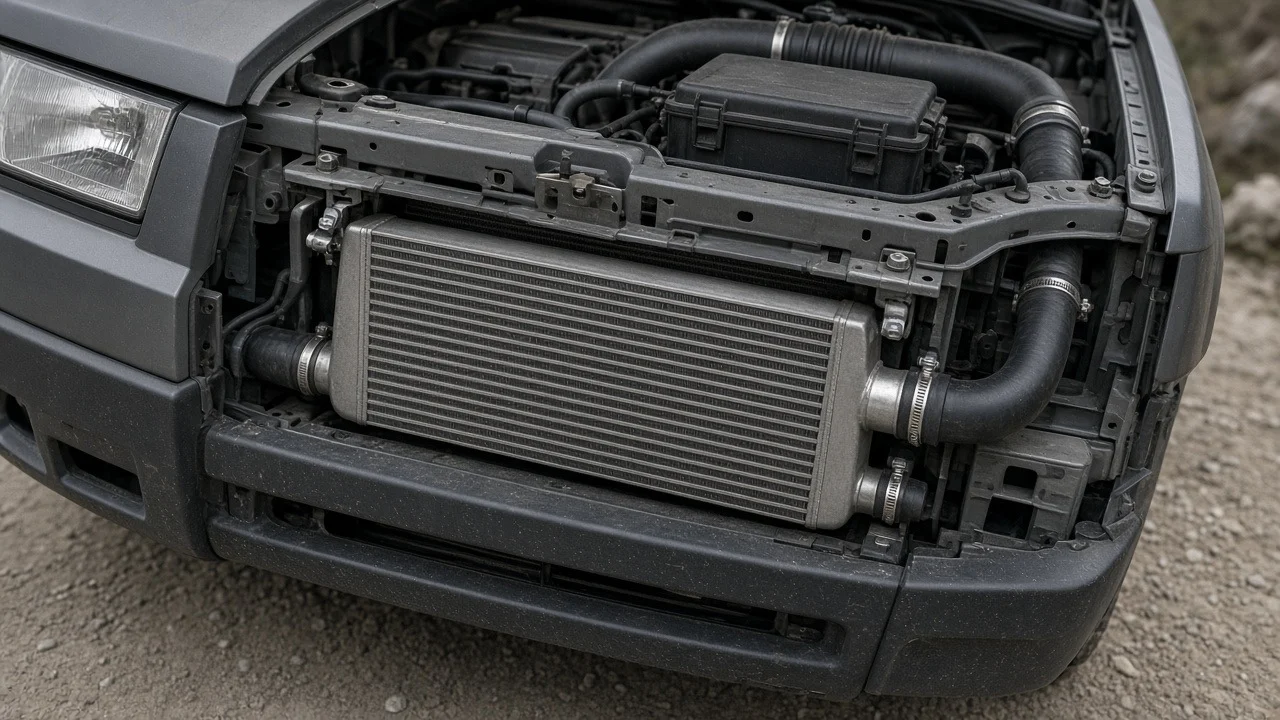
Choosing a Galloper intercooler turbo setup starts with one practical question: where is the charge air losing temperature or pressure before it reaches the engine? A turbocharged diesel depends on a dense, cool intake charge, and the intercooler is the component that makes that possible after the compressor outlet heats the air under boost. When you are researching a replacement or upgrade, the useful first step is to inspect the complete path from the turbocharger to the intake manifold, including hose connections and mounting points. That inspection, rather than a catalog guess, tells you whether the intercooler itself is the weak link or whether a supporting part is creating the symptom.
The direct answer
The direct answer is that a Galloper turbo intercooler must be evaluated as part of the whole charge-air system, not as an isolated bolt-on part. A replacement makes sense when the core is physically damaged, leaking at a seam, or so restricted that boost pressure cannot hold under load. If the core is intact but charge-air temperature stays high, the problem may instead be poor airflow across the intercooler, a failed duct, or a loose hose connection that is bleeding pressure before the intake.
A worn or leaking intercooler often shows up as reduced response, lower sustained boost pressure, or visible oil mist around the end tanks. That oil can come from normal turbocharger breather accumulation, so oil contamination alone does not prove the intercooler has failed. The condition that changes the answer is whether the pressure loss is inside the core or at a connection. Confirming the leak location first helps you avoid replacing a sound intercooler when a clamp or silicone coupler is the actual fault.













