Front and rear differential explained
A differential is the gear assembly that lets driven wheels rotate at different speeds while still receiving engine torque. In front-engine rear-wheel-drive vehicles, this unit sits between the rear axles, while front-wheel-drive cars often package it inside the transaxle. Drivers researching a rear differential on a car usually want to understand why it matters for cornering, traction and tire wear. The same principle applies to a front differential, and 4x4 systems can use both along with a transfer case. Knowing each location helps explain common sounds, handling behavior and service needs.
Essential answer
In simple terms, the rear differential in a car is a geared mechanism housed in the axle center that splits driveshaft rotation to the two rear wheels. It solves a basic cornering problem: the outside wheel travels a longer arc than the inside wheel, so both cannot spin at the same speed without scrubbing a tire. A car front differential performs that job for the front axle, though in many front-drive vehicles it is integrated into the transmission housing rather than a separate rear axle unit. On a 4x4, differentials are present on both axles so engine power reaches all four wheels.
The essential answer changes slightly by drive layout. A rear differential on a car with rear-wheel drive is the primary final-drive unit. In an all-wheel-drive or 4x4 vehicle, the front differential directs torque to the front wheels while the rear differential handles the rear axle. Treating the units as automatic speed balancers is accurate for open differentials, but limited-slip and locking designs add traction behavior. The scope therefore includes where the component lives, what it does during turns and low-traction conditions, and how that influences everyday driving.
How it works
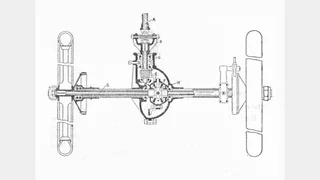
Inside an open differential, a ring gear receives input from the driveshaft and turns a carrier holding smaller pinion gears. The pinions mesh with side gears connected to each axle shaft. When the car drives straight, the assembly rotates mostly as one unit. During a turn, the pinions begin to rotate on their own shafts, allowing the outside axle to speed up while the inside axle slows down. This lets the car corner smoothly without forcing one tire to break traction.
The practical effect is most noticeable at low speed and on varied surfaces. The rear differential in a car reduces driveline binding during tight parking maneuvers and long highway curves. In a front differential car, the same action must work while the front wheels also steer, which makes the packaging more compact and the axle shafts more complex. In 4x4 or all-wheel-drive use, a differential in car 4x4 can be augmented with a locking feature. That restriction helps maintain forward motion when one wheel loses grip, but it can make sharp turns feel stiff.
Strengths, limitations and suitability
An open differential suits most paved-road driving because it prioritizes smooth steering and predictable tire wear. Its main limitation appears on slippery terrain, where the open design can send most torque to the wheel with less resistance. That can leave a vehicle stationary with one tire spinning on ice while the other has traction. Limited-slip, electronic, or locking differentials address this by transferring torque more effectively, though they can add cost, weight, and occasional clunking or binding feel.
For readers comparing front and rear units, the suitability judgment depends on drive configuration and intended terrain. A rear differential car enjoys balanced weight transfer during acceleration and generally simpler front packaging. Front-drive cars with a transaxle differential often provide better traction in snow because engine weight sits over the driven wheels. A 4x4 with both front and rear differentials offers the broadest capability, but it adds drivetrain components and service points. The best choice follows how often low-traction conditions and off-road terrain are actually encountered.
Procedure
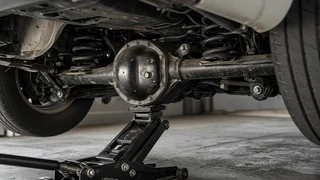
Regular inspection begins with identifying the differential housing and checking for wetness around the cover, pinion seal, or axle seals. Fluid level checks and changes are the most common owner-adjacent tasks, but exact intervals and lubricant specifications vary by manufacturer and differential type. A rear differential on a car may have a fill plug that is removed to confirm the lubricant reaches the opening. Any inspection that requires lifting the vehicle should follow safe support practices and manufacturer guidance.
Service work such as seal replacement, ring and pinion adjustment, or bearing installation requires precise measurement and specialized tools. Incorrect gear contact can produce noise and accelerated wear. For that reason, most owners limit themselves to external checks and rely on a qualified shop for internal repairs. A front differential on a car can be harder to reach because it may share oil with the transmission or sit between steering components. Confirm the specific drain, fill, and inspection points before beginning any work.
Diagnosing a problem
A rhythmic whine or howl that changes with road speed often points to gear or bearing wear in the differential, but it can also come from wheel bearings or tires. The first step is to note when the noise appears: during acceleration, coasting, or steady cruise. A rumble that changes during left and right turns can help separate a wheel bearing issue from an internal differential concern. Fluid that is low, contaminated, or has a burnt smell supports the need for a closer inspection without proving an internal part has failed.
Clunking when shifting into drive or reverse may be normal driveline lash, but a sharp metallic knock during throttle transitions can indicate worn gears, universal joints, or mounts. For a front differential car, clicking that varies with steering angle and power application may also involve a CV axle. A 4x4 differential in car 4x4 systems should be checked for proper mode engagement before condemning the unit. When a symptom is severe, accompanied by vibration, or the fluid shows metal flakes, stop driving and have the vehicle professionally diagnosed.