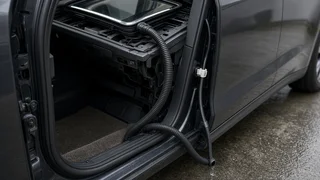
Ford sunroof drain tubes (F-150, Explorer, Expedition, Focus)
A sunroof drain tube problem on a Ford often shows up first as a wet headliner, damp carpet, or water staining near the windshield pillars and door openings. The concern applies differently across body styles: an Explorer and Expedition carry long roof lines and rear cargo areas, while an F-150 cab and a Focus sedan or hatch route moisture through different trim and floor shapes. The tubes are part of a passive drainage system designed around the sunroof cassette. Understanding how model generation, cab configuration, and trim level change the path helps you judge where water may collect before a clog becomes obvious.
Essential answer
Ford sunroof drain tubes are flexible or rigid channels that carry water from the sunroof tray down through the body pillars and release it near the lower rockers or wheelwell areas. Their job is not to seal the glass completely; some water is expected to pass the glass seal, collect in the tray, and leave through the drains. When a tube becomes blocked, kinked, or disconnected, the water backs up and follows the path of least resistance, which may mean the headliner, floor, or electrical connectors near the sill.
The routing and number of drains vary with the vehicle. An F-150 SuperCrew cab, an Explorer SUV, an Expedition body style, and a Focus platform place the sunroof cassette in different positions, so the tubes also differ in length and accessible endpoints. Some systems drain behind the front wheel area and others near the rear body mount or lower quarter. A leak in one corner usually points to a problem on that side, but water can migrate along trim and appear far from the actual blockage.