Ford Figo Inner CV Joint
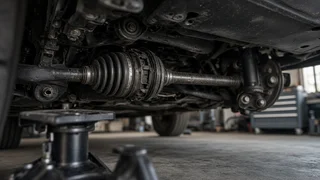
A worn Ford Figo inner CV joint usually announces itself as a clicking or clunking sound during acceleration, deceleration, or tight turns, but the symptom can also point to loose axle shaft hardware, a degraded protective boot, or excessive drivetrain loading. Because the inner joint handles both power delivery and suspension movement, its condition affects drivability well before total failure. Understanding the joint’s role, the axle shaft assembly, and the spline fit helps narrow the likely cause and select the appropriate replacement part or service step without guessing.
The direct answer
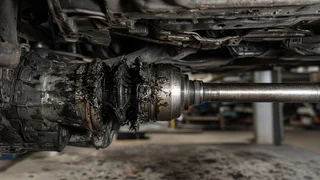
The immediate answer is that a faulty Ford Figo inner CV joint should be inspected as part of the complete axle shaft assembly, not diagnosed by sound alone. Inner joint wear typically produces a shudder under load or a knock when transitioning between throttle and coast, while outer joint problems usually click during sharp steering. If the inner protective boot is torn, grease loss and contamination accelerate wear, but a torn boot is not proof that the joint has already failed. Confirm which side is affected and whether the noise changes with joint articulation before purchasing components.
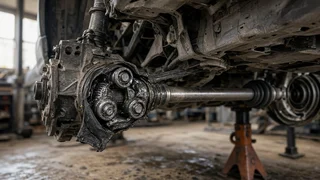
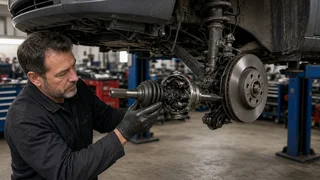
A replacement joint must match the Figo’s axle shaft diameter, spline count, and retaining clip style. An incorrect spline fit can cause poor engagement, vibration, or damage under drivetrain loading. Because some replacement shafts arrive as a complete unit with both inner and outer joints already installed, comparing the new part with the removed shaft is a practical compatibility check. If the boot is intact and the joint is quiet, a loose retaining clip or worn support bearing may be the actual source of the movement.