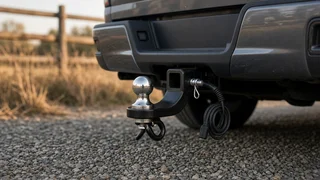
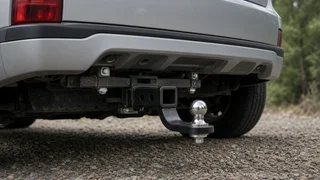
Ford F-150 trailer hitch ball mount
Choosing the right Ford F-150 trailer hitch ball mount comes down to matching the ball shank to the receiver, the ball platform to the load, and the rise or drop to the trailer coupler height. Buyers often start with a search for an f-150 trailer hitch ball mount and then encounter terms such as payload, gross vehicle weight rating, combined weight rating, tongue weight, and axle rating. Understanding how those limits interact helps prevent a purchase that tows smoothly on flat ground but becomes unstable with passengers, cargo, or a loaded trailer.
The direct answer
The immediate answer is that a Ford F-150 trailer hitch ball mount must have a shank sized for the truck’s receiver opening, typically a two-inch or two-and-a-half-inch receiver depending on configuration, and a ball with a diameter matching the trailer coupler. The ball mount also needs a drop or rise that lets the trailer ride close to level when the truck is loaded. Capacity is not just the stamped number on the ball mount; the truck’s hitch, payload, and axle ratings all set the practical ceiling.
The condition that changes the answer is the truck’s configuration. Cab style, bed length, engine, axle ratio, and optional tow package affect gross vehicle weight rating, rear axle rating, and the allowable tongue weight. A ball mount rated well above the trailer’s gross weight is useful, but it cannot raise the Ford F-150’s certified limits. Confirm the receiver size on the exact truck and use the vehicle’s tow rating and combined weight rating as the controlling numbers rather than relying on the accessory’s maximum stamped capacity alone.