Ford EcoBoost Timing Chain

Ford EcoBoost engines use a timing chain rather than a belt, but ownership questions often center on wear, noise, and replacement cost. The chain synchronizes the crankshaft and camshafts inside the engine, and its condition depends heavily on oil maintenance and service history. Drivers researching the Ford EcoBoost engine timing chain usually want to know whether a specific symptom points to chain stretch, guide failure, or a tensioner problem. Because several EcoBoost displacements exist, the practical answer requires separating shared design ideas from vehicle-specific confirmation. The following overview explains how the system works, what can degrade, and how a repair decision is typically approached without assuming a code proves a failed component.
Essential answer
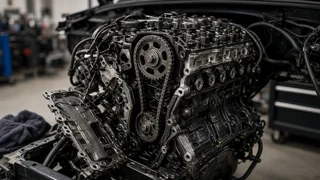
The Ford EcoBoost timing chain is an internal engine component that connects the crankshaft to the camshafts so that valve events stay in phase with piston movement. In a turbocharged direct-injection engine, accurate timing is especially important because combustion pressures are higher and minor chain wear can shift cam timing enough to affect idle quality, fuel trims, or torque delivery. The essential answer is not that every EcoBoost has a defective chain; rather, the chain is a wear item that can stretch, guides can crack, and the hydraulic tensioner can lose control when oil pressure, oil condition, or maintenance intervals are poor. The subject covers design operation, failure evidence, inspection, and repair context.
A timing chain does not normally need replacement on a fixed schedule like many timing belts, but it is not lifetime equipment in every operating environment. Long oil-change intervals, frequent cold starts, low oil level, or contaminated oil can accelerate pin and bushing wear. That wear may appear as a rattling noise at startup, a stored camshaft correlation diagnostic code, or rough running under specific symptom conditions. Manufacturer-dependent codes require confirmation because similar numbers can point to different faults by engine family. Service history and inspection usually matter more than code presence alone when judging whether the chain, guide, tensioner, or a related actuator is the likely cause.