Find Kia Sportage gear oil capacity

Gear oil capacity for a Kia Sportage is not a single universal figure, because the correct lubricant fill depends on the transmission, drivetrain, and model configuration. The phrase “kia sportage gear oil capacity” usually points owners toward the amount needed for a manual gearbox, transfer case, or differential rather than automatic transmission fluid. A useful answer therefore begins with identifying the exact vehicle and component, then matching the fill quantity and lubricant specification to the manufacturer requirement for that configuration.
Essential answer
The essential answer is that the correct gear oil capacity is the manufacturer-specified fill quantity for the installed component, not a generic number that applies to every Sportage. Front and rear differentials, transfer cases, and manual transaxles each hold different volumes. The fill quantity also changes across generations and between front-wheel-drive and all-wheel-drive layouts, so a capacity listed for one drivetrain may be wrong for another even when the model name is identical.
Because no verified model-specific figure is supplied here, the safest approach is to treat capacity as a specification to confirm for the vehicle’s equipment identification. The vehicle identification number or the build information from the owner’s materials can separate otherwise similar configurations. Once the exact component is known, the fill quantity becomes a target for service rather than a guess, helping avoid an overfill that can cause aeration, leakage, or seal stress in a gear case.
Identification and location
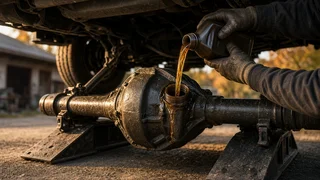
Finding the gear oil location starts with distinguishing the manual transaxle from the transfer case and rear differential, since these components are sometimes confused during a lubricant service. On many crossover layouts the transaxle case sits beside the engine, while the rear differential is centered between the rear wheels. All-wheel-drive models add a transfer unit near the transmission output, and each assembly has separate fill and level-check openings.
Identification should include the equipment details that affect the lubricant requirement, such as driveline type and transmission option. A level check plug or fill opening on the side of the gear housing is often used to confirm the correct fill point, but the exact location varies by model year and drivetrain. Checking the vehicle documentation for the applicable configuration is a practical step before draining, because selecting the wrong opening can confuse the fill quantity and lubricant specification.