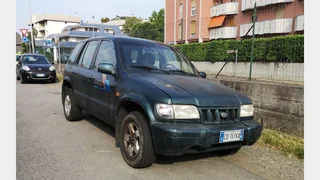
Find Kia Sportage gear oil capacity

The short answer
No single gear oil capacity applies to every Kia Sportage. The correct figure depends on the model year and generation, the transmission fitted, and whether the vehicle is front-wheel drive or all-wheel drive. Sportage models have used manual gearboxes, conventional automatics, and dual-clutch transmissions across different years and markets. All-wheel-drive versions also have a transfer case and a rear differential, and each of these has its own lubricant and fill quantity.
No verified capacity figures were available for this article, so it does not quote specific volumes. A figure taken from a different generation, gearbox, or market could lead to underfilling or overfilling, and both can damage gears and bearings. The reliable source for your vehicle is the capacities table in its owner's manual or the factory service information, matched to your exact configuration.
Why the answer varies
The term "gear oil" covers several different components, and readers often mean different ones. Each component below has a separate specification:
Manual transaxle: a combined gearbox and front differential in front-drive-based vehicles. It is filled with manual transmission fluid or gear oil of the grade Kia specifies. Automatic transmission: uses automatic transmission fluid (ATF), not conventional gear oil. Its capacity is usually listed separately, sometimes as a drain-and-refill amount and a total dry-fill amount. Dual-clutch transmission (DCT): uses a fluid specific to that unit. It should not be treated as interchangeable with ATF or manual gear oil. Transfer case (AWD only): the unit that sends drive to the rear axle. It typically takes hypoid gear oil, a gear oil formulated for the angled gear teeth used in differentials. Rear differential (AWD only): has its own fill quantity and lubricant specification.
Market, model year, and engine pairing also determine which of these units your Sportage has. Capacities can change between generations even when the component names stay the same.
How to identify your configuration
Confirm these details before looking up a capacity:
Detail to confirm | Where to check | Why it matters; Model year and generation | Registration documents, the VIN (vehicle identification number), or the label on the driver's door jamb | Capacities can differ between generations; Transmission type | Gear selector layout, sales documents, or a VIN decode by a dealer | Manual, automatic, and DCT units use different fluids and quantities; Drivetrain (FWD or AWD) | Badging, sales documents, or a visual check underneath for a rear driveshaft and differential | AWD adds a transfer case and rear differential, each with its own capacity; Engine | Owner's documents or the engine cover | Engine choice often determines which transmission is paired with it; Market | Owner's manual edition or dealer records | Specifications can differ between regions
Where to find the official figure
Kia owner's manuals typically include a specifications section with a table of recommended lubricants and capacities. That table generally lists each fluid by component, gives its grade or standard, and gives the fill volume. Make sure the manual matches your model year and market. If you no longer have the printed manual, a Kia dealer service department can look up the specification for your VIN. Factory service information gives the most detailed procedures, including whether a figure is a refill amount or a total capacity.
Locating fill and check points
Manual transaxles, transfer cases, and differentials usually have a fill or check plug and a separate drain plug on the housing. A common method is to fill until the fluid reaches the bottom edge of the fill hole, but the exact procedure and plug locations vary by unit. Many modern automatic transmissions have no conventional dipstick and need a specific temperature-controlled check procedure. Location and procedure details were not verified for individual Sportage configurations here, so check them against the service documentation for your vehicle before you start work.
What this article could not confirm
Specific capacities, fluid grades, and plug locations for individual Sportage generations and drivetrains could not be checked against supporting documentation, so none are given. Use the owner's manual, factory service information, or a Kia dealer for the figure that applies to your vehicle.