Find Honda Pilot engine oil capacity
Finding the correct engine oil capacity for a Honda Pilot is the first step toward a clean refill and a reliable level check, but the number is not the whole story. The right fill quantity depends on the model year and engine option, and it works together with the lubricant specification and the method used to verify the level. A drain-and-refill service, a filter change, and a simple top-up each involve slightly different amounts of oil, so the useful answer is an accurate starting point paired with confirmation for the specific vehicle configuration.
Essential answer
Honda Pilot engine oil capacity varies by generation and engine choice, so a single universal figure can be misleading. In practice, the fill quantity printed for one V6 Pilot may not apply to another model year or trim. The correct approach is to identify the engine and model year first, then use the manufacturer's published capacity for that configuration. Without confirmed documentation for a particular Pilot, treating any widely quoted number as approximate rather than exact prevents an overfill or underfill during service.
The capacity also changes with the type of service being performed. The base fill quantity describes the oil needed when the filter is replaced and the pan is fully drained, but a simple top-up after a low level reading requires much less oil. Because the lubricant specification and manufacturer approval can affect which product is selected, capacity should be paired with the recommended oil type and the proper level check procedure. That combination gives a realistic service amount instead of a theoretical maximum.
Identification and location
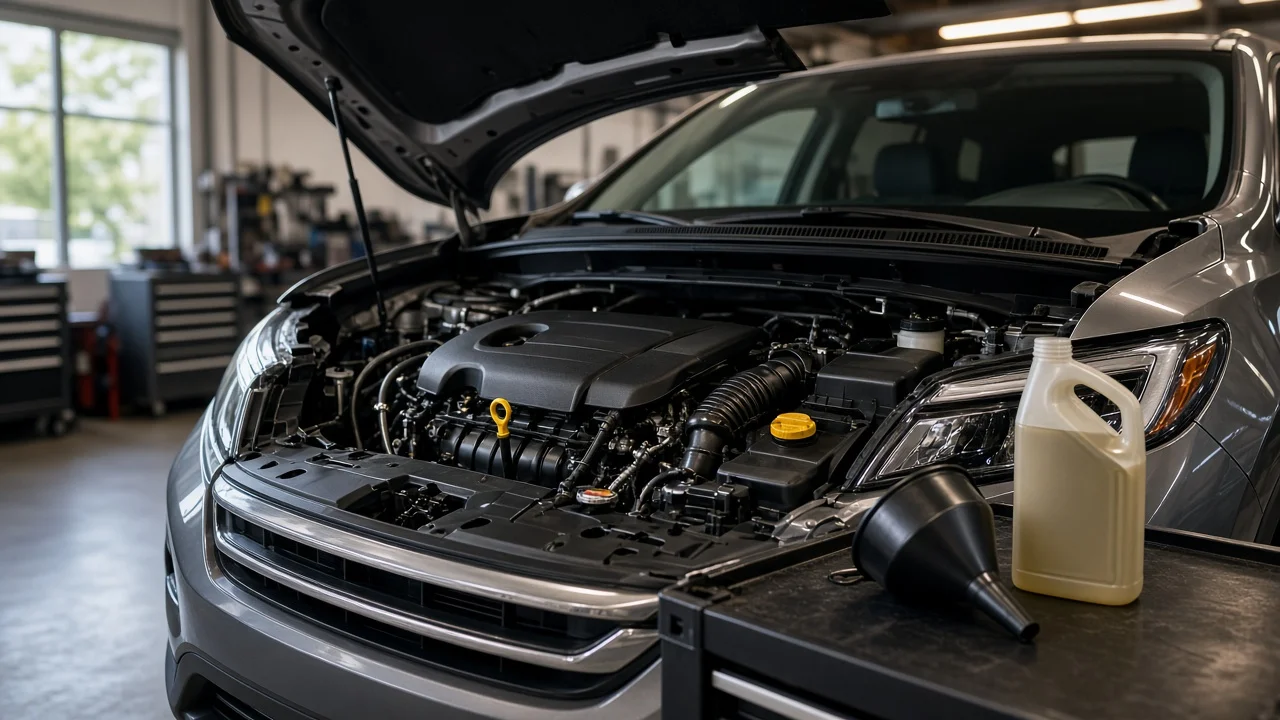
Confirming the correct Honda Pilot engine oil capacity starts with identifying the engine installed in the vehicle. Emissions labels, the owner's manual, or the vehicle identification data for the applicable model year can distinguish otherwise similar Pilots. The oil fill cap and dipstick also provide practical proof of location, but a fill cap marking usually identifies a lubricant specification rather than the exact fill quantity. Equipment identification therefore narrows the range before any fluid is added.
The dipstick is the primary tool for verifying a safe oil level after a refill or between service intervals. A level check works best on level ground with the engine off and after a short settling period, allowing oil to return to the pan. The difference between the low and full marks does not equal the engine's total capacity; it indicates the amount needed for a top-up. That distinction helps avoid adding the full drain-and-refill quantity when only a small correction is required.