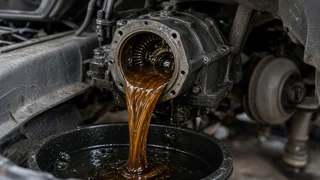
Find a gearbox oil specification number

The short answer
No single gearbox oil number applies to every car. The correct specification depends on the exact transmission fitted to your vehicle, so it can differ between model years, engines, drivetrains and markets, even under the same model name. The most reliable source is the vehicle manufacturer's documentation for your exact configuration, usually the owner's manual or the service manual. If neither is available, a dealer parts or service department can normally look up the specification from the vehicle identification number (VIN).
This guide does not list a specification for any particular vehicle, because none was supplied for review. It explains where the specification is usually recorded, what the different numbers on a gear oil label mean, and which items are easily confused.
What a gearbox oil specification usually consists of
A gearbox oil requirement is often a combination of identifiers rather than one number. Depending on the manufacturer and transmission type, the documentation may list one or more of the following.
Viscosity grade: an SAE gear oil grade such as 75W-90 or 80W-90, which describes how the oil flows at different temperatures. Performance or service class: an API category such as GL-4 or GL-5, which describes the level of extreme-pressure protection. Manufacturer approval or standard: a code or standard number issued by the vehicle or transmission maker. Some manufacturers require an oil that carries this approval, not just a matching grade and class. Fluid type for automatic or dual-clutch units: these often use automatic transmission fluid (ATF) or dedicated dual-clutch fluid named by a manufacturer specification, rather than a conventional gear oil grade. OEM part number: the manufacturer's own catalogue number for its branded fluid. This identifies a product, which is different from a specification that third-party oils can meet.
Where to find the specification
Check these sources roughly in order of reliability, and confirm that each one matches your vehicle's actual configuration.
Owner's manual: look in the section on fluids, capacities, lubricants or technical specifications. Manuals often list separate entries for manual transmission, automatic transmission, transfer case and differential. Service or workshop manual: usually gives the fullest detail, including capacity and any approval codes, broken down by transmission code. Under-bonnet or door-jamb labels: some vehicles carry fluid information on labels, though gearbox oil is listed less often than engine oil or coolant. Transmission identification plate or stamping: many gearboxes carry a code on a tag or cast into the casing. This code identifies the unit and can be used to look up the specification, but it is usually not the oil specification itself. Dealer parts or service department: can usually confirm the required fluid from the VIN, which accounts for the factory-fitted transmission. Oil manufacturers' vehicle lookup tools: useful as a cross-check, but treat the result as a recommendation and verify it against the vehicle maker's requirement.
Identifying the right gearbox before choosing an oil
Because one model can be sold with several transmissions, identify which unit is fitted first. Useful cues include the transmission type (manual, conventional automatic, CVT or dual-clutch), the number of gears, whether the vehicle is front-, rear- or all-wheel drive, and the transmission code from the identification plate or the manufacturer's records. If a gearbox has been replaced or swapped, the original factory documentation may no longer apply, and the code on the unit itself becomes more important than the VIN.
Commonly confused items
Gear oil grades versus engine oil grades: SAE gear oil and engine oil viscosity grades use separate scales, so a gear oil labelled 75W-90 should not be compared with an engine oil number to judge thickness. GL-4 versus GL-5: these are different API service classes, and a higher number is not automatically a safe substitute. GL-5 oils contain more extreme-pressure additive, which some manual gearboxes are not designed for, particularly those with certain synchroniser materials. Use the class the manufacturer specifies. Gearbox versus differential or transfer case: these components may need different fluids, even when they are housed close together or appear under similar headings in the manual. Manual versus automatic fluid: manual gear oil and automatic transmission fluid are generally not interchangeable unless the manufacturer specifies the same fluid for both. Transmission code versus oil specification: a code stamped on the gearbox identifies the unit; it is not the oil standard to buy.
Next steps
Write down the complete requirement from the manufacturer's documentation, including viscosity grade, service class and any approval code. Then check that the oil you are considering explicitly states it meets that requirement on its label or data sheet. If the documentation and a product lookup disagree, or if you cannot confirm which transmission is fitted, ask a dealer or qualified technician to confirm the specification from your VIN or transmission code before filling or topping up.
Information gap: no manufacturer documentation for a specific vehicle was provided, so this guide cannot state the correct gearbox oil for any particular model, year, powertrain or market.