Find Cummins 12-valve oil capacity
Owners searching for Cummins 12-valve oil capacity are usually preparing for a lubricant service on the mechanically injected 5.9L straight-six used in Dodge Ram pickups and various medium-duty applications. The exact fill quantity depends on configuration, pan design, filter size, and whether the engine is dry after overhaul or still holding residual oil. Because published figures can differ by application, the useful approach is to understand how the oiling system, sump, and dipstick interact before adding lubricant. A correct level check matters more than relying on a single number from memory, since overfilling can aerate oil and underfilling can reduce protection under load.
Essential answer
The Cummins 12-valve typically requires a substantially larger fill quantity than light-duty gasoline engines because the inline six has a deep sump, a long crankshaft, and a high-volume lubricant circuit. The generally referenced capacity falls in a range that varies with the oil pan and whether the filter is changed at the same time. A service fill with a new oil filter will usually be higher than a simple drain-and-refill estimate, while a dry engine after rebuild may require additional lubricant to fill galleys, the turbocharger feed line, and the oil cooler cavities before the dipstick reads correctly.
For practical work, treat the advertised capacity as a starting volume rather than an absolute instruction. Add most of the expected fill quantity, start the engine briefly to circulate lubricant through the filter and galleries, then shut it down and allow the oil to drain back before checking the level. The final increments should be guided by the dipstick. The goal is a stable reading in the crosshatched operating zone, not a precise laboratory amount, because small differences in pan shape, filter volume, and vehicle inclination can shift the observed level.
Identification and location
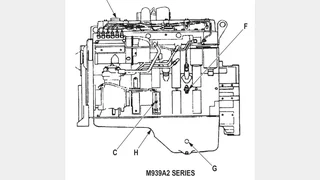
Locating the lubrication service points on a 12-valve engine usually begins with the stamped steel or cast aluminum sump below the block. The drain plug is positioned at a low corner or rear-facing surface of the pan, while the spin-on oil filter is mounted on the left side of the block on many Dodge Ram installations. A turbocharged application may also have a separate supply or return connection, but the primary filter remains the main service component for a routine oil change. Confirm the configuration against the vehicle documentation before draining, especially if the engine has been repowered into a different chassis.
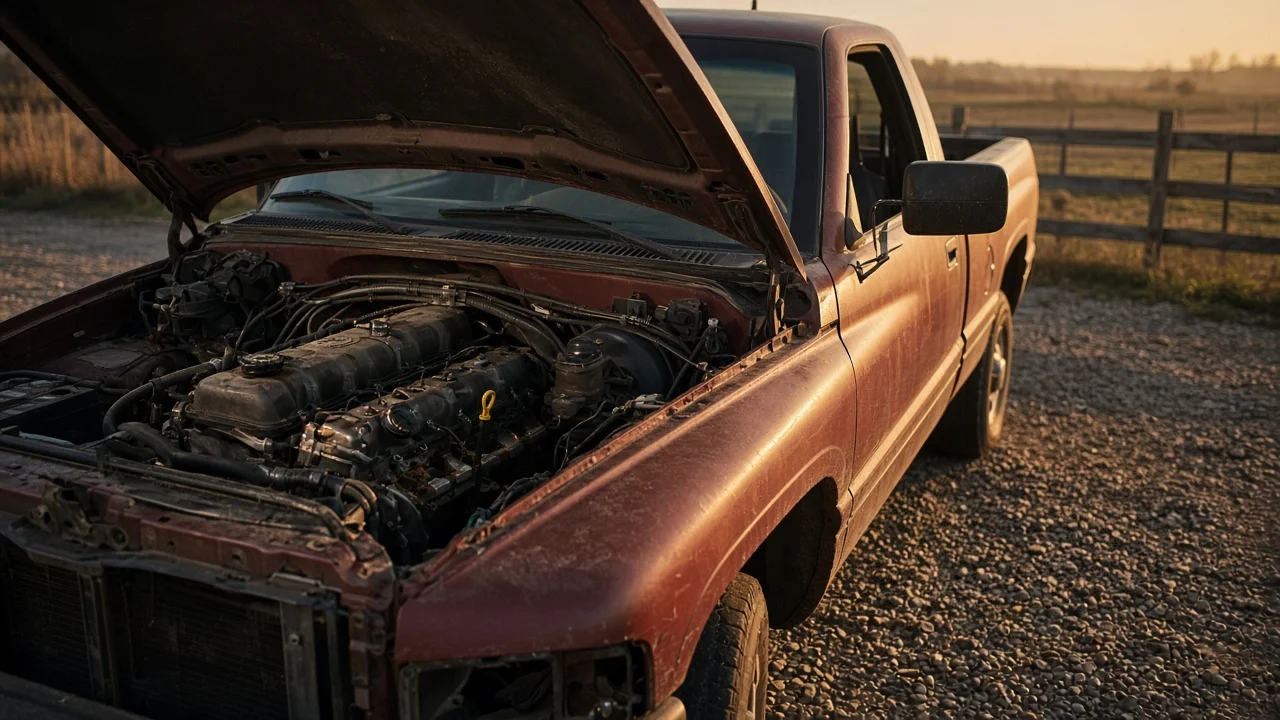
The dipstick is the most important identification tool after refilling. Its yellow or black handle typically rises near the front of the engine on the driver side, and the blade shows a full or safe range rather than one marked line. Because the 12-valve sump can retain oil in the rocker area and piston cooling nozzles after shutdown, always check the level on level ground after a short waiting period. Reading the stick on a sloped surface or immediately after shutdown can cause an inaccurate evaluation and lead to a poorly informed fill decision.