FG Barra Oil Capacity: What to Check Before You Top Up or Change Oil

The short answer
The FG Falcon's Barra engine is Ford Australia's 4.0-litre inline six. Its oil capacity is a documented factory specification, but no verified figure was available for this guide, so no number is quoted here. Using an unconfirmed capacity risks underfilling or overfilling the engine, and both can cause problems. The reliable source is the owner's handbook or the factory service information for your exact car.
Two things can change the answer: which Barra variant is fitted, and whether the oil filter is being replaced at the same time.
Why the figure depends on your exact car
"FG Barra" covers more than one engine and more than one model year. Before you rely on any capacity figure, including one from a parts catalogue, a forum or an oil retailer's lookup tool, check that it matches your car on these points.
Model and series: the original FG and the later FG MkII were sold in different years, and specifications can differ between them. Confirm which one you have from the build plate or registration papers. Engine variant: the Barra six was offered naturally aspirated, turbocharged and, in some models, as a dedicated LPG version. A turbo engine has extra oil passages for the turbocharger, so do not assume it shares a capacity with the naturally aspirated engine. Filter change: manufacturers usually quote a capacity with a filter change and a smaller one without. A new filter holds some oil, so the with-filter figure is the one to use at a normal service. Market: Ford data for Australia and for export markets such as New Zealand may be presented differently. Use the information for your car's market.
Where to find the confirmed specification
Owner's handbook: the technical specifications section normally lists engine oil capacity and the recommended oil grade and specification. Factory workshop or service information: this gives the most detailed figures, often separated by engine variant and by whether the filter is changed. A Ford dealer or qualified mechanic: they can look up the capacity using the car's VIN, which removes any doubt about the variant.
Check the recommended oil grade at the same time. The correct quantity of the wrong oil specification is still not a correct service.
Identifying your engine and the oil service points
To confirm which Barra variant you have, use the vehicle identification plate and the VIN. You can also check the model badging, though badges can be changed by previous owners, so treat them as a hint rather than proof. A turbocharged Barra is usually easy to spot under the bonnet because of its intercooler pipework and turbocharger plumbing, which the naturally aspirated engine does not have.
Under the bonnet, look for two separate items: the oil filler cap on top of the engine, and the dipstick, which has a looped or coloured handle. Their exact positions can vary between configurations, so confirm them against the engine bay diagram in the owner's handbook. Do not confuse the oil dipstick with the automatic transmission dipstick or with fluid reservoir caps.
Filling correctly, whatever the quoted capacity
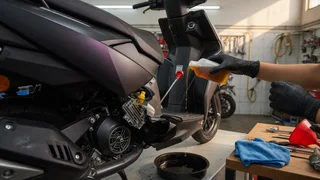
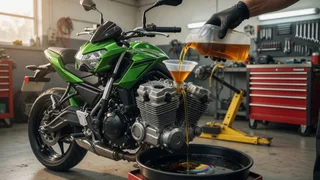
Treat the published capacity as a guide to how much oil to have on hand, not a volume to pour in all at once. After draining, add most of the specified amount, then run the engine briefly and switch it off. Wait for the oil to drain back to the sump, park the car on level ground and check the dipstick. Top up in small amounts until the level sits between the minimum and maximum marks. The dipstick reading is the final authority, because some old oil always stays in the engine after draining.
Information gap
This guide does not state a litre figure for the FG Barra because none could be verified for each variant and filter scenario. If you find a figure elsewhere, check that it names your series, your engine variant and whether it includes a filter change before you use it.