Family Camper Van Conversion (Sleeps 4–5)
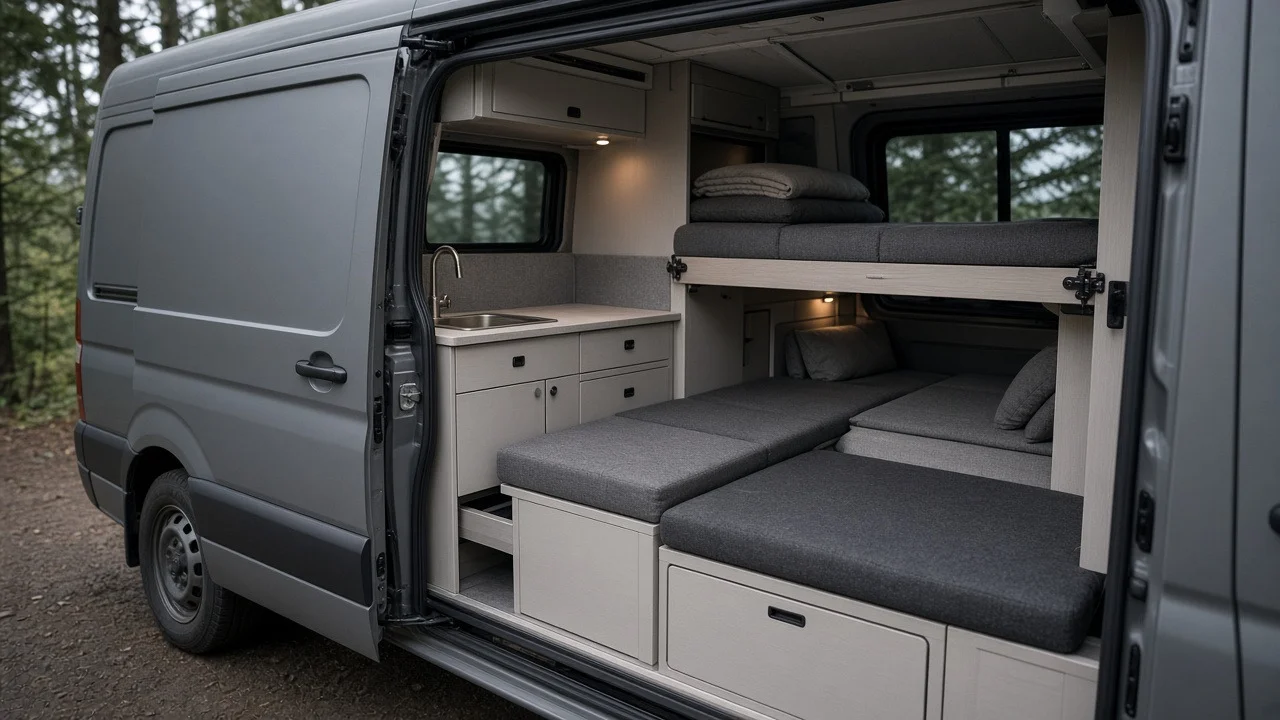
A family camper van conversion that sleeps four to five people begins with the right base vehicle and a layout planned around real travel needs. The goal is not simply adding beds, but creating secure sleeping space, practical seating, and usable storage inside a cargo area. Choosing the best van for family camper conversion depends on interior height, body configuration, wheelbase, cargo access, and powertrain options available in the US market. Some families need a camper van conversion for a family of four, while others require a fifth sleeping spot without making the cabin feel cramped. The most useful conversions treat the vehicle as a compact mobile room where every seat, panel, and cabinet has more than one job.
Essential answer
A camper van conversion that sleeps four to five people usually requires a high-roof, long-wheelbase van with enough floor area for a rear bed platform and a forward seating group that converts into additional sleeping space. For a family of four, a two-plus-two layout works well: two sleep in a fixed rear bed and two use a folding bench or bunk arrangement. For a camper van conversion for a family of five, the practical solution is often a rear double bed, a mid-cab bunk, and a convertible front dinette, or a three-person lower bed combined with upper bunks. The seating layout and sleeping layout must be designed together so travel mode is safe and night mode is not an afterthought.
The best van for family camper conversion balances interior width, vertical space, and cargo access with the body configuration that allows three forward travel seats and a rear lounge. In US market specification, popular candidates include full-size vans with extended-length body options and available high roofs. A longer wheelbase improves straight-line stability and gives more space behind the front seats, while a sliding side door and rear cargo doors make loading gear and reaching child seating easier. Powertrain options matter less than interior packaging for sleeping capacity, but families covering long distances should consider drivability, fuel range, and how the chosen engine or transmission behaves when the conversion adds constant weight.