Exhaust Leak Repair: Fixing a Leaking Exhaust Pipe
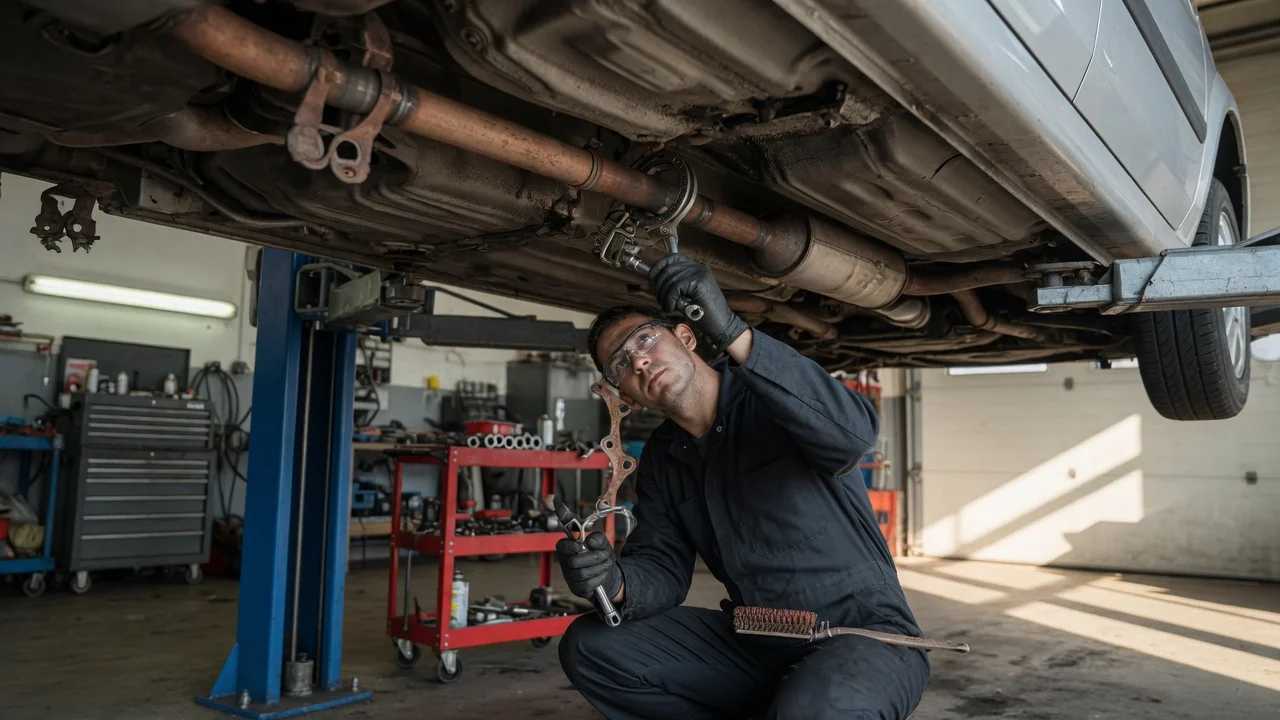
An exhaust leak can make a car sound louder than normal and may allow exhaust gases to enter areas where they should not be. The repair can range from a simple replacement of a damaged gasket to cutting out and replacing a corroded exhaust pipe section. Start by finding the leak, then choose a repair method that matches the metal condition around the opening.
Identify the symptom and environment
A leaking exhaust pipe typically appears as a cracked or rusted-through section between the catalytic converter and the muffler, or at a joint where two pipe sections meet. Symptoms can include a ticking or puffing sound during acceleration, a stronger exhaust smell near the vehicle, or visible soot around a joint. Record the point where the noise appears and whether the surrounding pipe is wet, oily, or heavily corroded.
Isolate where the fault occurs
Let the engine cool before touching any exhaust component, because exhaust pipes and shields become hot enough to burn skin. Raise the vehicle using a jack and support it with jack stands on level ground, or take the car to a lift if one is available. Check whether the noise comes from a gasket at a flange, a clamp, a weld, or a rust hole in the middle of the pipe. Shake the pipe gently only after it has cooled; excessive movement at a joint can indicate a worn gasket, broken hanger, or loose clamp.
Try reversible fixes in order
For a small hole with solid metal around it, a high-temperature exhaust repair compound can be applied as a temporary patch. Clean the surface thoroughly with a wire brush, remove loose rust, and follow the product instructions for the required curing time. Some exhaust repair kits include a mesh or bandage that wraps around the damaged exhaust pipe section. These products work best on a clean, dry pipe and are not a permanent replacement for metal that is too thin or crumbling.
If the leak is at a flange, remove the fasteners only when the area is cool and accessible. Soaking the fasteners with penetrating oil before removal can help reduce breakage. Replace the gasket if it is compressed, cracked, or burned, and use new hardware if the old fasteners are severely rusted. Do not rely on sealant alone at a joint that is designed to seal with a gasket or a clamp.
Confirm the result
After the repair, start the engine and listen for the original ticking or puffing noise. Check the patched area for visible soot or escaping vapor during the first few minutes of operation, while keeping hands clear of moving parts. A successful temporary repair should reduce or stop the local leak, but it does not restore a heavily corroded exhaust pipe.
If the problem remains
If the area around the opening crumbles when cleaned, or the patch fails quickly, the damaged pipe section may need to be cut out and replaced. Record the leaking location, pipe diameter, and nearby parts such as the catalytic converter, resonator, or muffler before ordering a replacement section. When the leak involves a flex joint, a cracked manifold, or an inaccessible section, exhaust repair may require welding or professional replacement.