Enclosed Car Subwoofers: What They Are and When They Make Sense
What Is an Enclosed Car Subwoofer?
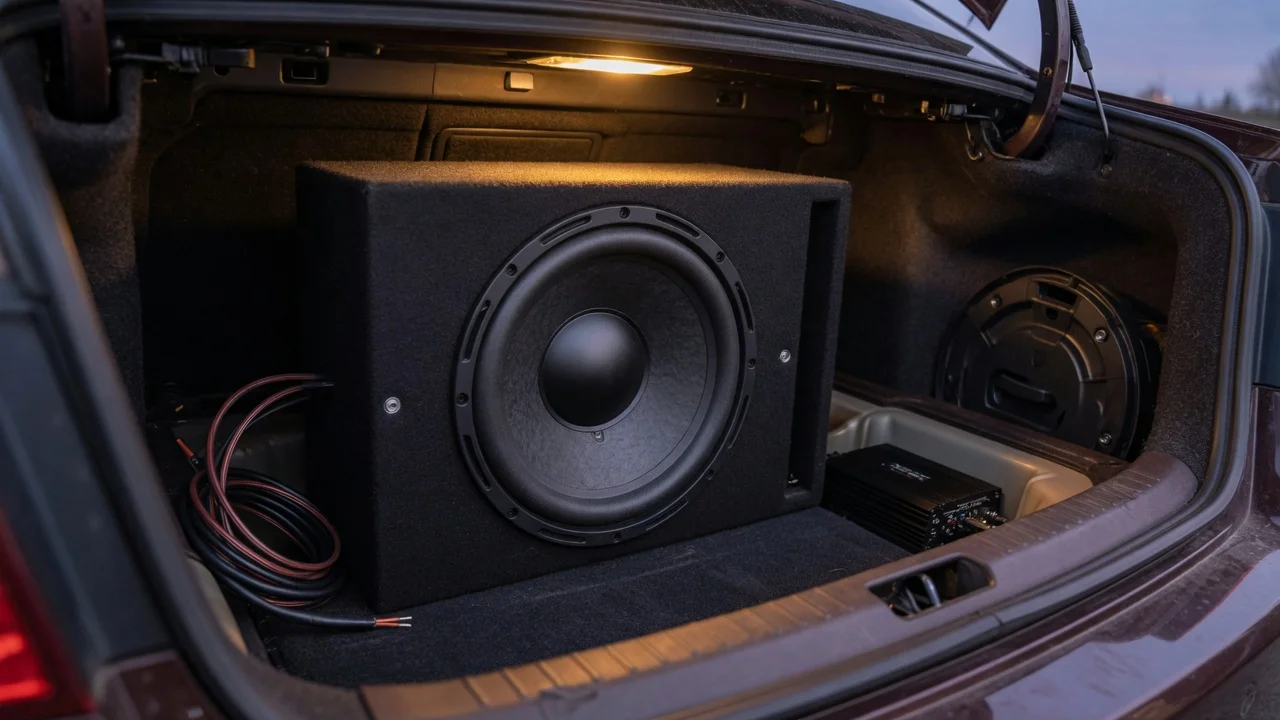
An enclosed car subwoofer is a low-frequency speaker driver already mounted inside a purpose-built box. The enclosure shapes the woofer’s output, protects the driver, and makes installation simpler than buying a raw subwoofer and building or sourcing a separate box. The main trade-off is that the enclosure takes up cargo or passenger space, so the right choice depends on the vehicle and how much room you are willing to give up.
Sealed versus Ported Enclosures
Sealed enclosures are fully closed boxes. They tend to produce tighter, more accurate bass and usually need less space. Ported, or vented, enclosures have a tuned opening that increases output around a specific frequency range. A ported box can sound louder and deeper with the same power, but it is often larger and more sensitive to tuning and placement. Bandpass enclosures exist too, but they are less common for everyday vehicles because they can exaggerate a narrow bass range.
Fitment and Vehicle Space Considerations
Before choosing an enclosed subwoofer, measure the area where it will sit. A compact hatchback may only fit a shallow-mount enclosure under a seat or against a rear bulkhead, while a larger SUV or pickup can accept a bigger box. Check the mounting depth of the enclosure against the available height, and account for clearance needed by the woofer’s excursion. Fitment is vehicle-specific: a box that fits one model year or trim may not fit another with a different floor shape, seat track, or cargo area.
Power Handling and Amplifier Matching
Match the enclosed subwoofer to an amplifier using the continuous power rating, not just the peak figure. If the amplifier is underpowered, you may turn up the gain until the signal clips, which can damage the subwoofer even when the power number seems low. If the amplifier is much more powerful than the subwoofer’s rating, the driver can overheat or reach mechanical limits. Also check the final impedance of the enclosure. A 2-ohm load draws more current from a compatible amplifier than a 4-ohm load, so the amp must be stable at that impedance.
Wiring and Signal Integration
An enclosed subwoofer still needs a signal source. Factory radios generally do not have a dedicated subwoofer output, so an amplifier with speaker-level inputs or a separate line output converter may be required. The enclosure itself may be passive, powered, or have a built-in amplifier. A powered enclosed subwoofer bundles the amp and driver, which can reduce wiring complexity, but it still needs a fused power feed, a solid ground, and a remote turn-on connection.
Placement and Everyday Usability
Where the enclosure sits affects both sound and practicality. Firing a sub toward the rear hatch or trunk lid can increase perceived output in some vehicles, but results vary with the car’s shape and the enclosure type. A removable enclosure with a quick-disconnect harness can help when you need the space for luggage or larger items. Keep in mind that a heavy enclosure may need to be secured so it does not shift during hard braking or an accident.
What to Check Before Buying
Measure the available height, width, and depth in the intended location; include clearance for the woofer movement. Confirm the enclosure’s impedance and continuous power handling so it can be paired with a suitable amplifier. Check whether the box is sealed or ported and whether that tuning fits your preferred bass character and space limits. Identify whether the enclosure is passive or powered, and plan the required power, ground, and signal connections. Verify that the enclosure can be secured in the vehicle and that you can still use the space you need.
Common Fitment and Compatibility Gaps
Manufacturer compatibility claims do not cover every vehicle configuration or aftermarket modification. A shallow enclosure may clear the floor of a stock trunk but not a trunk with an added spare-tire kit or different carpet and underlay. Factory audio systems with active noise cancellation, load-dependent equalization, or nonstandard speaker impedance may require additional integration steps. If a supplier does not specify the model year, market, or trim covered by its fitment note, treat that as an unresolved gap rather than assuming it will fit.