Emissions Testing in Lombard: What Drivers Need to Know
The Short Answer
Lombard, Illinois, is in DuPage County, which falls inside the Chicago-area region where the state requires periodic vehicle emissions testing. If you live in Lombard and your vehicle is covered by the program, you will need to pass an emissions test to keep your registration current. The state mails a test notice to the owners of vehicles that are due, and that notice is the most reliable sign that your vehicle needs a test.
Several things can change that answer for a particular vehicle: its model year, fuel type, weight class, and whether it is new enough to be temporarily exempt. Your registered address also matters more than where you drive or service the car.
What the Test Is and What It Is Not
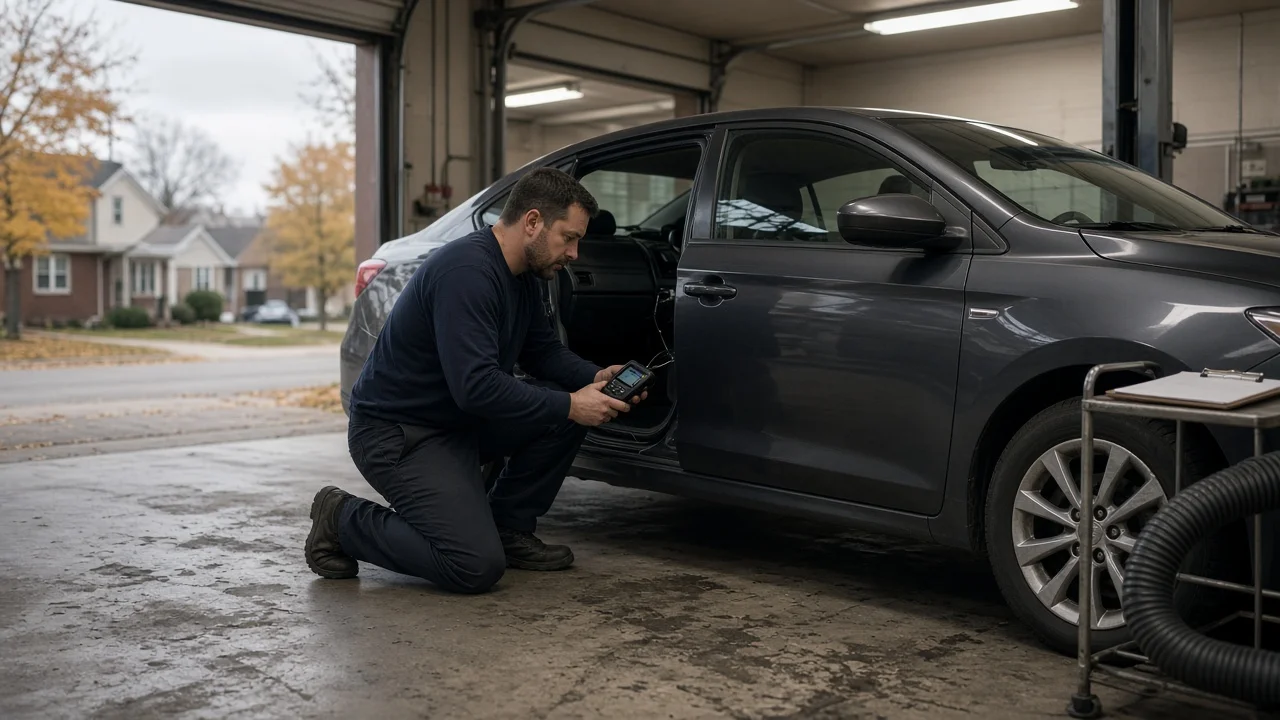
In Illinois, emissions testing for most passenger cars and light trucks is an on-board diagnostics check, usually shortened to OBD-II. A technician or kiosk connects to the vehicle's diagnostic port, typically under the dashboard on the driver's side. It then reads data from the engine computer. That data shows whether the emissions-related monitors have completed their self-checks and whether any stored fault codes have switched on the check-engine light.
The state emissions test is not a general roadworthiness or safety inspection for ordinary passenger vehicles. It does not assess brakes, tires, lights or body condition. Drivers searching for mandatory roadworthiness certification should know that, for a typical privately owned car in the Lombard area, the emissions test is the required check tied to registration. Commercial and certain specialty vehicles can fall under separate safety inspection rules, which are not covered here.
Which Vehicles Are Usually Covered
As a general principle, the program targets gasoline-powered cars and light trucks equipped with OBD-II. That technology is standard on most light vehicles sold in the US from the mid-1990s onward. Newer vehicles are typically exempt for an initial period after they are first sold. After that, testing usually recurs on a regular cycle.
Categories that are commonly exempt or handled differently include:
Fully electric vehicles, which produce no tailpipe emissions; Motorcycles; Many diesel-powered vehicles; Older vehicles built before OBD-II became standard; Vehicles above the program's weight limit; Antique, collector or other specially registered vehicles
Exemption thresholds, testing intervals and weight limits are set by state rules and can change. The exact current figures were not available for this article, so confirm them on your test notice or with the Illinois EPA before relying on them.
Where Lombard Drivers Can Get Tested
The state program is branded Illinois Air Team. It has generally offered testing through official testing stations, self-service kiosks and participating private facilities such as repair shops. Testing at official state stations has historically been free of charge. Private participating businesses may set their own policies, so ask about any fee before the test.
This article does not list specific locations, hours or contact details because none could be verified. The test notice and the Illinois EPA's official program information are the dependable ways to find current testing options near Lombard.
Preparing for a Pass
Because the test reads the engine computer rather than measuring tailpipe gases directly, most failures come from a few predictable causes. These general preparation steps apply to OBD-II testing:
Fix the cause of an illuminated check-engine light before testing. An active fault usually leads to a failure. Avoid testing right after a battery disconnection or right after fault codes have been cleared. Either can reset the readiness monitors, and the car must be driven normally for a while before they complete again. Make sure the diagnostic port is accessible and undamaged. Bring the test notice if you received one.
If the Vehicle Fails
A failed test generally means the vehicle needs repair and a retest. Illinois has provisions for owners who make qualifying repair efforts but still cannot get the vehicle to pass, sometimes called a waiver. Eligibility conditions apply. The specific requirements and spending thresholds could not be confirmed for this article and should be checked with the state.
What Happens If You Skip It
Emissions compliance is linked to vehicle registration in Illinois. Ignoring a test notice can block registration renewal and, if it stays unresolved, can lead to suspension of the registration. Owners who have sold the vehicle, moved outside the testing area or stored the vehicle should contact the program instead of ignoring the notice.
Information Gaps to Check
No confirmed local details were available for this article. That includes current testing station locations, operating hours, fees at private facilities, exact exemption ages, testing intervals and waiver amounts. Treat the general rules above as orientation, and use your mailed notice or official Illinois EPA information for the figures that apply to your vehicle.