Electronic Parking Brake Reset After Repair: Methods, Tools and Limits
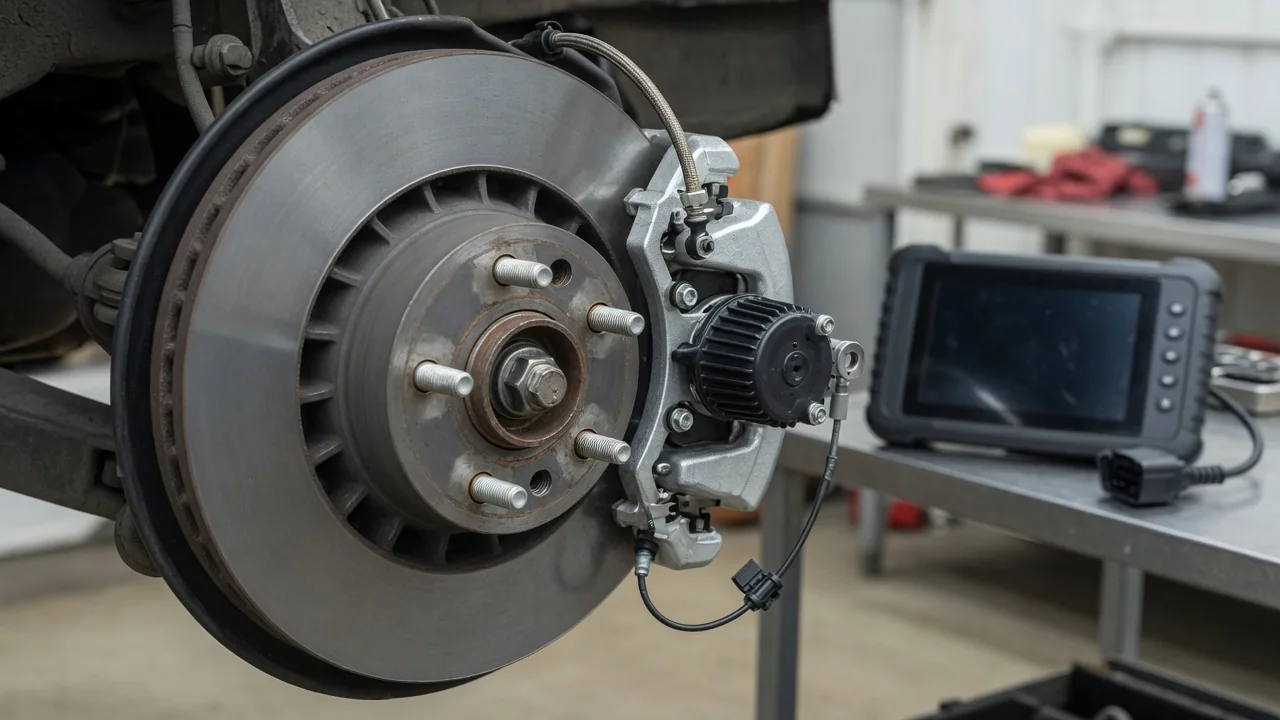
An electronic parking brake reset is often the last step after rear brake work, yet it is also one of the most misunderstood. This guide explains what the reset does, how to reset an electronic parking brake using documented methods, what a scan tool contributes, and where Subaru, VW, Mercedes, Volvo, GM, Jeep and Honda procedures differ enough to require vehicle-specific confirmation.
What an Electronic Parking Brake Reset Actually Does After Brake Work
On most vehicles, the electronic parking brake clamps the rear pads using a small caliper motor on each rear caliper actuator. Before brake pad replacement, the system is placed in EPB service mode so those motors wind back and make room for new parts. The reset that follows returns the actuators to normal operation and lets the control module relearn where the pads now meet the rotor, which is why it is often called parking brake calibration.
A reset may be needed after rear pad or rotor replacement, caliper or actuator work, a battery disconnection, or a service procedure that was interrupted partway through. It is a calibration and relearn step, though, not a repair. It cannot revive a failed motor, mend damaged wiring or compensate for worn hardware. A parking brake warning light or stored message after brake work therefore deserves a confirmed cause before anyone assumes a reset is the answer.
How to Reset an Electronic Parking Brake: General Approaches and Their Limits
Reset methods fall into three broad groups: built-in control sequences on some vehicles, service functions run through a scan tool, and dealer-level software procedures. Sequences that use the parking brake switch, brake pedal and ignition do exist, but they differ by make, model, year and even trim. Anyone asking how to reset an electronic parking brake should begin with the owner's manual or official service information rather than a sequence borrowed from a different vehicle.
Whether you can reset an electronic parking brake without a scan tool depends entirely on the vehicle. Some allow a manual procedure, many require electronic commands, and guessing at sequences can leave the system in a fault state. Forcing a piston back on an EPB-equipped caliper that has not been placed in service mode risks damaging the actuator's internal mechanism. If a documented procedure does not behave as described, stop there and have a professional take over.
Choosing and Using an Electronic Parking Brake Reset Tool
An electronic parking brake reset tool is usually a scan tool with special-function support. It can open maintenance mode, retract and re-apply the actuators, run the calibration routine and clear related codes afterward. A basic code reader only reads and erases generic faults and cannot command the brake module, which is why a bidirectional scan tool is usually needed. Before relying on any scan tool to reset an electronic parking brake, confirm that it lists support for your exact make, model and year.
Follow the tool's on-screen instructions in order, alongside the vehicle's service information, because each stage depends on the module finishing the previous one. A procedure cut short by a dropped connection, low voltage or a skipped prompt can leave the actuators in an unknown position and set new faults. A stable battery supply matters for the same reason, since the motors draw current while the module is communicating. The vehicle should also be secured against rolling, because the parking brake is unavailable during service.
Subaru Electronic Parking Brake Reset Considerations
Subaru models equipped with an electronic parking brake may have a documented maintenance or reset procedure, but it varies by model and year. That makes a generic Subaru electronic parking brake reset sequence found online a poor substitute for the real reference. Owners wondering how to reset the electronic parking brake on a Subaru should verify the exact steps in the owner's manual or Subaru service information, including whether their vehicle expects a scan tool function instead of a switch-based routine.
After a reset attempt, a few safe observations show whether it took. The brake should apply and release normally from the switch, and the warning indicators in the instrument cluster should clear. If lights stay on, the brake does not release, or the rear wheels feel as if they are holding the car back, further attempts are unlikely to help. A Subaru dealer or qualified shop should take over then.
VW, Tiguan, Mercedes and Volvo Electronic Parking Brake Resets
Many European vehicles commonly rely on scan tool service functions for EPB work, with requirements that differ by model, year and system version. For a VW electronic parking brake reset, including on the Tiguan, confirm whether your vehicle needs a tool-based service mode and calibration before the calipers are touched. Anyone shopping for a VW electronic parking brake reset tool should check that it explicitly supports the specific vehicle rather than the brand in general.
A Mercedes electronic parking brake reset and a Volvo electronic parking brake reset follow the same caution. Procedures and tool support vary between platforms, so official service information or a qualified technician should be the reference, and a Volvo reset tool that suits one generation may not address another. Button sequences and menu paths described for a different car should not be assumed to apply. Persistent warning messages after the routine suggest the reset did not complete, and professional diagnosis is the sensible next step.
GM, Jeep Compass and Honda Civic Electronic Parking Brake Resets
A GM electronic parking brake reset is not a single procedure, because the corporation's brands and platforms have used different systems across models and years. Model-specific service information is the only reliable guide. The same applies to a Jeep Compass electronic parking brake reset: confirm whether a manual service procedure or a scan tool function applies to your model year before starting brake work, since that answer determines what equipment needs to be on hand.
For those researching how to reset the electronic parking brake on a Honda Civic, the documented procedure for the specific generation and trim is what counts, not generic instructions. Manufacturers revise brake hardware, modules and software between model years, and a refresh can change the brake system relearn without any visible difference at the switch. A method that worked on one year may do nothing on another, or may leave the system partway through a routine it was never designed to accept.
When an EPB Reset Fails: Warning Signs and When to Get Professional Testing
Some symptoms point beyond a simple reset: a brake that will not release, grinding or clicking from the rear wheels, dragging, or warning lights that keep coming back. Stored fault codes help, but parking brake codes often carry manufacturer-specific meanings, so check the vehicle-specific definition before interpreting one. Even then, a code or warning alone cannot confirm whether the cause is the actuator, the wiring, a switch, the control module or simply low battery voltage.
Avoid driving a vehicle with a dragging or unreliable parking brake, since dragging builds heat in the rear brakes and an unreliable brake may not hold the car when parked. Professional diagnosis with proper equipment can test the circuits and components directly instead of inferring from symptoms. Tell the technician what brake work was done recently, which reset steps were already tried and in what order, and exactly which warnings or messages appeared.