Electric water pump for race cars
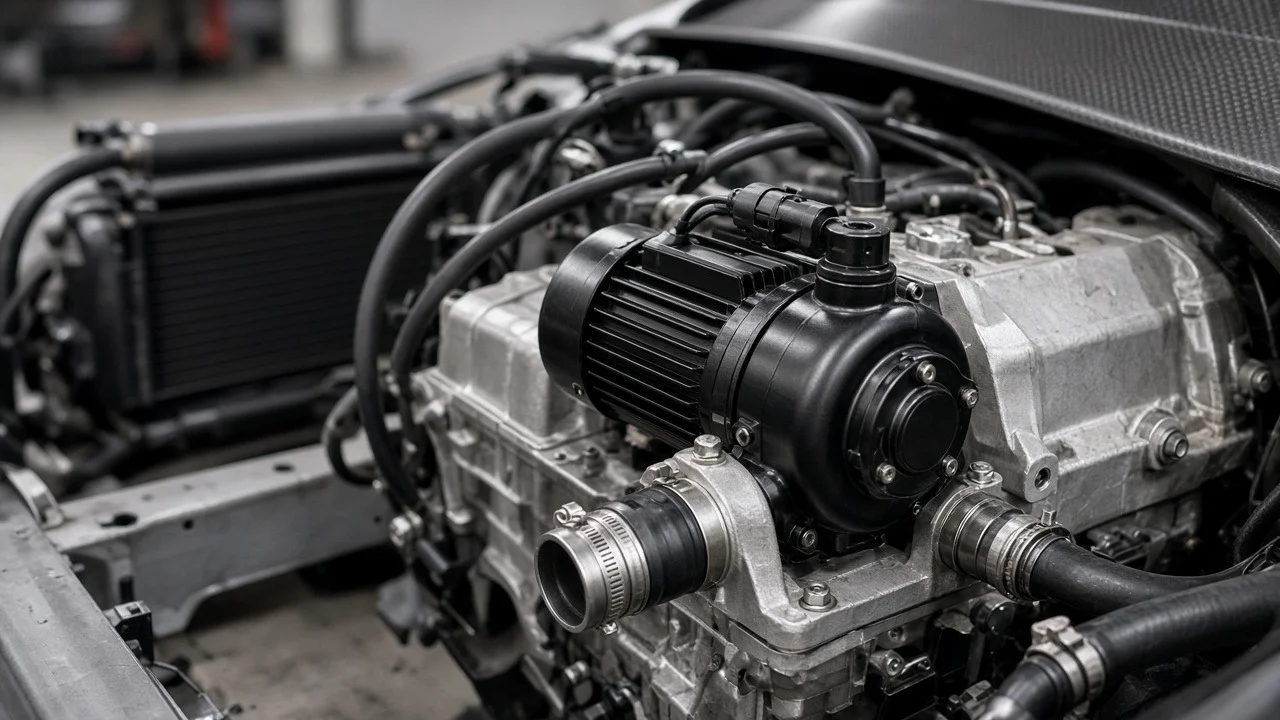
Choosing a race car electric water pump is not simply about moving more coolant. The goal is predictable heat rejection across a range of engine speeds, including pit stops, idle conditions, and sustained high-rpm loads. A belt-driven pump follows crank speed, while an electric unit can maintain flow independently. That difference matters when a radiator, thermostat, pressure cap, and coolant concentration are tuned for a narrow operating window. Understanding how the pump fits the cooling circuit helps avoid air pockets, uneven warm-up, and wasted electrical load. This guide explains the most useful purchase considerations for competition use.
The direct answer
A race car electric water pump should be evaluated primarily by how it matches the cooling circuit and the engine’s expected heat load. The direct answer is to choose a pump with enough sustained flow at the voltage available in the car, while keeping current draw within the alternator’s capacity. Fitment, inlet and outlet orientation, and the intended use with or without a thermostat can materially change suitability. A drag car that cools briefly between runs has different needs from a road-race car under continuous load. Pumps sold as universal race units still require verification of hose routing, mounting depth, and pulley clearance.
For most competition vehicles, the practical choice is a remote inline pump or a compact unit that can be mounted close to the radiator or engine block with minimal plumbing changes. Coolant specification also matters because electric motors add heat and the pump internals may respond differently to high water content or additives intended for racing. Check that the cooling circuit can be filled and bled without trapping air pockets at the pump inlet. If the system uses a pressure cap, the pump must tolerate the normal expansion pressure rather than simply free-flowing in an open test setup.