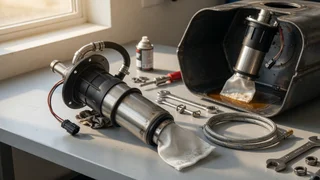
Electric EFI In-Tank Fuel Pump
Selecting an electric EFI in-tank fuel pump means matching the module to the fuel system’s pressure and flow demands, not simply finding a part that fits the tank opening. The pump operates submerged in fuel, where the liquid cools the motor and suppresses noise while the module draws from a reservoir to resist starvation during cornering or low fuel conditions. Buyers should evaluate pressure rating, flow at rated voltage, inlet strainer condition, electrical connector fitment, and the sender or regulator design before purchase because an incorrect pump can alter fuel trim, damage an injector over time, or create a persistent driveability fault.
The direct answer
The immediate question is usually whether a given electric fuel pump in tank will work for a specific EFI application. The answer is that compatibility depends on matching the pump’s regulated operating pressure and delivery volume to the engine’s needs. An EFI system expects a steady pressure differential across the injector, so the pump must supply enough flow at that pressure without excessive current draw or voltage drop. A pump that moves high volume at low pressure may still be wrong for port injection if it cannot maintain pressure under load.
Before buying an in-tank EFI fuel pump, confirm the module includes the correct reservoir, jet pump or pickup arrangement for the tank shape. The pump assembly must also interface with the level sender, return line or returnless regulator used by the vehicle. Inspect the wiring pass-through and the strainer because a fresh pump with a clogged inlet sock can repeat the symptoms of the failed unit. The code on a scan tool is only evidence of a fuel delivery issue, not automatic proof the pump itself has failed.