DT12 Transmission Relearn Procedure: What Owners Should Know
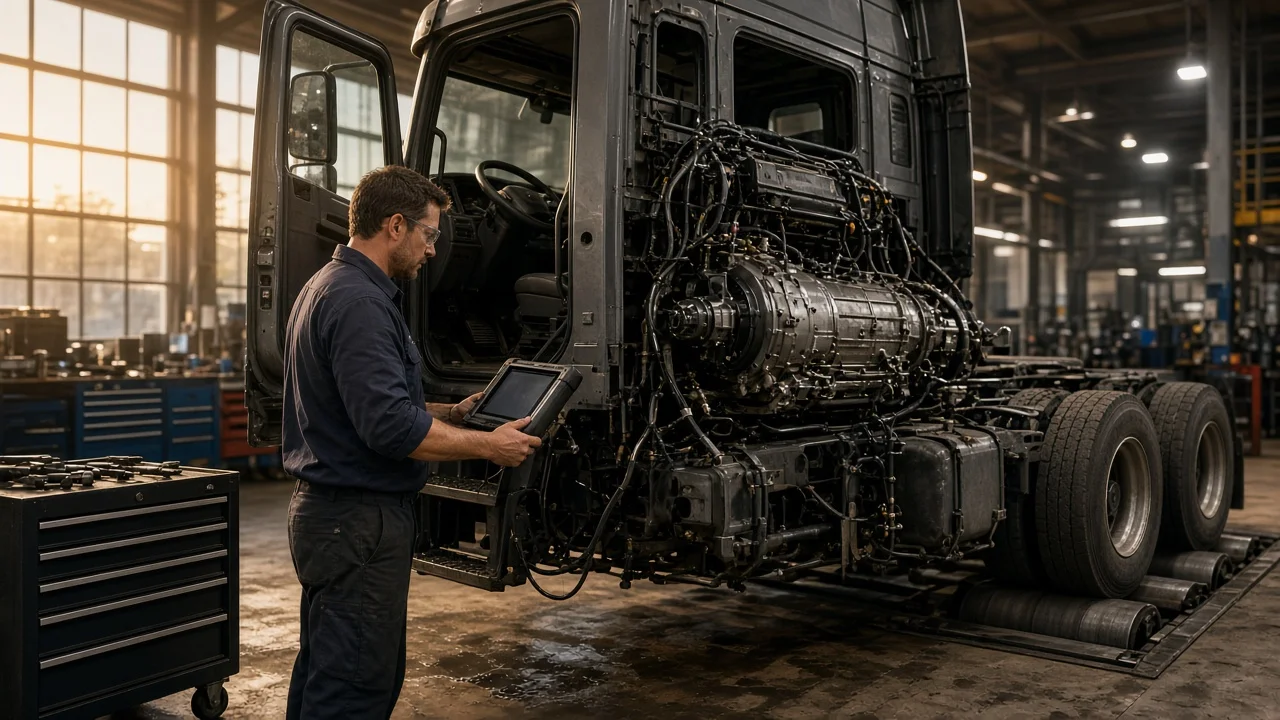
A DT12 relearn, often called a calibration or teach-in, lets the transmission control module record clutch engagement points and gear positions after parts are replaced, adjusted or reprogrammed. On the Detroit DT12 automated manual used in many Freightliner and Western Star trucks, this routine is normally run through dealer-level diagnostic software rather than a pedal or key sequence. This guide explains what the relearn does, when it applies and how an owner can prepare for it.
Short answer: how a DT12 relearn is done
On a Detroit DT12, a relearn is normally carried out with Detroit Diagnostic Link or comparable dealer-level software connected to the truck's diagnostic port. The technician selects the transmission, opens the calibration or teach-in routines, and the software checks preconditions before commanding the clutch and shift actuators through their travel. The learned values are then stored in the transmission control module. Depending on what was serviced, routines may cover the clutch engagement point, clutch actuator position and gear or shift-rail positions; the exact names and order vary with software level and transmission version. No owner-level pedal or key-cycle sequence can be confirmed as an equivalent, so treat any such shortcut as unverified for your truck.
Relearning is a maintenance step, not a repair. It updates stored positions after a legitimate change such as clutch replacement, actuator replacement, a transmission control module swap or a software update. If the truck is shifting roughly, hunting for gears or logging diagnostic codes, calibration helps only when an outdated or lost calibration is the actual cause. It will not correct an air leak, a worn clutch, a damaged harness or a failing sensor, and a symptom alone does not identify which part has failed.
How DT12 learning works
The DT12 is an automated manual: internally it uses gear sets and a dry clutch similar to a manual gearbox, but air-operated actuators controlled by the transmission control module work the clutch and select gears. Because no driver is feeling for the friction point or guiding a shifter, the module must know exactly where the clutch starts to transmit torque and where each gear position sits. Those reference points move slightly as the clutch wears, when an actuator or sensor is replaced, or when new software interprets the signals differently.
During calibration, the software moves components through controlled sweeps while sensors report position and speed. The module compares the readings with expected ranges and saves them if they pass. If a value falls outside limits, the routine typically stops and reports a fault rather than storing bad data. Stable supply air matters here: low pressure, leaks or a moisture-laden system can make actuator movement inconsistent, which leads to failed or poor calibrations. Automated manuals in general also make small adaptive adjustments during normal driving, but a formal relearn is what establishes the baseline after hardware or software changes.
What changes the procedure
The transmission type and configuration matter first. The DT12 family includes direct-drive and overdrive versions, and some variants add low crawler gears for vocational work. Model year, transmission software level and the generation of clutch actuator fitted to the truck all affect which calibration routines are offered and what preconditions they require. The engine pairing and vehicle application can also change the parameters programmed into the modules. Confirm the exact transmission model from its identification tag or the vehicle's build data before relying on any procedure.
Service history determines which routine is needed. A clutch replacement usually calls for clutch-related calibration, while a replacement transmission control module may first need to be programmed to the vehicle before any learning can succeed. Fitment is part of this: a module, actuator or clutch that is not correct for that transmission build can cause calibrations to fail or produce unusual shift behavior. Fluid specification is a separate issue from clutch learning, since the clutch is dry, but the wrong oil or an incorrect level can still affect internal shifting and should be checked against the manufacturer's specification. Warranty status can also influence where the work should be done.
What the owner can do
Before booking a relearn, document what the truck is doing. Note whether rough shifts happen when cold or hot, loaded or empty, at launch or between specific gears, and write down any diagnostic codes or warnings shown on the dash. Check the air system: watch build-up time and governor cut-out on the gauge, listen for leaks with the engine off, and drain the air tanks if the truck has manual drains. Confirm the transmission oil level and type against the specification for your unit, and gather the service history, including any recent clutch work, module replacement or software updates.
When the calibration is performed, the software usually expects conditions such as the truck parked on level ground, parking brake applied, transmission in neutral, engine running at idle, full system air pressure and normal operating temperature. Follow the prompts shown by the software rather than a generic checklist, and keep people clear of the vehicle while actuators move. Afterward, drive the truck through launches, upshifts and downshifts under normal load, and confirm that codes have cleared and do not return.
Repair options include an authorized Detroit or Freightliner service location, an independent heavy-duty shop with compatible diagnostic software and a current subscription, or a mobile technician equipped for transmission calibration. Ask whether the shop can also read stored fault history and check for software updates, since those often explain why a relearn was needed in the first place.
Limitations and next step
This article cannot list the exact menu path or step sequence for your truck, because those depend on the software version, transmission model and what was replaced. The service information tied to your vehicle identification number is the authoritative source. If a calibration repeatedly fails, the reported failure reason is a diagnostic clue, not something to bypass; it often points to air supply, wiring, sensor or mechanical issues that must be fixed first.
Seek professional help promptly if the truck will not engage a gear, slips under load, rolls unexpectedly, sets repeated transmission codes or shows a clutch overheat warning. These conditions can affect safety and may cause further damage if driving continues. The practical next step is to confirm the transmission model, collect your symptom notes and service records, and have a qualified technician run the diagnostic checks and calibration with the correct software for your configuration.