Driven Break-In Oil 10W-40: How to Decide If It Fits Your Engine

Driven break-in oil in a 10W-40 grade is a reasonable choice for a freshly built or rebuilt engine when your engine builder or cam manufacturer calls for a dedicated break-in oil and a 10W-40 viscosity suits the engine's bearing clearances and operating conditions. It is not an everyday oil. It is not a replacement for the factory-specified oil in a new production vehicle under warranty. Two conditions change the answer most: whether the engine uses a flat-tappet camshaft, and whether the vehicle has a catalytic converter or a wet clutch that the oil could affect.
What break-in oil is designed to do
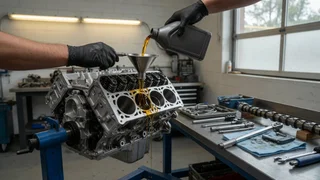
A new or rebuilt engine has fresh surfaces that have not yet worn into each other. The piston rings need to seat against the cylinder walls to seal compression. On flat-tappet engines, the lifters and cam lobes need to develop a compatible wear pattern. Break-in oils are formulated for this short, high-stress period. They usually carry generous levels of anti-wear additives, commonly zinc and phosphorus compounds known as ZDDP, to protect high-pressure sliding contacts. Their additive balance also allows controlled wear so the rings can seat rather than glaze.
Driven Racing Oil markets its break-in products for this purpose. The exact additive levels, base oil type and recommended use for a specific bottle should be read from the current label or product data sheet. Formulations and packaging can change over time, so do not rely on figures quoted secondhand.
Who should consider the 10W-40 grade
Engine builders and owners breaking in a rebuilt engine, especially one with a flat-tappet camshaft, where the cam supplier specifies a high-zinc break-in oil. Builds where the machinist or builder has set clearances that suit a 40-weight oil at operating temperature. Engines that will run in moderate-to-warm conditions during break-in, where a 10W cold rating gives acceptable cold starting. Owners who want one break-in viscosity that sits between a thinner 30-weight option and a heavier 50-weight option.
If your builder specifies a different viscosity, follow the builder. The viscosity grade should match the engine's clearances and the climate, not personal preference. The first number (10W) describes cold-flow behavior. The second number (40) describes thickness at normal operating temperature.
When it is the wrong choice
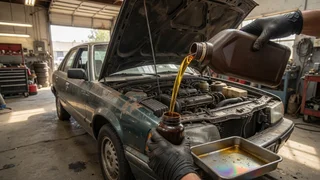
New factory-built vehicles: modern production engines are broken in at the factory and filled with an oil meeting the manufacturer's lubricant specification. Switching to a break-in oil that lacks the manufacturer approval listed in the owner's manual can create warranty questions and offers no clear benefit. Long-term street use: break-in oils are meant for a short initial period, not a full service interval. Vehicles where catalytic converter life is a priority: high phosphorus levels can, over extended use, contribute to converter contamination. Short-term break-in use is a different situation from running the oil for months. Check the label for any emissions or converter guidance. Motorcycles and other engines with a wet clutch: an oil can only be assumed clutch-compatible if the label states a wet-clutch rating such as JASO MA or MA2. Do not assume a car-oriented break-in oil carries one. Engines whose builder specifies a particular brand or formula: some cam and engine warranties are conditional on using a named product or a specification.
What to check before you buy
Equipment identification
Start by confirming exactly what you are lubricating. Gather the engine family, displacement, cam type (flat-tappet or roller), the builder's clearance sheet and the cam card if one came with the camshaft. A roller-cam engine does not face the same lobe-and-lifter break-in risk as a flat-tappet engine. That can change whether a dedicated break-in oil is required or simply preferred for ring seating.
Lubricant specification and viscosity
Compare the 10W-40 grade with what the builder, cam manufacturer or engine kit instructions call for. If they name a viscosity range, stay inside it. If they say nothing, base the choice on bearing clearances and expected ambient temperature during break-in, and ask the builder before guessing.
Fill quantity and container size
Work out the engine's total fill quantity, including the filter and any oil cooler or remote filter lines. Break-in usually involves at least one early oil change, so plan for enough oil to cover the initial fill, the first change and a little extra for top-ups. Buying the wrong container size can leave you short mid-procedure.
Supporting parts and total cost
The bottle price is only part of the cost. Include a quality oil filter for each change, a priming tool if the engine needs pre-oiling, and the follow-on oil you will switch to after break-in. When comparing listed prices, check that you are comparing the same container size and the same retailer region. Note whether shipping is included, since oil is heavy.
Authenticity and condition
Buy sealed containers from sellers that store product properly. Check that the label, grade and product name match what you intended to order. Avoid bottles with damaged seals or no visible batch markings.
Using it during break-in
Procedures vary by engine and cam supplier, so the builder's or cam maker's instructions take priority. The general pattern looks like this:
Pre-lubricate cam lobes and lifters with the assembly lube supplied or specified for the build, then prime the oiling system so pressure is established before first fire. On flat-tappet engines, follow the specified cam break-in routine. This commonly means avoiding prolonged idle immediately after start-up and holding a moderate engine speed for the specified period. Watch oil pressure, coolant temperature and leaks closely during the first run. Do a level check after the first run and again after the engine cools, since a new engine may consume or redistribute oil as it settles. Change the oil and filter at the point the builder specifies, and inspect the drained oil and filter for unusual debris.
Service interval: when to switch away
Break-in oil belongs to the first stage of an engine's life. Most builders call for one or more early changes on break-in oil, then a move to the oil intended for regular use. Depending on the engine, that may be a high-zinc street or performance oil for a flat-tappet build, or a conventional oil carrying the relevant approvals. Ask your builder for the switch-over point instead of extending break-in oil to a normal service interval. Leaving it in too long can work against its purpose and, in emissions-equipped vehicles, against the catalytic converter.
Comparing your options
Option | Best fit | Main trade-off; Driven break-in oil, 10W-40 | Rebuilt engines, especially flat-tappet, where a mid-range 40-weight suits clearances and climate | Short-term use only; check converter and wet-clutch suitability; Thinner break-in grade (30-weight class) | Tighter-clearance builds or cooler conditions, if the builder specifies it | May be too thin for engines built with looser clearances; Heavier break-in grade (50-weight class) | Looser-clearance or high-heat builds where the builder calls for it | Slower cold flow; can be unnecessary for tighter engines; Other brands' break-in oils | Builds where the cam or engine supplier names a specific product | Formulations differ; compare labels, not just viscosity; High-zinc street or performance oil | After break-in on flat-tappet engines | Not formulated for ring seating in the same way; Factory-specified oil | New production vehicles and warranty-covered engines | Not designed for flat-tappet cam break-in on rebuilt engines
Choose the Driven 10W-40 when the engine is newly built, the builder or cam supplier calls for a break-in oil, and a 40-weight grade matches the build. Choose a different break-in grade if the builder's clearance or climate guidance points elsewhere. Stay with the factory-approved oil for a new production vehicle. For a motorcycle, prioritize an oil that explicitly carries the required wet-clutch rating.
Quick decision checklist
Is the engine freshly built or rebuilt, rather than a factory-new production engine? Does the builder or cam manufacturer call for a dedicated break-in oil? Does a 10W-40 viscosity fall within the builder's recommendation for clearances and expected temperatures? Is the engine flat-tappet, and does the cam supplier have any specific oil or additive requirements? Does the vehicle have a catalytic converter or wet clutch, and does the label address it? Have you bought enough oil and filters for the initial fill plus the early change? Do you know which oil you will switch to after break-in, and when?
If you can answer yes to the relevant questions, the 10W-40 break-in oil is a sensible purchase. If any answer is uncertain, ask your engine builder before buying. The builder's specification for that specific engine outweighs any general recommendation.