DOT 4 Brake Fluid Moisture Tester
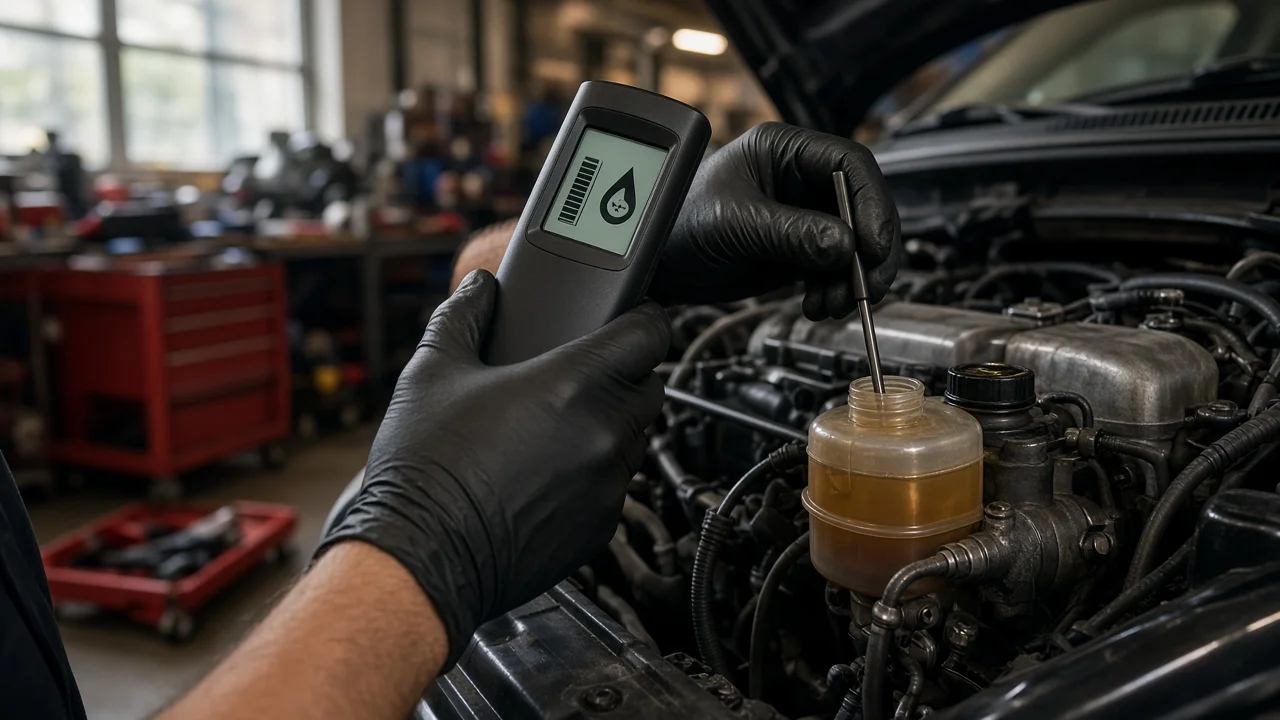
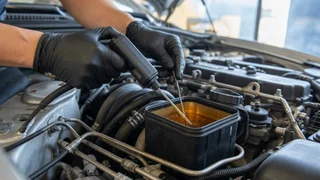
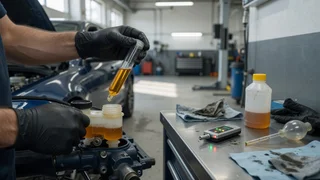
A DOT 4 brake fluid moisture tester is a handheld diagnostic tool that estimates water content inside the hydraulic brake system. Because DOT 4 fluid is hygroscopic, it gradually absorbs moisture from the atmosphere, lowering its boiling point and changing pedal response under repeated hard stops. For drivers researching brake upkeep, the immediate purchase question is whether a simple pen-style or probe-style unit can give a reliable enough reading to decide when a flush is actually needed. Understanding what these testers measure, and where they can mislead, helps place them correctly alongside visual inspection of the master cylinder reservoir and standard wear checks for pads and rotors.
The direct answer
A DOT 4 brake fluid moisture tester gives a useful but conditional answer. It typically reports the estimated percentage of water by volume after its electrodes are dipped into the master cylinder reservoir. Fresh fluid may read under one percent, while a reading above about three percent generally suggests the fluid has absorbed enough moisture that its wet boiling point has fallen toward a level where vapor lock becomes more likely during sustained braking. The device is not a laboratory instrument, and its accuracy depends on clean probe tips, correct immersion depth, and the fluid temperature.
The result is a screening indicator rather than a definitive chemical analysis. Because manufacturers calibrate testers around typical glycol-ether fluid conductivity, readings can drift with additives, contamination, or different fluid formulations. A high moisture reading argues for a brake fluid flush, but it does not by itself prove that a caliper, master cylinder, or brake line has failed. It also does not replace checking friction material wear limits or confirming vehicle fitment for replacement parts.