Does the Audi 2.0T Have a Timing Belt or Chain
When your timing drive is due for inspection, knowing whether it runs a replaceable belt or a lubricated chain changes your service plan. The question has practical value for longevity, repair estimates and used-car evaluation, because the answer varies with engine generation rather than with the Audi badge alone. Several turbocharged four-cylinder families have carried the 2.0T label, and their construction details are not identical. Narrowing the answer requires looking past displacement to cylinder-head architecture, accessory layout and the service history you observe on a particular vehicle.
Essential answer
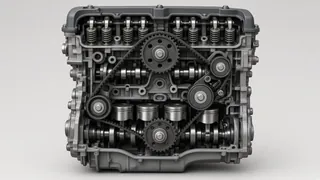
The Audi 2.0T is most commonly associated with a timing chain, especially in the widely used EA113 and EA888 turbocharged four-cylinder families fitted across many US-market A4, A5, Q5 and TT models. A chain runs inside the engine, lubricated by oil, and normally does not appear on a regular replacement schedule like a dry rubber belt. This accounts for the general expectation that the 2.0T depends on a metal link assembly rather than a toothed belt behind a plastic cover. However, engine configuration and service history matter because the badge alone does not define every version.
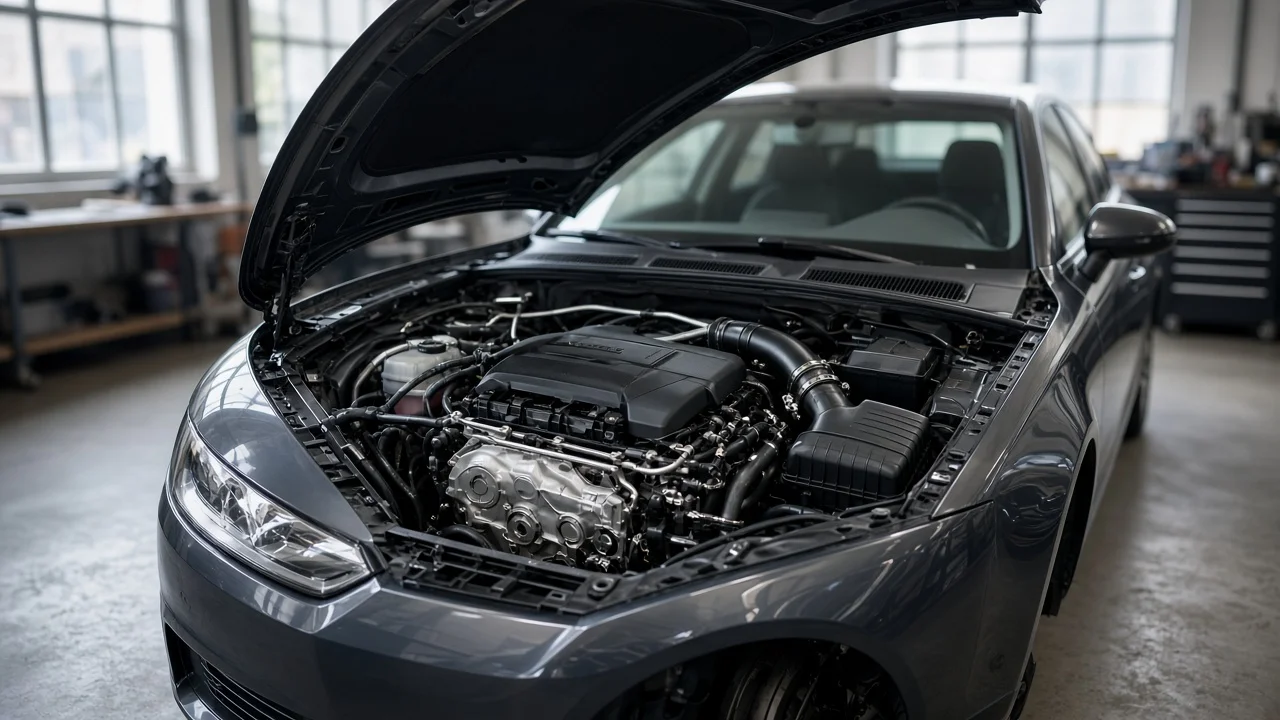
If you are checking a specific car, an inspection is the reliable way to confirm the hardware you have. Opening the front timing cover reveals a multi-link chain and guides on most transverse and longitudinal 2.0T engines, while a belt-driven design would show a wide, dry toothed band. Symptom conditions such as cold-start rattle, camshaft correlation diagnostic codes, or oil leaks near the upper cover often accompany chain wear. Because manufacturer-dependent codes require vehicle-specific confirmation, reading the VIN and comparing it against the original build data resolves the question without guessing.