Do You Have to Remove the Engine to Replace a Timing Chain

Replacing a timing chain raises an immediate practical concern: does the job require pulling the entire engine out of the vehicle? The answer depends heavily on engine configuration and how much working clearance exists around the timing cover. Many timing chain replacements are performed with the engine still in the chassis, but access can become tight in front-wheel-drive platforms or vehicles with limited space between the drive belts and the inner fender. Understanding what the procedure involves, why clearance matters, and when removal becomes unavoidable helps owners interpret repair estimates and diagnostic findings without assuming the worst.
Essential answer
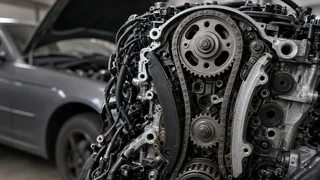
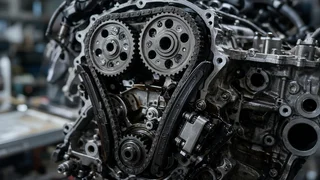
In most cases, you do not have to remove the engine to replace a timing chain. The chain, guides, tensioner, and sprockets sit behind a timing cover at the front of the block, and technicians can typically reach that area after removing accessory drive components, the harmonic balancer, and sometimes a motor mount or radiator support for extra room. Engine configuration is the main qualifier. A longitudinally mounted engine in a rear-wheel-drive vehicle often leaves generous space ahead of the crankshaft pulley, while a transverse V6 packed into a compact engine bay can make the same repair far more difficult.
Removal becomes a practical option when access is so restricted that safe fastener torque, seal cleaning, and timing mark verification cannot be performed reliably in the vehicle. Some shops may drop the subframe or support the engine and lower it slightly rather than pull it completely, which achieves clearance without disconnecting every harness and hose. The direct answer is therefore qualified: removal is not a universal requirement, but it is occasionally the cleaner route when engine configuration and chassis packaging leave too little room for careful work.
Procedure
The typical in-vehicle procedure begins with documenting diagnostic codes and symptom conditions to confirm the timing chain is the likely fault, because a stretched chain can share symptoms with variable valve timing faults or cam sensor failures. Technicians disconnect the battery, remove the accessory belt and drive pulleys, and set the engine to a known timing reference before exposing the timing cover. Engine mounts may be detached and a support fixture used to shift the engine forward or downward enough for cover removal. Manufacturer specifications control fastener sequence, torque values, and sealant application when the cover is reinstalled.
Once the timing cover is off, the condition of the chain, guides, and tensioner is inspected before parts come out. The old chain is removed only after the crankshaft and camshaft positions are secured so valve timing cannot shift. New components are installed with the timing marks aligned according to the service information, and the engine is rotated by hand to confirm that the marks return to the correct relationship. A completion check includes clearing stored codes, running the engine to listen for chain noise, and verifying that no coolant or oil leaks appear at the resealed cover. If clearance prevents any of these steps from being done accurately, partial engine lowering or full removal becomes the safer professional boundary.