Do Subaru Engines Have a Timing Belt or Chain
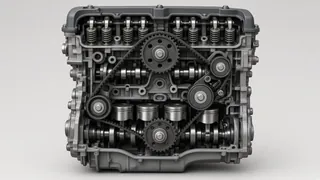
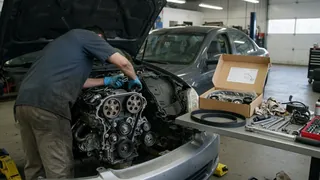
Subaru has used both timing belts and timing chains across its flat-four and six-cylinder boxer engine families, so the answer depends on the exact engine under the hood. Older single-overhead-cam EJ-series engines often drive the camshafts with a rubber timing belt, while later FB-series and EZ-series designs generally use a metal timing chain. Understanding which system a particular Subaru boxer engine uses matters because belt and chain service expectations, failure symptoms, inspection points, and long-term ownership costs are not the same.
Essential answer
The essential answer is that some Subaru engines have a timing belt and others have a timing chain. The horizontally opposed boxer layout describes the piston and crankshaft arrangement, not the camshaft drive method. An EJ engine such as a 2.5-liter naturally aspirated four-cylinder is typically associated with a timing belt, but owner research should confirm the specific engine code because displacement alone is not a reliable identifier.
By contrast, the FB20 and FB25 four-cylinder engines introduced in later Subaru models are commonly fitted with a timing chain, and the 3.6-liter six-cylinder boxer engine is also generally designed around a chain. The chain is enclosed inside the engine and lubricated by engine oil, while a belt is an external dry component behind a cover. This distinction changes whether routine replacement is expected or the system is normally inspected for wear, noise, and oil-related faults.