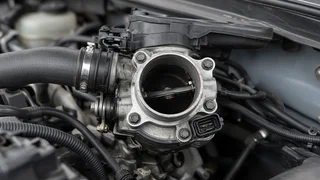
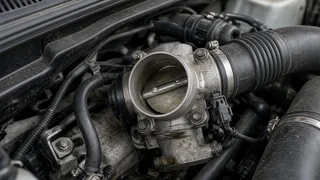
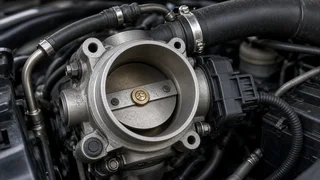
Dirty Throttle Body Symptoms
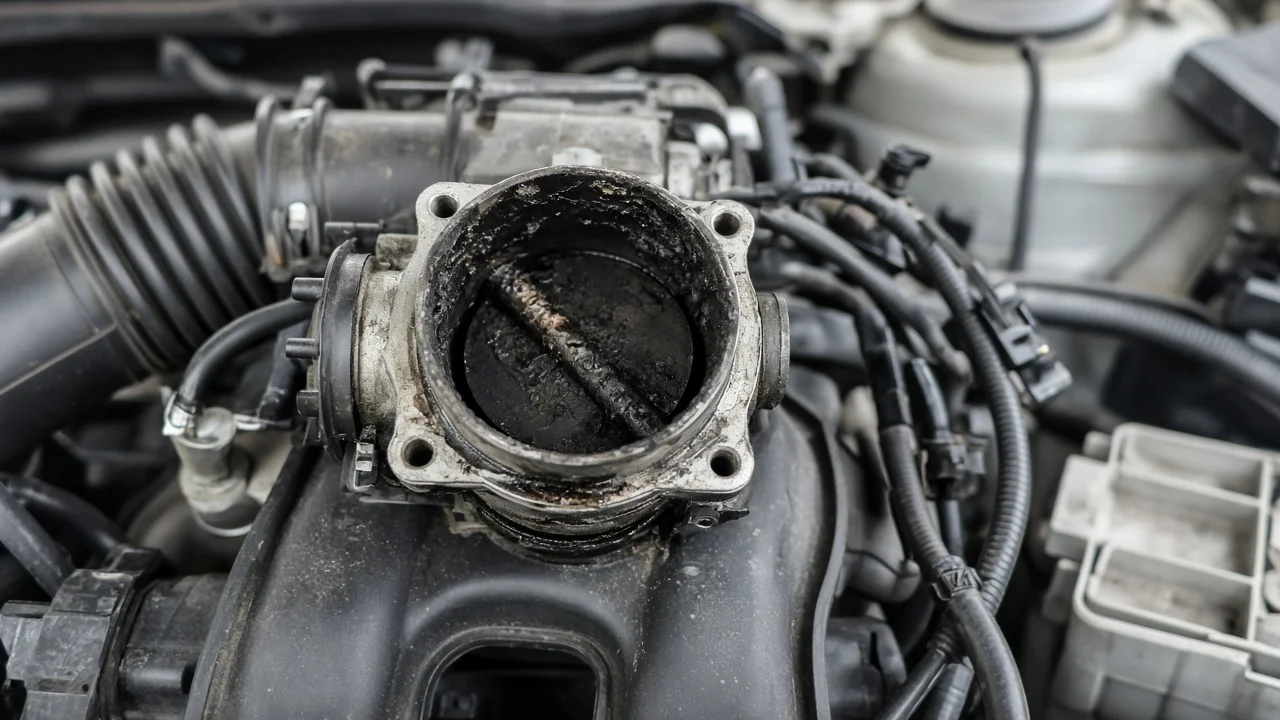
A dirty throttle body car can feel hesitant, idle unevenly, or respond sluggishly even when the engine is otherwise healthy. The throttle body controls the air entering the intake passage, and deposits around the throttle plate disrupt that carefully metered airflow. Because the engine computer expects a predictable relationship between plate angle and incoming air, contamination changes idle adaptation and transient response. Recognizing the signs early helps separate routine buildup from other faults such as vacuum leaks, sensor drift, or ignition problems.
Direct answer
Common dirty throttle body symptoms include an unstable or wandering idle, hesitation when accelerating from a stop, mild surging at light throttle, and occasionally a check engine light with idle-speed or airflow-related trouble codes. The throttle plate is designed to leave a narrow calibrated gap, and a film of oil, carbon, and dust can narrow that gap or make the plate stick slightly. The result is an airflow error the control system attempts to correct, sometimes producing an idle that dips, flares, or hunts.
The contamination usually builds gradually, so owners often notice small drivability changes before a hard failure appears. A car may still run acceptably at highway speed because the throttle opening is larger and the deposit has less proportional effect. At closed throttle or very light openings, however, the same accumulation disturbs airflow enough to matter. This pattern—rough low-speed behavior with more normal cruising—is a useful clue that points toward throttle body fouling rather than a broad fuel or ignition fault.
Interpreting symptoms and test results
A fault code related to idle speed or throttle position is evidence to interpret, not proof that the throttle body must be replaced. Deposits can make the position sensor report a throttle plate angle that does not match the actual airflow, triggering a rationality diagnostic. Before condemning the assembly, consider whether carbon around the plate is physically limiting movement or changing the air gap. Cleaning the bore and plate often restores the relationship between the control signal and the measured idle behavior.
Air leakage can mimic a dirty throttle body by letting unmetered air enter downstream of the plate, causing similar idle instability. A smoke test or careful inspection of vacuum lines helps distinguish an external leak from an internal restriction caused by deposits. Idle adaptation values may also be informative because they show how far the engine computer has adjusted airflow correction. If adaptation returns toward a neutral range after cleaning, the contamination was a substantial contributor; if not, seek another source.