Diesel Engine Oil Pressure Sensor
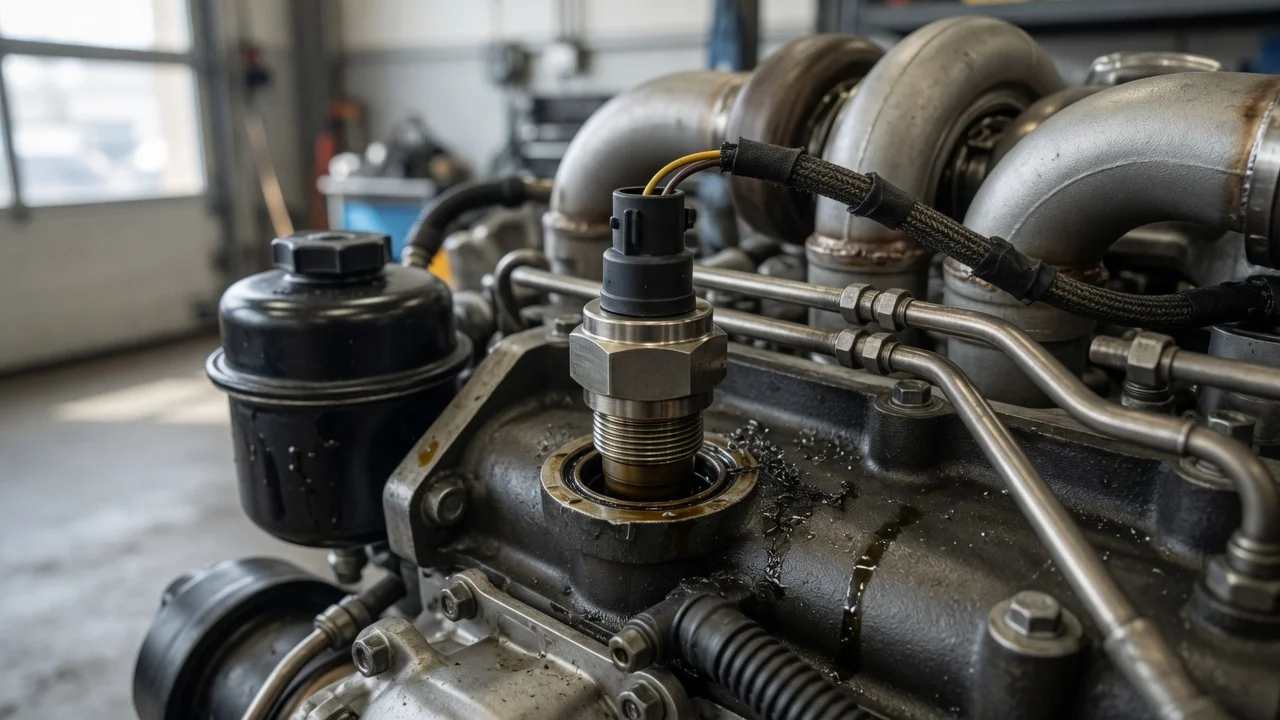
What a diesel engine oil pressure sensor does
A diesel engine oil pressure sensor measures engine oil pressure and converts it into an electrical signal for the instrument cluster or engine control module. In many modern diesels it is a transducer, not a simple switch, so it can report changing pressure rather than only triggering a warning light. The sensor usually sits in an oil gallery near the oil filter housing, cylinder head, or block. Its signal can influence warnings, gauge readings, and in some systems protective engine derating. Because diesel engines often run high compression and may use oil to actuate injectors or variable geometry systems, an accurate pressure signal can matter for both protection and calibration.
Common symptoms of a failing sensor
A faulty sensor may produce a false low oil pressure warning, a flickering oil light, or a gauge reading that is stuck, pegged, or erratic. External oil leaks from the sensor body or its electrical connector are also possible. In some vehicles the engine may enter a protective reduced-power state because the control module receives an implausible voltage. These symptoms do not automatically mean actual engine oil pressure is low. An inaccurate sensor can mimic a serious lubrication problem, so the sensor should be distinguished from the oil pump, pressure relief valve, or a genuinely clogged pickup.
Testing the sensor and oil pressure
A mechanical oil pressure gauge threaded temporarily into the sensor port is the most direct way to verify actual pressure. Compare the mechanical reading with the value shown by the vehicle at warm idle and at a higher engine speed such as 2,000 rpm. If the mechanical reading is normal while the electrical reading is not, the sensor or circuit is suspect. The sensor can also be checked with a multimeter using manufacturer-specific reference voltage, resistance, or output values. The exact connector pinout and expected signal vary by model year, engine, and whether the sensor is a switch, an analog sender, or a digital sensor.
Replacement considerations
The sensor is usually a thread-in component, but access can be tight on diesel engines with DPF assemblies, intake piping, or secondary systems nearby. Some sensors seal with a crush washer, O-ring, or pre-applied thread sealant. Replacement often requires a deep socket or line wrench, and the connector should be inspected for oil contamination. After installation, clear any stored diagnostic trouble code and confirm that the gauge or warning behaves normally at cold start, warm idle, and raised engine speed. On vehicles that use the sensor for fuel injection control or turbo actuation, confirm that the correct OEM or equivalent calibration is used.
Model-specific notes
Location, thread size, electrical values, and failure behavior differ across diesel families. A common-rail pickup may use a three-wire active sensor tied to the engine control module, while an older mechanically injected engine may use a single-wire switch that only closes below a set threshold. Some engines have separate oil pressure and oil temperature sensors in the same housing. Because the part can be marketed as a switch, sender, or pressure transducer for the same engine family, the sensor should be matched using the vehicle application, engine code, and connector photo rather than appearance alone.
Ownership guidance
If a low oil pressure warning appears, treat it as real until verified otherwise. Stop the engine if there is abnormal valvetrain or bottom-end noise, and check the oil level and condition before further diagnosis. A sensor replacement may fix a false warning, but it will not cure low pressure caused by a restricted pickup, worn bearings, a failed pressure relief spring, or a faulty oil pump. Record the exact engine code and model year when sourcing parts, and avoid relying on generic cross-reference data when the sensor also supports engine management functions.