Diesel EGR Valves: How They Work, Failure Signs, and Cleaning
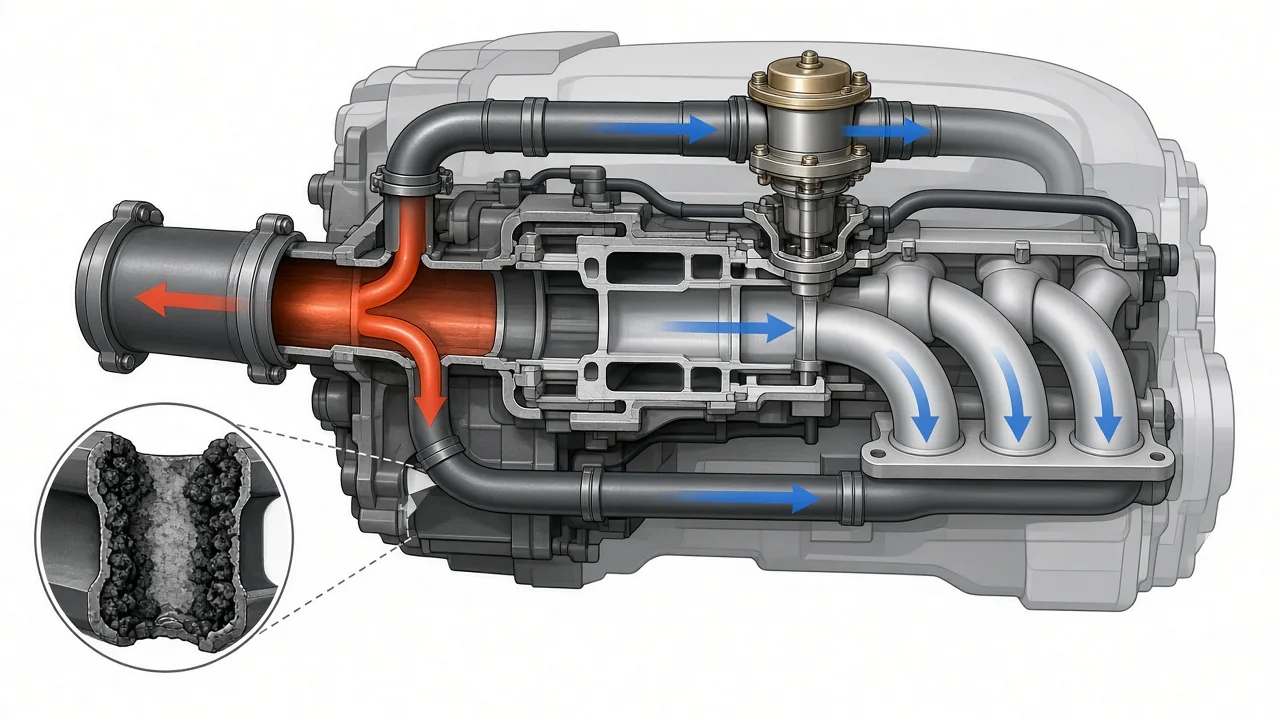
A diesel EGR valve meters some exhaust back into the intake so the engine can manage combustion temperatures and nitrogen oxides. On diesel engines, soot, intake deposits, and cooler-side residue often become the practical concern around that hardware. Knowing how an EGR valve in a diesel engine works, why deposits form, what faulty EGR valve symptoms on diesel equipment can look like, and when cleaning may help, supports better diagnosis.
What the EGR Valve Does in a Diesel Engine
Exhaust gas recirculation does not dump exhaust into the intake of a diesel engine at random. The diesel engine EGR valve meters a controlled share of already-burned gas into the incoming charge so peak combustion temperatures stay lower than they would with a full load of fresh air alone. That temperature drop is the main reason an EGR valve in diesel engines exists: cooler combustion chemistry forms fewer nitrogen oxides. The valve is the gate that opens, closes, or modulates that path as the controller demands.
The engine controller continually changes commanded EGR position with load, speed, temperature, and emissions strategy. An EGR valve on a diesel engine is not locked open whenever the engine is running, nor is it simply on or off on every design. Connecting passages carry the gas, and many layouts add an EGR cooler to drop exhaust temperature before it mixes with intake air. Hardware placement, cooler use, and actuator type vary by engine family, so the same principle can look quite different from one diesel to the next.
Why Soot Builds Up Around the EGR Valve
Recirculated diesel exhaust is not a clean gas stream. It carries soot that can settle on the valve pintle, seats, and connecting passages, forming soot deposits that grow with repeated use. Oil mist that reaches parts of the intake system can mix with that carbon and create a sticky film, so intake deposits around an EGR valve in a diesel engine are often a blend of soot and lubricant residue rather than dry powder. Restricted EGR flow can follow when those layers narrow the path or keep the valve from seating and opening as commanded.
How fast that buildup appears depends on operating conditions and overall engine condition, not on a single universal rate. Short trips, frequent cold running, high soot output, or oil that reaches the intake more readily can all favor heavier residue, while other duty cycles leave less. Visible carbon on the EGR valve that diesel engines use still does not prove the part has failed. Deposits can be present on a working valve, and a valve can fail electrically or mechanically with little obvious residue. Condition has to be judged by function, not appearance alone.
Symptoms That Can Point to a Diesel EGR Fault
Faulty EGR valve symptoms on diesel vehicles are easy to misread because they are not unique to this part. A stuck, slow, or poorly sealing EGR valve in diesel engine applications can contribute to rough idle, hesitation, reduced power, an illuminated engine warning light, and, in some circumstances, more visible smoke. Too much recirculation can dilute the charge more than the calibration intends, showing up as unstable idle or a lazy response. Too little recirculation, including restricted EGR flow, can leave combustion hotter than planned and may set a warning even when the engine still feels drivable.
Those same complaints overlap with intake leaks, boost problems, fuel delivery issues, and other emissions-system faults, so they cannot confirm a bad EGR valve on a diesel. A stored code or a warning lamp is a reason to investigate, not proof the valve itself has failed. Repeated stalling or a substantial loss of power deserves prompt professional assessment rather than continued hard use. If the engine overheats or a stop-engine warning appears, stop safely and have the vehicle evaluated; those conditions go beyond ordinary drivability annoyance and should not be diagnosed from the road.
What to Check Before Blaming the Valve
Before assuming the diesel EGR valve is at fault, note when the problem appears, whether the engine is cold or fully warm, and any dashboard messages. Do not try to recreate unsafe driving conditions just to capture a symptom. Owner inspection should stay at accessible areas with the engine off and cool. Leave hot exhaust parts, the EGR cooler, and pressurized intake or cooling connections alone. Visual clues can support a later diagnosis, but they are not a substitute for measuring how the valve actually behaves.
A trouble code points toward a system, not a parts invoice. Manufacturer-dependent codes need vehicle-specific confirmation, because the same number can describe different tests from one brand to another. A fault code is evidence to interpret, not proof a part has failed. Professional diagnosis compares commanded EGR position with actual movement, checks position feedback where the valve actuator provides it, watches airflow response, and inspects wiring plus passage restrictions. Airflow that ignores a command can mean a stuck valve or a blocked passage rather than a sensor-only fault.
When Cleaning a Diesel EGR Valve May Help
Diesel EGR valve cleaning can help when soot and intake deposits keep a still-serviceable valve from moving freely or passing the intended flow. EGR valve cleaning on a diesel engine is not a cure for failed electronics, a damaged valve actuator, or a leaking EGR cooler; those conditions need repair or replacement after diagnosis. Vehicle-specific service information decides whether cleaning is permitted, which parts may be serviced, and what else should be inspected. Treating cleaning as a default first step, without that guidance, can waste time or damage components that were never meant to be soaked or scraped.
Spraying cleaner into a running intake or soaking electrical connectors and the actuator is a poor idea because solvents can wash debris deeper into the engine, attack coatings, or ruin position sensors. Approved methods belong in the service literature, not in improvised chemical floods. After any permitted cleaning, operation should be confirmed under the same conditions that previously caused trouble. If symptoms or deposits return quickly, the valve was probably not the only issue. Look for contributing faults such as oil ingestion, cooler leakage, or combustion that produces unusually heavy soot.
How to Decide Whether EGR Cleaning Is Due
There is no universal interval for diesel EGR valve cleaning, and no single mileage or calendar schedule applies to every EGR valve on diesel engines. Follow the vehicle's maintenance information and service guidance for any inspection or cleaning requirement that actually applies. Symptoms, scan data, past repairs, and the real condition of the valve and passages should drive the decision. A clean-looking housing with a dead actuator still needs electrical repair. A carboned valve that still follows commanded EGR position may not need immediate work if flow and drivability remain acceptable.
An occasional long drive does not prove that soot deposits have cleared from an EGR valve in diesel engines, and diesel particulate filter regeneration is a separate process that should not be treated as EGR maintenance. Specified oil, filter, and fuel-system service still matters because poor combustion and oil consumption can feed the same residue. Addressing recurring faults is more useful than hoping a driving habit will keep the EGR valve on diesel engines permanently clean. Buildup can still return when the engine, cooler, and intake keep supplying soot and mist.