What Is an EGR Valve and What Does It Do? A Beginner's Guide to Exhaust Gas Recirculation
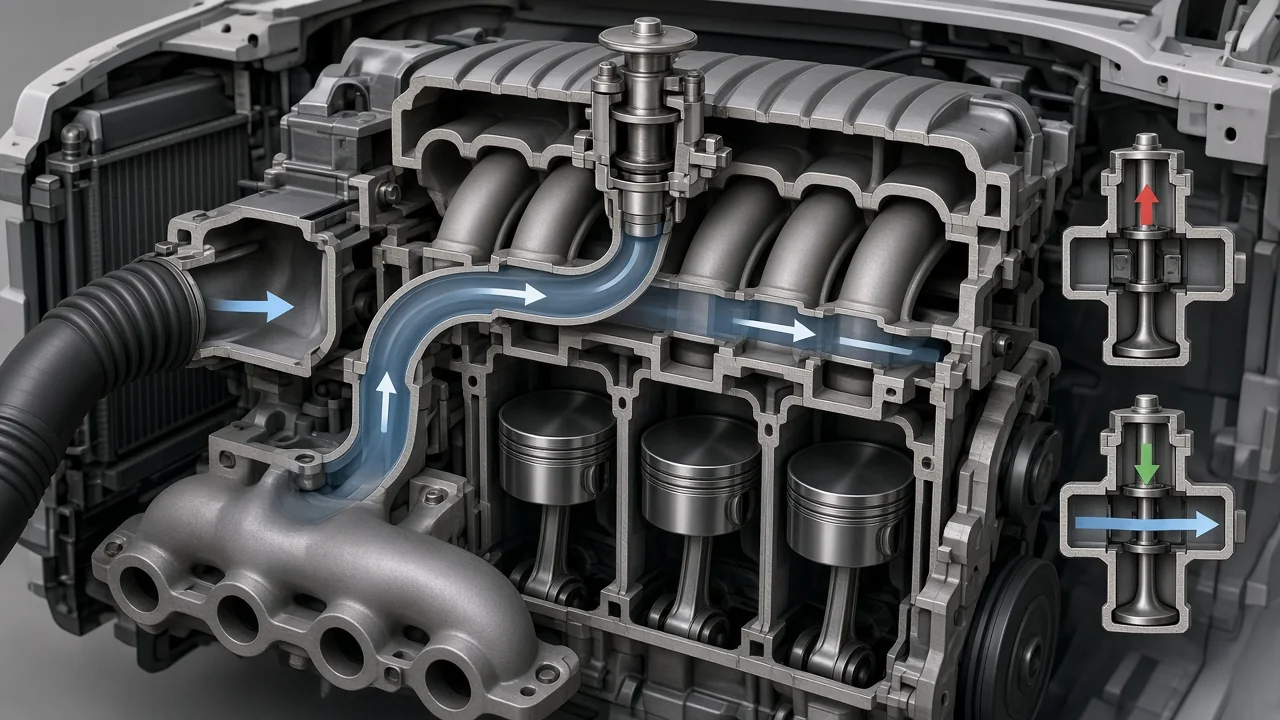
Pop the hood on many modern cars and somewhere near the intake you'll find a small part with a big emissions job. The EGR valve lets a carefully measured amount of exhaust back into the engine to curb pollution. Here's what it is, why it exists, how and when it works, what it looks like, and how it differs from the purge valve.
What an EGR valve is and where it sits on a car engine
An EGR valve is essentially a controlled gate. EGR stands for exhaust gas recirculation, and the valve lets a measured amount of exhaust flow from the exhaust side of the engine back into the intake. Strictly speaking, EGR describes the whole system, including passages, tubes and sometimes a cooler, while the valve is the moving part that decides how much gas actually passes through at any moment.
You'll find EGR on many gasoline and diesel engines as part of the broader emissions system, typically mounted on or near the intake manifold with a passage running from the exhaust side. It doesn't add power or scrub exhaust after it leaves the engine; it changes what enters the cylinders before combustion. Location, size and mounting vary widely, so check a reference for your specific vehicle instead of trusting a generic diagram.
Why engines recirculate exhaust: the purpose of the EGR valve
The main reason EGR exists is oxides of nitrogen, usually shortened to NOx. When combustion temperatures climb very high, nitrogen and oxygen from the intake air combine into these compounds, which are regulated pollutants linked to smog. Recirculated exhaust is mostly inert gas that has already burned. It takes up space in the cylinder, dilutes the fresh air-fuel charge and lowers peak flame temperature, so less NOx forms in the first place.
The chain is simple: less oxygen and a cooler burn produce less NOx at the tailpipe. On gasoline engines, engineers may also use EGR to reduce pumping losses at part throttle, because the engine draws in some exhaust rather than fighting a mostly closed throttle for air. That benefit depends on the design, though. What never changes is that the gas is metered, not dumped, since too much EGR makes an engine run rough.
What the EGR valve actually does: how it opens, closes and meters flow
Inside the valve, a pintle, poppet or flap moves off its seat to open a passage between the exhaust and intake sides. How far it opens sets how much exhaust flows. Older and simpler designs are vacuum-operated: a diaphragm responds to a vacuum signal and lifts the pintle. Electronic valves instead use a solenoid or stepper motor, which allows finer and faster control over the opening.
On modern cars, the engine control module decides when and how far the valve opens, weighing inputs such as coolant temperature, engine load, throttle position and engine speed. Many electronic valves include a position sensor that reports back, so the computer can tell whether the valve actually did what it was commanded. The valve should seal fully when told to close; a partially open or stuck valve is what creates drivability problems.
When the EGR valve operates and when it stays closed
EGR is typically inactive on a cold engine. Combustion temperatures are already lower during warm-up, and the engine needs a stable, clean mixture to run smoothly until it reaches operating temperature. Once warm, the main window for recirculation is steady cruising and moderate part-throttle driving, where loads are light to medium, combustion runs hot enough to create NOx, and the engine can tolerate some dilution without the driver noticing.
At idle the valve stays closed, because adding inert gas at low speed and low airflow would make the engine stumble or even stall. It also closes under hard acceleration, when the engine wants every bit of fresh air it can get for maximum power. Treat these as general patterns rather than rules, since each manufacturer programs its own strategy and gasoline and diesel engines are managed quite differently.
What an EGR valve looks like and the terminology you'll encounter
An EGR valve is usually a small metal housing bolted to the intake manifold or cylinder head. Vacuum types often have a round, dome-like diaphragm top with a vacuum hose attached, while electronic types carry an electrical connector. Nearby you may see an EGR tube or pipe carrying exhaust, a vacuum solenoid on older setups, or a differential pressure feedback sensor that measures flow. Diesel engines commonly use a cooled EGR path with quite different-looking hardware.
A few terms help when following a repair discussion. The pintle is the plunger that opens and closes the passage. Flow rate describes how much exhaust passes through. The EGR cooler is a heat exchanger that uses engine coolant to chill exhaust before it re-enters the intake, and an EGR position sensor reports valve opening. Carbon buildup means sooty deposits in the valve or passages. Since many intake parts look alike, confirm identification with a vehicle-specific reference.
EGR valve vs purge valve: two different jobs that are easy to confuse
The purge valve belongs to a separate system called evaporative emissions. Its job is to control gasoline vapor stored in a charcoal canister, drawing that vapor into the engine to be burned instead of letting it escape to the atmosphere. The EGR valve handles something entirely different: exhaust that has already been through combustion. One manages raw fuel vapor from the tank; the other manages burned gas from the exhaust manifold.
Their goals differ too. The purge valve keeps unburned hydrocarbons out of the air, while the EGR valve reduces NOx created inside the cylinders. The confusion is understandable, since both feed into the intake and both are computer-controlled. Their trouble codes and symptoms are distinct, however, so if a warning light appears, look up the code for your specific vehicle before assuming which valve is involved.
Signs the EGR valve may need attention and when to seek professional testing
A valve stuck open tends to cause rough idle, stalling or hesitation, because exhaust is diluting the mixture when it shouldn't. A valve stuck closed may cause pinging or knocking under load, since combustion runs hotter, and it can trigger a check engine light for emissions. Carbon deposits are the most common reason a valve stops moving freely, as soot from the exhaust gradually coats the pintle and passages.
Stick to safe observations: note warning lights, listen for rough idle and read stored codes with a scan tool, but avoid working near hot exhaust components. Remember that vacuum leaks, ignition faults and sensor problems can mimic EGR symptoms, and a code is evidence to interpret, not proof of a failed part. When codes point to EGR flow or position, professional testing that commands the valve and measures its response is the reliable next step.