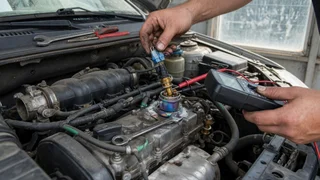
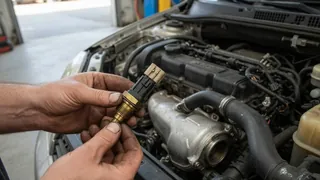
Diagnose Chevy Cruze engine coolant temperature sensor
A Chevrolet Cruze coolant temperature sensor issue can look minor at first, yet it influences fueling, gauge accuracy, cooling fan operation, and emissions behavior. The engine coolant temperature sensor chevy cruze question usually begins with a warning light, erratic gauge, poor idle, or reduced economy rather than an obvious leak. Because the sensor reports changing coolant heat to the powertrain control module, diagnosis means separating an electrical signal problem from actual cooling system trouble. Understanding the cooling circuit, thermostat, radiator, and potential air pockets helps narrow whether the indicated reading is false or reflects a genuine thermal condition.
Essential answer
The essential answer is that the coolant temperature sensor is a thermistor exposed to the cooling circuit, and its resistance changes as engine heat rises or falls. When the signal becomes implausible, the control module may store a fault and substitute a default value. On a Cruze, this can alter cold-start enrichment, cooling fan strategy, and gauge response. Before replacing the component, the connector, wiring, coolant level, and cooling circuit condition should be checked, because a false reading can be caused by air pockets or electrical resistance rather than the sensor itself.
The diagnosis should be treated as an investigation of the signal path and the physical cooling loop. A loss of coolant, stuck thermostat, radiator restriction, or faulty pressure cap can also produce temperatures that the sensor honestly reports but the driver interprets as a sensor failure. The sensor is the reporting device, not necessarily the source of the condition. Confirming the coolant concentration, filling level, and absence of trapped air gives the reading context. The goal is to identify whether the reported value is untrustworthy or the engine is actually running outside its expected range.
Diagnosing a problem
Start with observable checks that separate signal faults from thermal faults. Inspect the reservoir level when the engine is cold, and look for signs of coolant loss around the radiator cap, hoses, thermostat housing, and water pump area. Air pockets can make the sensor read inconsistently because the sensing tip may briefly contact steam instead of liquid. A scan tool reading that jumps erratically while the engine warms, especially if the gauge disagrees with the scan value, points toward a circuit, connector, or sensor signal problem rather than actual overheating.
A stored coolant temperature rationality code is evidence to interpret, not proof that the sensor has failed. Compare the sensor reading after a long cold soak with ambient conditions and observe whether the value climbs steadily as the thermostat opens. If the reading stays fixed, moves impossibly fast, or contradicts measured coolant behavior, focus on the sensor and its wiring. If the reading rises and the engine pushes coolant, overheats, or the radiator stays cool on one side, investigate the thermostat, cooling flow, pressure cap, and coolant concentration before condemning the sensor. Continued overheating requires stopping use and obtaining professional diagnosis.