Deutz air-cooled diesel engine oil
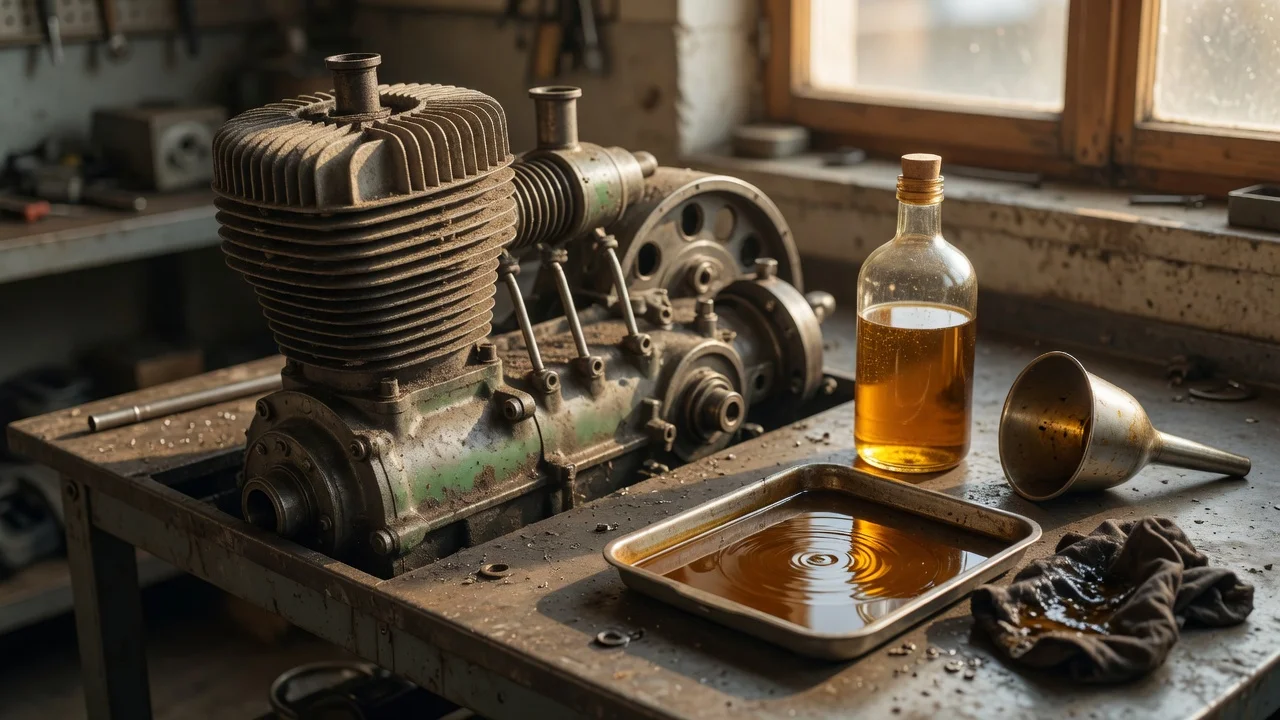
What oil a Deutz air-cooled diesel needs
Use a heavy-duty diesel engine oil that meets the Deutz Quality Class (DQC) and SAE viscosity grade printed in the operator’s manual for that engine family, ambient-temperature range, and duty. In a Deutz air-cooled diesel the oil both lubricates and carries heat away from the cylinders and heads, so the listed class and grade are the answer; a generic “diesel 15W-40” is suitable only when the same product also carries the stated DQC approval.
That specification is model- and generation-dependent. Classic air-cooled industrial and agricultural families (including the widely used 912, 913 and 914 series) are specified differently from later air/oil-cooled designs such as the 1011 and 2011, and differently again from water-cooled Deutz engines with exhaust aftertreatment. Turbocharged, naturally aspirated, generator-set and vehicle applications can also call out different DQC levels or drain intervals. Confirm the plate engine type and the oil chart in that engine’s manual before buying.
Why the oil grade is not optional
Without a liquid coolant jacket, cylinder heat is rejected through finned surfaces and through the circulating oil. Sump and gallery temperatures therefore run higher than in many water-cooled diesels of similar output. An oil that shears, oxidizes or thins too far under that load leaves bearings, pistons and the oil cooler (where fitted) under-protected. High-temperature viscosity, oxidation stability and the detergent/ash chemistry Deutz encoded in each DQC class are what the approval is screening for.
How to read Deutz Quality Class and viscosity
Deutz publishes oil quality in DQC steps (commonly DQC I through DQC IV, with dated suffixes such as DQC II-10 on later lists). A higher class is generally a more thermally stable, higher-performance diesel oil; it is not automatically the right fill for an older air-cooled block. Classic 912/913-type engines were typically released against earlier DQC or predecessor Deutz oil standards and API diesel categories of their period. Later engines, especially those with exhaust aftertreatment, may require a specific low-ash DQC IV product. Using a low-SAPS oil meant for a DPF-equipped engine in an older air-cooled unit, or the reverse, is a specification mismatch unless the manual lists that product.
Viscosity is chosen from the manual’s ambient-temperature chart, not from habit. SAE 15W-40 is the grade many temperate-climate charts list for year-round use in these engines; hotter climates and older charts often list SAE 20W-50 or straight SAE 30/40. Cold starts need the winter (“W”) grade the chart shows for the lowest temperature the engine will see. The correct cell on that chart is the supported choice; a single viscosity cannot be stated as universal across all Deutz air-cooled models and markets.
What to put on the purchase spec
Engine type from the rating plate (for example a 912/913/914 or 1011/2011 family code) and, if given, the oil specification document number in the manual.
Required Deutz Quality Class, including any year suffix, and any named predecessor Deutz oil standard the manual still allows.
SAE grade for the coldest and hottest temperatures the machine will see.
Duty: continuous generator load, dusty agricultural work, and high ambient temperature can shorten the oil-change interval even when the grade stays the same.
Prefer a product that states the matching DQC approval on the label or data sheet. API, ACEA or military diesel categories can be useful secondary filters when the manual lists them, but they do not replace the Deutz class. Do not use gasoline-engine oil, two-stroke mix, or hydraulic fluid as crankcase fill.
Ownership checks that follow from the cooling role
Because the oil is part of the cooling circuit, level and condition matter as much as grade. Check the dipstick with the engine stopped on level ground, at the hot or cold condition the manual specifies, and refill only with the same approved grade. Air-cooled Deutz engines can consume oil in normal service; running low raises oil temperature and can damage pistons and bearings quickly. Keep cooling fins, the fan, and any oil cooler clean: dirt on the fins raises oil temperature even when the fill is correct. Change oil and the filter at the hours or months the manual gives for that fuel sulphur level and duty; dusty or high-load use sits at the short end of that range.
Gaps you still need the manual to close
This guide cannot name one universal DQC class, SAE grade, fill quantity or drain interval for every Deutz air-cooled diesel. Those figures vary by engine series, build year, oil-cooler fitment, turbocharging, fuel sulphur and application, and they are not supplied here as a single data table. If the rating plate is missing or the manual disagrees with a parts-counter suggestion, treat the plate plus the oil chart for that exact engine type as the controlling specification.