Defensive driving rules and techniques
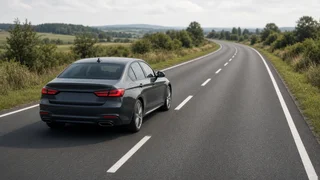
Taking a risk while driving means choosing an action that reduces your time and space to respond to changing traffic. The result can be a near miss, a citation, or a collision that injures people and damages vehicles. Defensive driving is the opposite: a systematic way to manage speed, position, and attention so you do not depend on other road users being perfect. This article explains the core rules, the four A’s, visual scanning, vehicle motion cues, and the practical consequences of risky decisions on the road.
Essential answer
The definition of defensive driving is operating a vehicle in a way that anticipates hazards and preserves a safe escape path before trouble develops. Instead of reacting after another driver brakes or drifts into your lane, you continuously adjust speed, following distance, and lane position to keep options open. The essential answer to what happens when you take a risk while driving is that you trade away that safety margin. A risky maneuver may succeed, but it leaves less room for the unexpected behavior of others.
One of the rules of defensive driving is to make only one change at a time and make it predictable. Passing, braking, or changing lanes while accelerating hard combines several decisions at once. If one element goes wrong, the driver has used up the cushion needed to correct it. Defensive driving therefore treats risk not as a sign of skill, but as an unnecessary reduction in control. The goal is to arrive without requiring last-second heroics from yourself or anyone nearby.
How it works
Defensive driving works by layering attention outward from the vehicle. The driver scans the road ahead, checks mirrors, and monitors side spaces so that movement develops in a predictable sequence. This habit is often simplified as the four A’s of defensive driving: anticipate, assess, adjust, and act. Anticipation means expecting a child near a parked car or a vehicle hidden in a blind spot. Assessment compares that possibility with speed, road surface, and traffic density before the driver makes a change.
Vehicle motion cues do the same job by connecting small physical signals to likely driver intentions. A front wheel turning slightly, a car drifting within its lane, or a head moving toward a mirror may signal an upcoming lane change or turn before a signal appears. Searching for specific driving related clues helps the driver recognize these early warnings. By using those cues and the four A’s together, defensive driving creates a continuous loop of observation and smooth response rather than a series of sudden corrections.
Strengths, limitations and suitability
The strength of defensive driving is that it suits almost every driver, vehicle class, and road condition. It does not require special tires, advanced driver assistance features, or high performance capability. What it requires is consistent eye movement and a willingness to reduce speed when visibility or traction falls. This matters because a driver who follows the rules of defensive driving is less likely to be surprised by a stalled vehicle, an aggressive lane change, or a sudden slowdown in dense traffic.
The limitation is that defensive driving cannot control the actions of others. It reduces exposure to risk, but it does not eliminate the possibility of an impaired driver crossing a median or running a red light at speed. That is why the method emphasizes an escape route: keep space in at least one direction, usually ahead or to the side. Drivers who understand this balance are better suited to heavy urban traffic and high-speed highways, where the cost of even a brief lapse in attention is highest.
Procedure
Begin by setting a visual rhythm before and during each trip. The recommended scanning time for defensive driving is to look far down the road and return to the area immediately ahead roughly every few seconds. Move your eyes between the mirrors, the road surface, and the edges of the travel lane. This prevents the fixed stare that develops during fatigue or highway hypnosis. If a developing hazard appears, identify the closest available space that offers an exit before you need it.
Next, separate actions so each has its own decision point. When changing lanes, check the mirror, check the blind spot, signal, and then move only when the gap is stable. Avoid pairing the lane change with hard acceleration or abrupt braking unless the situation has already collapsed into an emergency. After completing a maneuver, resume the higher scan pattern. This completion check helps the driver avoid relaxing immediately after passing one risk and missing the next one that forms a few car lengths ahead.
Diagnosing a problem
A driver who frequently finds that other vehicles brake or swerve in response to their actions is likely consuming the safety margin of everyone around them. The behavior can often be traced to late signaling, following too closely, or making multiple control inputs at once. Observable clues include a passenger bracing against the door, frequent last-second braking, or constant correction within the lane. These patterns suggest that the driver is reacting to traffic rather than anticipating it.
Another warning sign is a pattern of near misses at the same types of locations, such as merge areas, intersections, or off-ramps. In those moments, the key question is not who had the legal right-of-way, but whether the driver placed the vehicle where an escape path no longer existed. If a driver cannot describe what was happening on both sides and behind the vehicle seconds before an event, the scanning process was too narrow. The remedy is to widen the visual search and reduce speed until the flow of information becomes manageable.