Crystal In-Car Speakerphone: What to Check Before You Buy
The short answer
A Crystal-branded in-car speakerphone can be a reasonable choice if your vehicle lacks built-in Bluetooth calling. However, no confirmed specifications, prices or test results for a specific Crystal model were available for this guide. Treat any listing as unverified until the seller or packaging confirms the details below. If your car already has factory Bluetooth hands-free calling that works with your phone, a separate speakerphone usually adds little.
When a standalone speakerphone makes sense
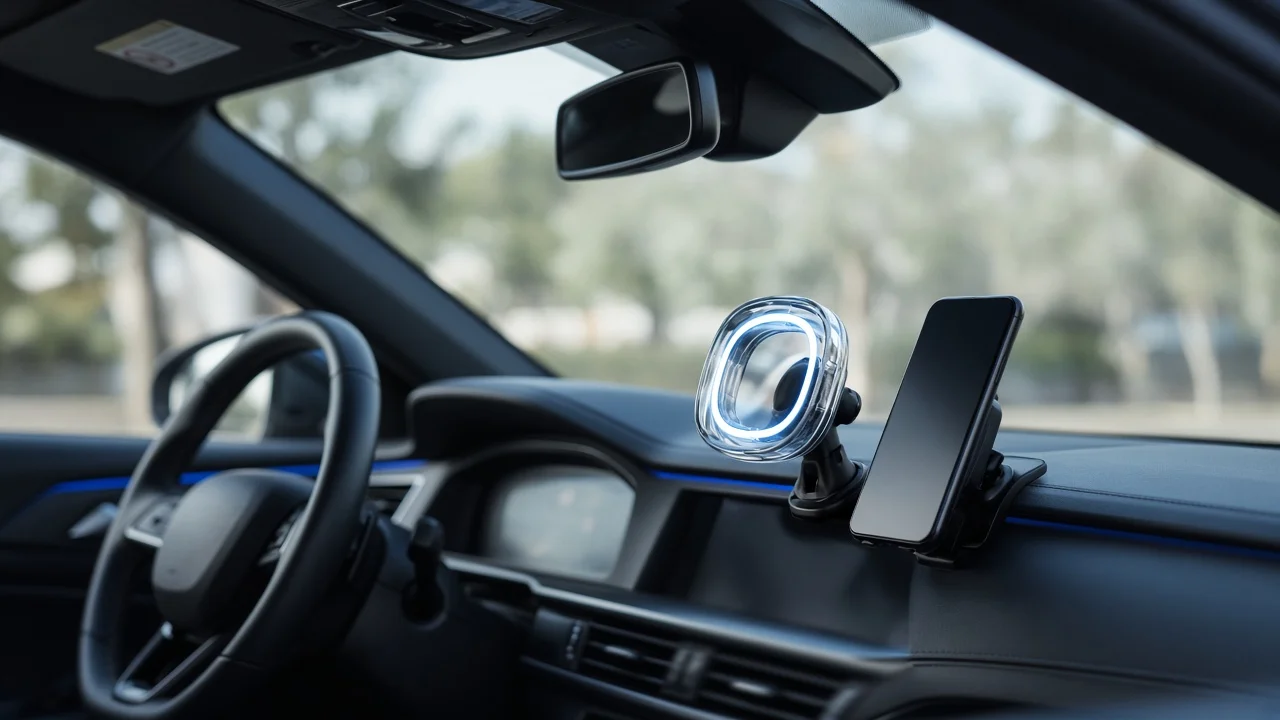
A clip-on or dash-mounted speakerphone is a Bluetooth device with its own microphone and speaker. It pairs with your phone and handles calls without connecting to the car's audio system. It is most useful in older vehicles with no Bluetooth, in vehicles whose factory system pairs poorly with newer phones, and in work or rental vehicles where you want the same calling setup in every car. Whether the factory system is present depends on the model year, market and trim, so check your owner's manual or the infotainment settings menu before buying.
What to confirm on any Crystal listing
Hands-Free Profile (HFP) support: the Bluetooth standard that carries two-way call audio. Without it, the device cannot handle calls properly. Bluetooth version and phone compatibility: confirm the device is listed as compatible with your phone's operating system. Multipoint pairing: whether it can stay connected to two phones at once, which matters for shared or work vehicles. Noise reduction and echo cancellation: features meant to cut road noise and stop the caller hearing their own voice. Look for a clear description rather than vague 'crystal clear' marketing. Power source: an internal rechargeable battery, a USB cable or a 12-volt adapter. Check the stated talk and standby time, and the charging connector type. Mounting method: visor clip, dash mount or vent mount. Confirm the device fits your visor's thickness and won't block airbags, sensors or your view. Voice assistant and controls: whether a button triggers your phone's voice assistant, and whether the controls are easy to reach without looking. Auto-connect and power-off: whether it reconnects when you start driving and switches off to save battery. Warranty and return terms: confirm these before buying, especially if the listing has few verifiable details.
Speakerphone versus other options
Option | How it works | Main trade-off; Standalone speakerphone | Own microphone and speaker; pairs with phone | Sound depends on the device's small speaker; needs charging or a cable; FM transmitter with calling | Sends audio through the car radio on an FM frequency | Can pick up interference; quality varies by area; Aux or USB Bluetooth adapter | Feeds audio into the car's input port | Requires a compatible input; microphone placement matters; Factory or aftermarket head unit | Calling built into the car's stereo | Highest integration, but highest cost and possible installation
Legal and safety note
US rules on handheld phone use while driving vary by state, and some states restrict even hands-free use for certain drivers. A speakerphone helps keep your hands free, but check your state's current rules and set up pairing before you drive.
Gaps to resolve before buying
This guide could not confirm which Crystal models exist, their Bluetooth versions, battery life, price or availability in the US. Ask the seller for the model number and documented specifications. Confirm compatibility with your phone. Read independent buyer feedback that mentions call quality at highway speed, since that is where small speakerphones are most often tested.