Coolant Leaking from the Bottom of the Engine: Finding the Source
What the Question Really Means
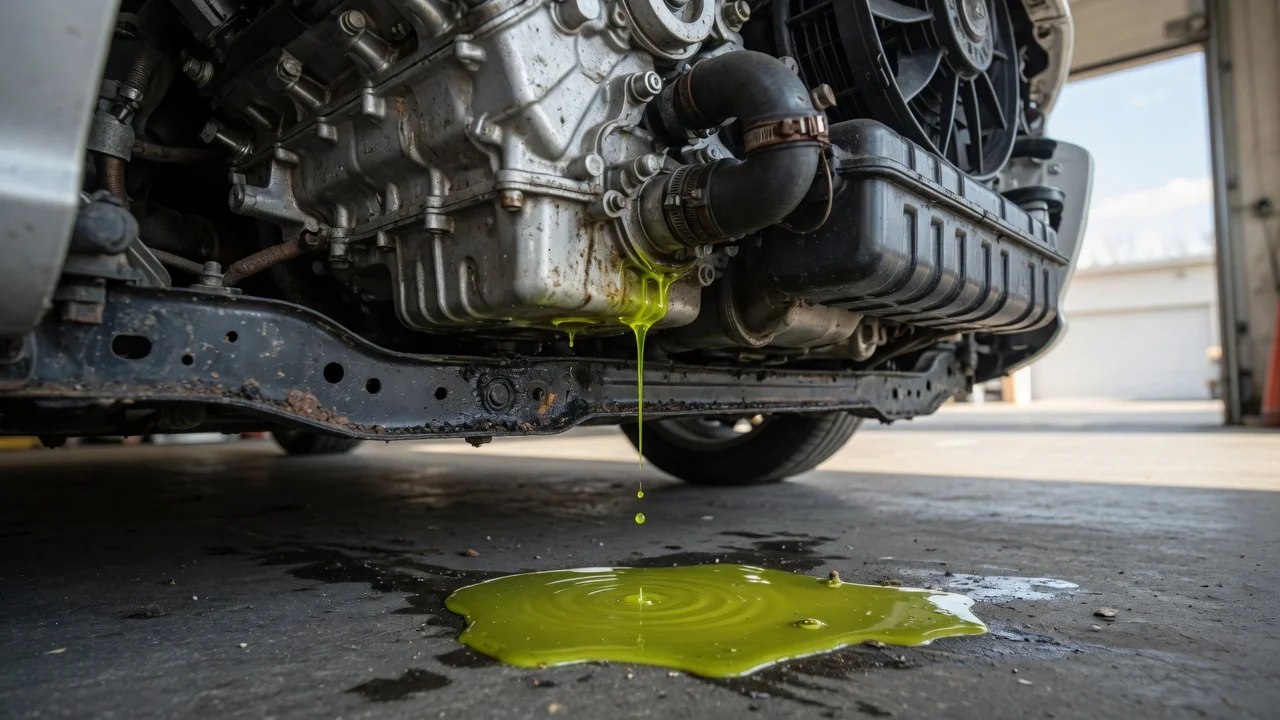
The direct answer is that coolant seen under the middle or rear of the engine is usually not proof that the engine block itself is leaking. Coolant is circulated through several components, and a puddle on the ground only tells you the lowest point where the fluid collected. The actual source is often higher up and farther forward, with the coolant running down along the engine or subframe before dripping. Before replacing parts, the leak should be traced upward from the wet area rather than judged by where the puddle appears.
Why the Bottom Puddle Can Be Misleading
Gravity, airflow, and engine movement can carry coolant away from the point where it escapes. Wind from the radiator fan or forward motion can push liquid rearward, while the underside of the engine and splash shields can redirect it. Because of this, a leak that looks like it is coming from the bottom of the engine may begin at a hose connection, the radiator, the water pump, or another component mounted higher in the engine bay.
Common Sources That Drip Near the Bottom of the Engine
Water pump: On many engines, the water pump is mounted on the front or side of the engine and is driven by a belt. A failed shaft seal or gasket can allow coolant to run down the front of the block and drip from underneath.
Lower radiator hose: The hose that connects the bottom of the radiator to the engine is a common leak point. A loose clamp, softened hose, or cracked end can release coolant near the lower part of the engine bay.
Thermostat housing: The thermostat is usually located at the engine end of the upper radiator hose, but its housing and gasket can leak. Depending on engine layout, the coolant can travel downward and appear beneath the engine.
Heater hoses and connections: Hoses that carry coolant to the heater core often run along or behind the engine. A leak at one of these hoses or at a metal connector can drip from the firewall area and look like an engine-bottom leak.
Radiator or radiator tank seam: A cracked plastic tank or damaged core can leak at the front of the vehicle, but coolant may be pushed rearward while driving and collect farther under the engine.
Freeze plugs: Also called core plugs, these metal plugs are pressed into openings in the engine block and cylinder head. One that is corroded or displaced can leak directly from the side or rear of the block.
Intake manifold gasket: On some engines, coolant passages run through the intake manifold. A failed gasket can leak externally and let coolant run down the engine.
Head gasket: A head gasket failure can push coolant out of the engine at the joint between the cylinder head and block. This is a serious fault, but it is not the default explanation for every external coolant puddle.
How to Begin Tracing the Leak
Start with the engine cool and look at the highest wet or stained component you can find. Follow the trail of dampness, crusty residue, or discoloration upward and forward from the puddle. Coolant often leaves a white, green, orange, pink, or blue deposit as it dries, which can make the path easier to see than the liquid alone.
A pressure test is the most useful confirmation method. With the engine off and cool, a hand pump is attached to the cooling system in place of the radiator or reservoir cap, and the system is pressurized to the specified level. The leak is then watched for dripping or a loss of pressure. This can reveal a leak without the engine running and is safer than searching around hot components.
Where Exact Identification Depends on the Vehicle
The most likely source varies with engine family, drive layout, and cooling-system configuration. Some engines have a rear-mounted water crossover, while others keep all major cooling connections at the front. A turbocharged engine can also have coolant lines running to the turbocharger, and those lines may leak near the back of the engine. Because these details are vehicle-specific, a workshop manual for the exact engine and model year is the reliable way to confirm component locations and tightening requirements.
When Not to Confuse Coolant with Another Fluid
Coolant is usually slippery and may smell slightly sweet, but color alone is not a safe identification because formulations differ. Engine oil is generally darker and more viscous, while transmission fluid or power steering fluid can be reddish or amber. Air conditioning condensation is clear water and is a normal underside drip. If the fluid cannot be identified by appearance and location, collecting a small sample on a clean surface can help separate coolant from other leaks.
Practical Next Steps
Do not open the radiator or reservoir cap while the engine is hot. Top up only with the correct coolant type for the vehicle, and never rely on water as a permanent substitute unless an emergency makes it necessary. Inspect the underside with the engine off and cool before assuming the block is damaged. Use a pressure test to confirm the leaking component when the visual path is unclear. Repair the identified source rather than adding stop-leak products as a first response, because additives may mask the leak or affect the cooling system.
Uncertainty to Keep in Mind
This guide explains how to reason about the leak, but final identification requires seeing the vehicle. Coolant routing, component placement, and failure patterns differ by manufacturer and model year, so no universal answer can state exactly which part is leaking. If the leak is rapid, the engine is overheating, or the puddle forms while parked without an obvious external path, a professional inspection is the safer next step.