Commercial auto insurance for small businesses
The short answer
If your business owns, leases or regularly uses vehicles for work, you will usually need a commercial auto policy rather than a personal one. Personal auto policies often limit or exclude business use, so a claim that happens while you are hauling equipment, making deliveries or carrying paying passengers may be denied or disputed. Three conditions change the answer most. The first is who owns or titles the vehicle. The second is what the vehicle is used for. The third is whether employees drive their own cars on company business. Each is covered below.
This guide does not include prices, premium ranges or insurer-specific terms, because none were verified for it. Costs and available coverage depend on your state, your insurer, your vehicles and your drivers. Treat any figure you see elsewhere as an estimate until you have a written quote.
When a business typically needs a commercial policy
The vehicle is titled or leased in the business's name rather than to an individual. The vehicle carries tools, equipment, inventory or goods for the business. The vehicle transports clients, employees or members of the public as part of the work. Several employees, not just the owner, drive the vehicle. The vehicle is a truck, van or other type that a personal insurer may decline to cover. The business operates under rules that require proof of specific coverage. Interstate motor carriers subject to federal regulation are one example, and certain licensed trades and public contracts are others.
If none of these apply, for example a sole proprietor who occasionally drives a personal car to a client meeting, a personal policy may be sufficient. Confirm this with your insurer in writing, because definitions of business use differ between companies.
What a commercial auto policy usually includes
Coverage | What it generally addresses; Liability (bodily injury and property damage) | Injuries to other people and damage to their property when your driver is at fault. Most states require a minimum amount. Collision | Damage to your vehicle from a crash, regardless of fault. Comprehensive | Damage to your vehicle from non-collision events such as theft, fire, vandalism or weather. Medical payments or personal injury protection | Medical costs for your driver and passengers. Whether this is required or optional depends on the state. Uninsured and underinsured motorist | Your losses when the at-fault driver has no insurance or too little. Hired and non-owned auto | The business's liability when employees use rented vehicles or their own cars for work.
Optional add-ons, such as rental reimbursement, towing or coverage for permanently installed equipment, vary by insurer. Ask which of these are included and which cost extra, and check whether any cover the specific equipment you carry.
Company cars versus employees' own vehicles
A company car, meaning a vehicle the business owns or leases, is normally listed directly on the commercial policy. Every employee who drives it should be disclosed to the insurer as a driver. An undisclosed driver can complicate a claim.
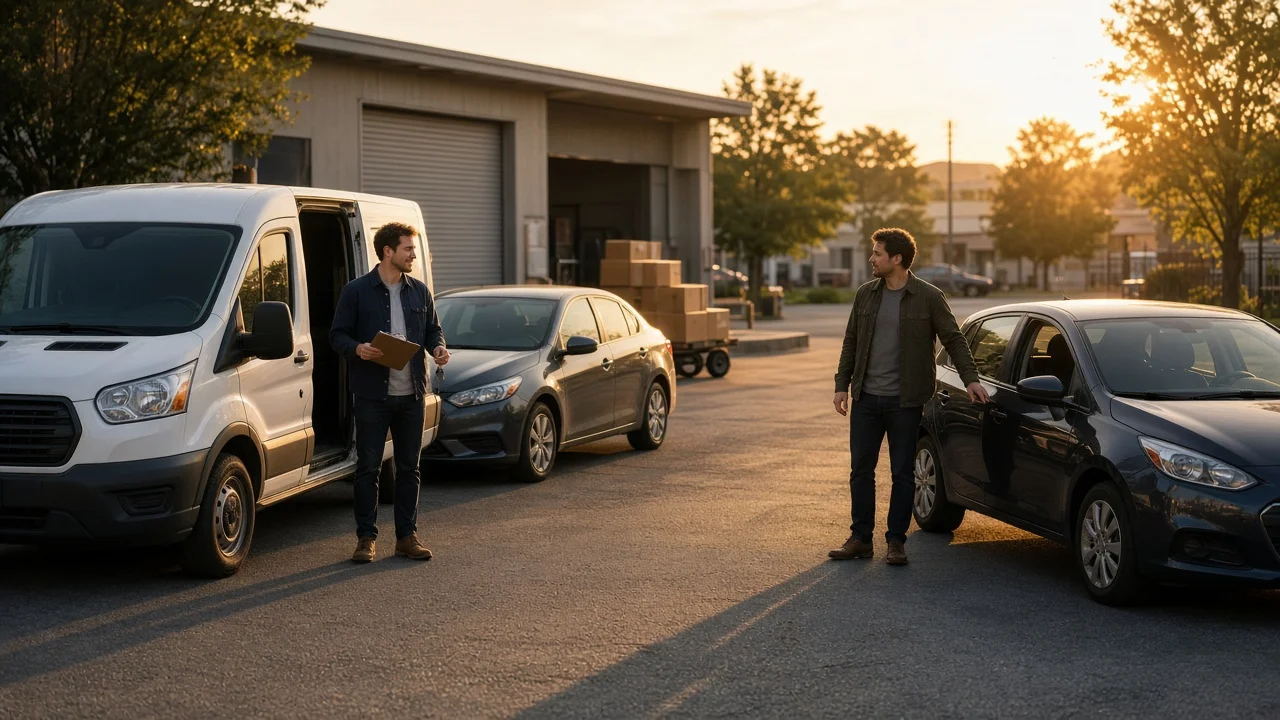
When employees drive their personal cars on business errands, the situation is different. In many cases the employee's personal policy responds first. Hired and non-owned auto coverage then protects the business if it is sued over the accident. It generally does not pay to repair the employee's own car. If your staff run errands, visit clients or make deliveries in their own vehicles, ask the insurer exactly how the two policies interact. Also confirm that your employees' personal policies do not exclude that kind of use.
Getting a commercial auto insurance quote online
Many insurers and brokers offer online quote forms. Straightforward risks, such as one or two light vehicles with clean driving records, may get a price quickly. Larger fleets, heavy vehicles, hazardous cargo or poor loss histories usually need review by an underwriter, the insurer's risk assessor, before a final price is issued. An online figure may therefore be preliminary.
Having the following ready makes quotes faster and more accurate:
Business legal name, structure, industry and years in operation; Vehicle identification number (VIN), year, make, model and body type for each vehicle; Garaging location, meaning where each vehicle is kept overnight; How each vehicle is used and the typical driving radius; A list of drivers with dates of birth, license numbers and driving history; Current or prior insurance details and loss runs, which are the claim histories issued by previous insurers; Any contract, lender or regulatory requirements for coverage amounts or for naming additional insureds
How to compare quotes
Compare matching liability limits and deductibles. A lower premium may simply reflect less coverage. Check that every vehicle and every regular driver is listed correctly. Confirm whether hired and non-owned auto coverage is included or needs to be added. Ask how the policy treats equipment permanently mounted on the vehicle and cargo carried inside it. Cargo is often a separate coverage. Ask whether the policy can be bundled with other business coverage, and whether that changes the terms. Read the exclusions, particularly any related to vehicle use, driver eligibility or delivery work.
What affects the price
Insurers commonly weigh the type and value of each vehicle, how far and how often it is driven, where it is garaged, the industry, the drivers' records and experience, the business's claims history and the limits and deductibles you choose. No specific premium figures are given here. Only a written quote reflects your actual rate.
Filing a claim
Make sure everyone is safe and contact emergency services if anyone is injured. Exchange information with other drivers, and record names, plates, insurers and witnesses. Photograph the scene, the vehicles and any visible damage. Obtain a police report number where one is filed. Report the incident to your insurer promptly. Policies typically require timely notice. Avoid admitting fault at the scene. Let the insurer handle liability. Keep repair estimates, receipts and correspondence together until the claim closes.
Next step
List your vehicles, drivers and how each vehicle is used. Then check your state's minimum requirements and any contract obligations. Request quotes from at least two sources with identical limits so you are comparing like for like. If employees use their own cars for work, raise that with every insurer you contact.